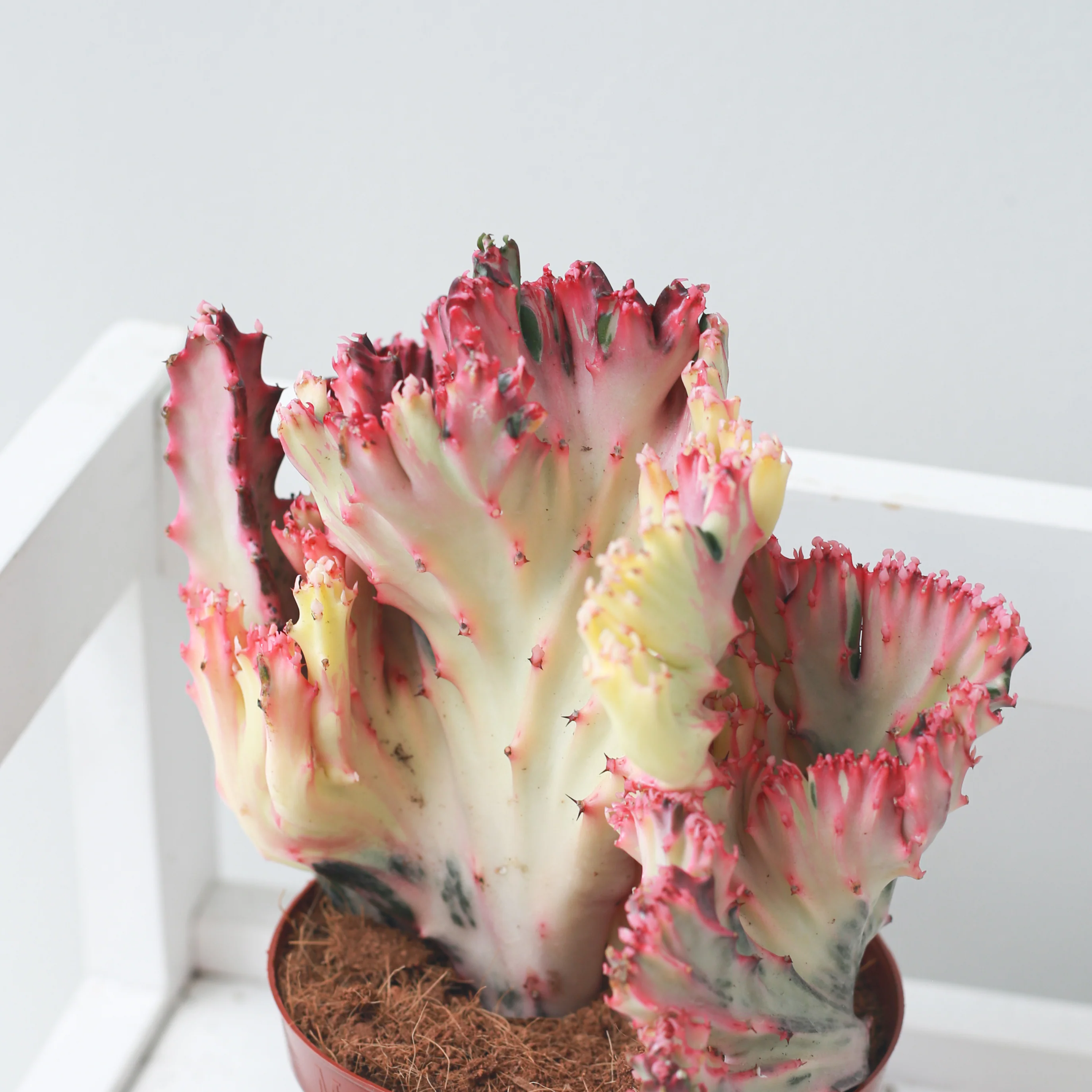
Coral Cactus
- Description
- Coral Cactus Care Guide
- FAQ/Common Issues
-
![]() Coral Cactus is a rare grafted succulent created by grafting a crested Euphorbia lactea onto an Euphorbia neriifolia rootstock, producing a one-of-a-kind sculptural plant that does not exist in the wild. The result is a living work of art that has become one of the most sought-after architectural indoor plants in the succulent world, beloved by collectors and beginners alike.
Coral Cactus is a rare grafted succulent created by grafting a crested Euphorbia lactea onto an Euphorbia neriifolia rootstock, producing a one-of-a-kind sculptural plant that does not exist in the wild. The result is a living work of art that has become one of the most sought-after architectural indoor plants in the succulent world, beloved by collectors and beginners alike.
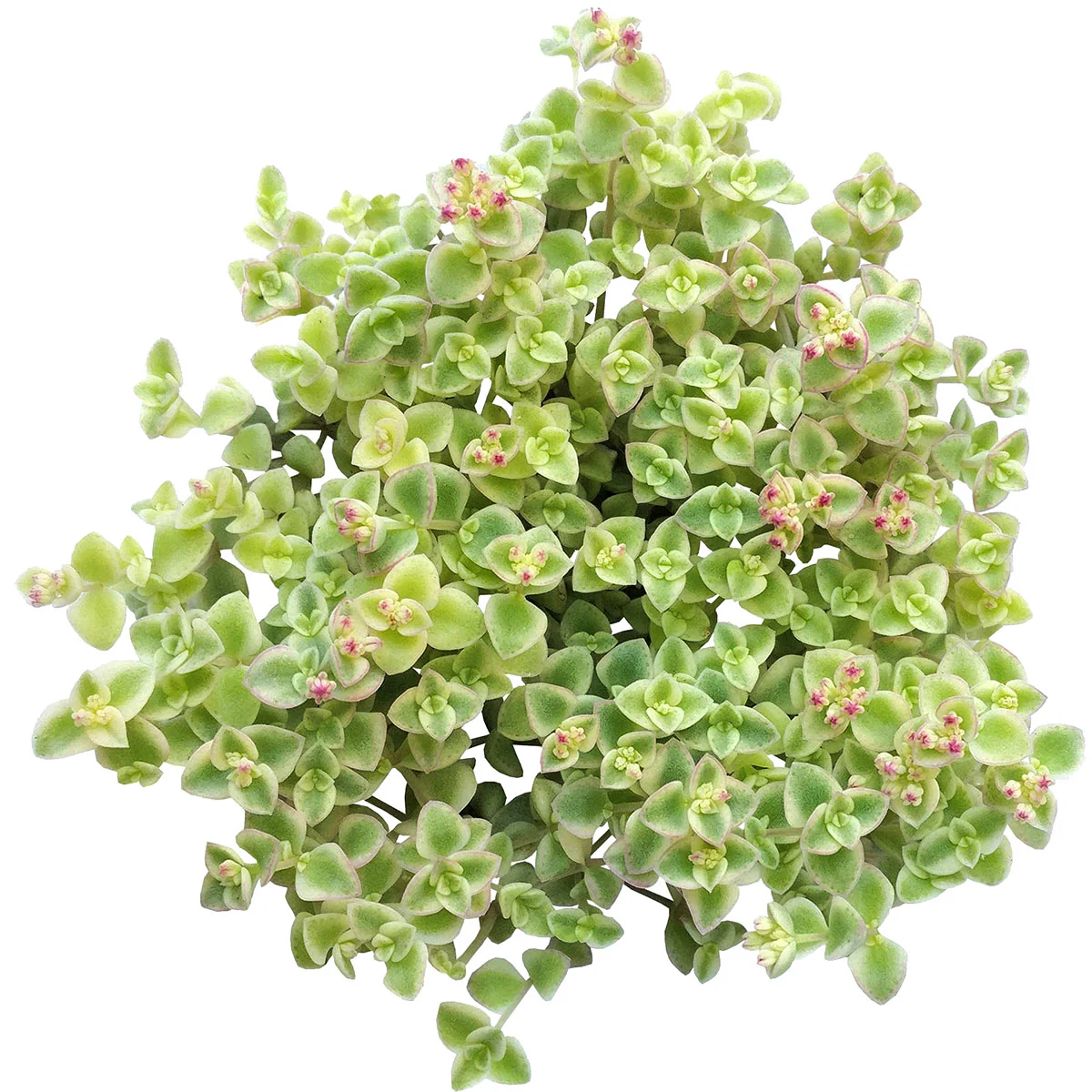
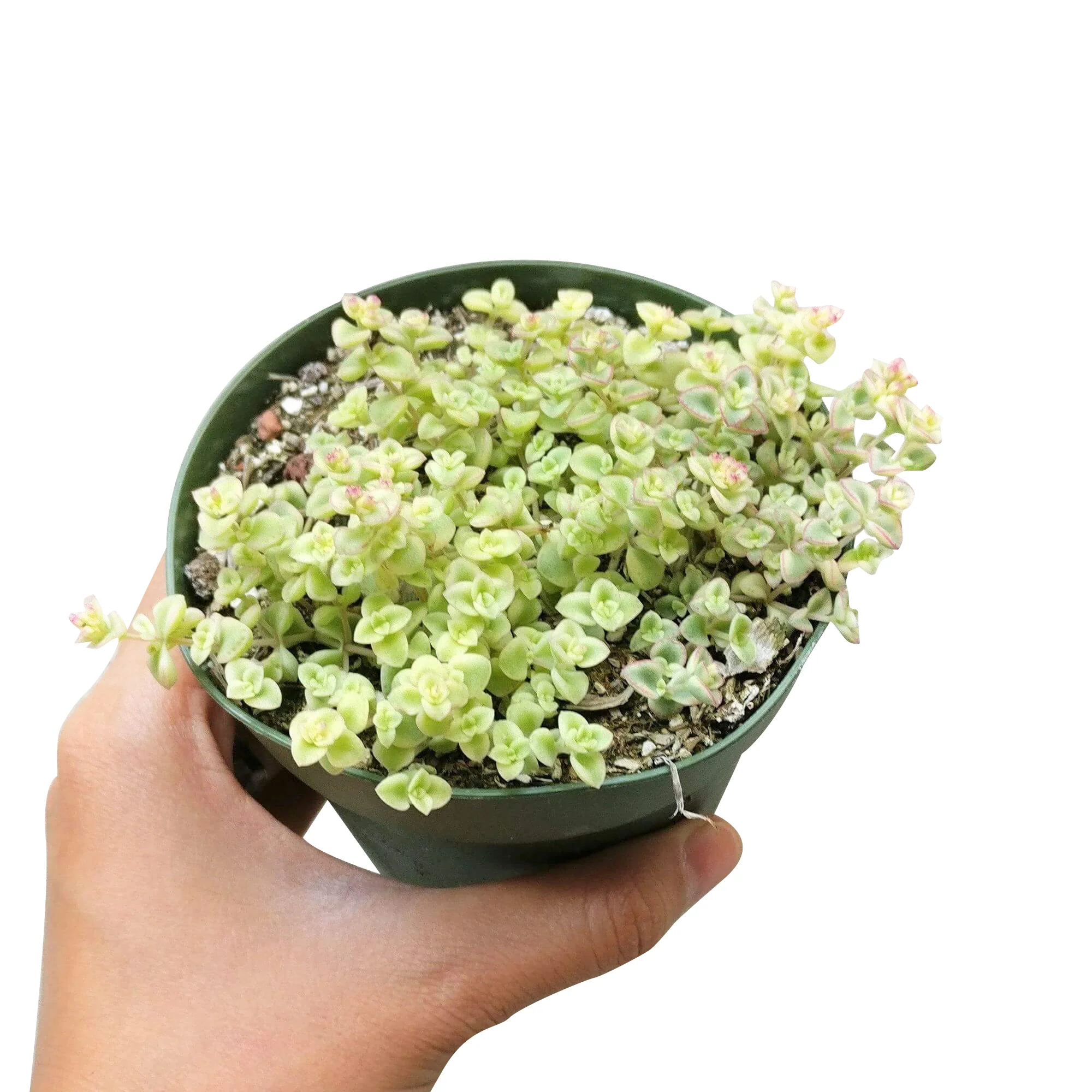
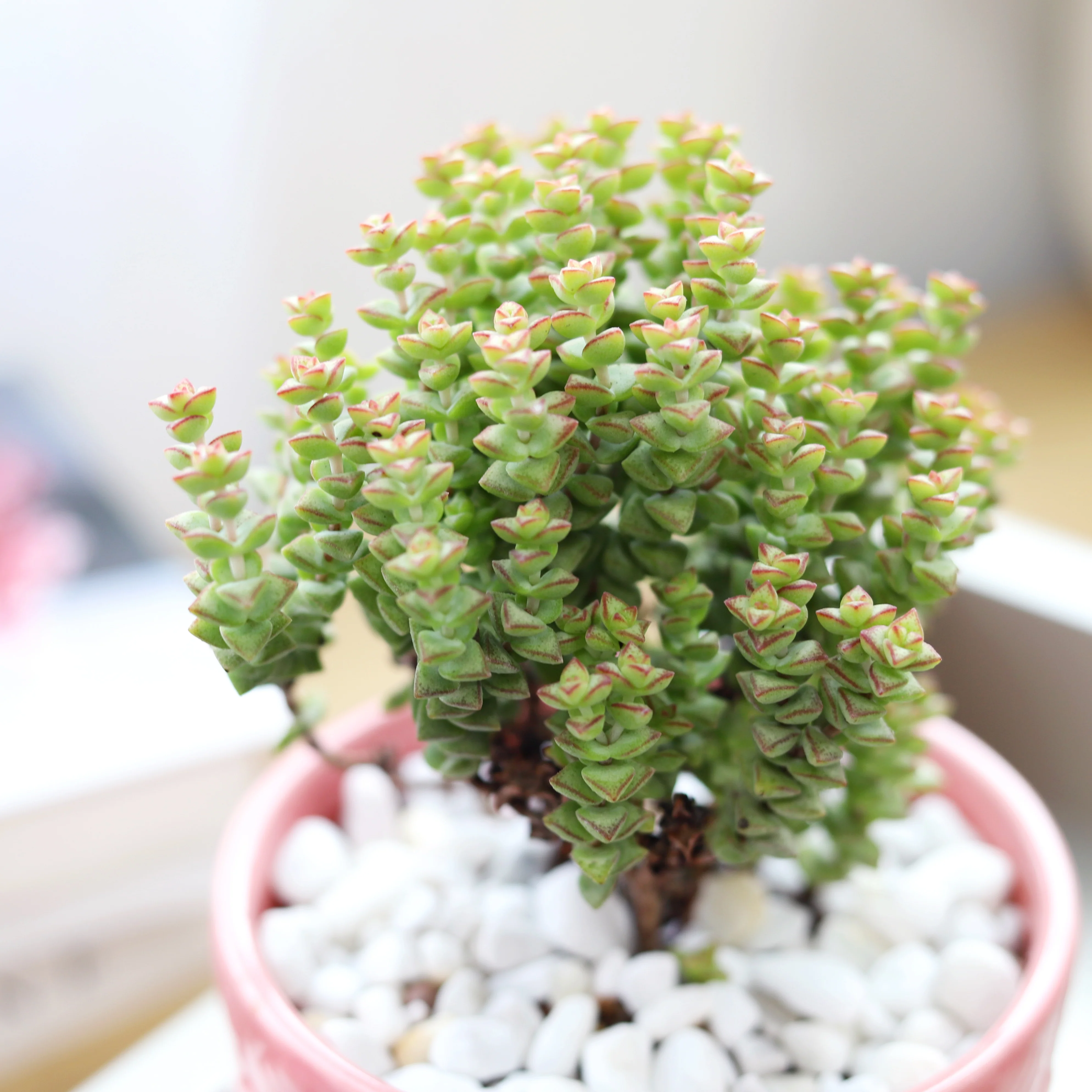
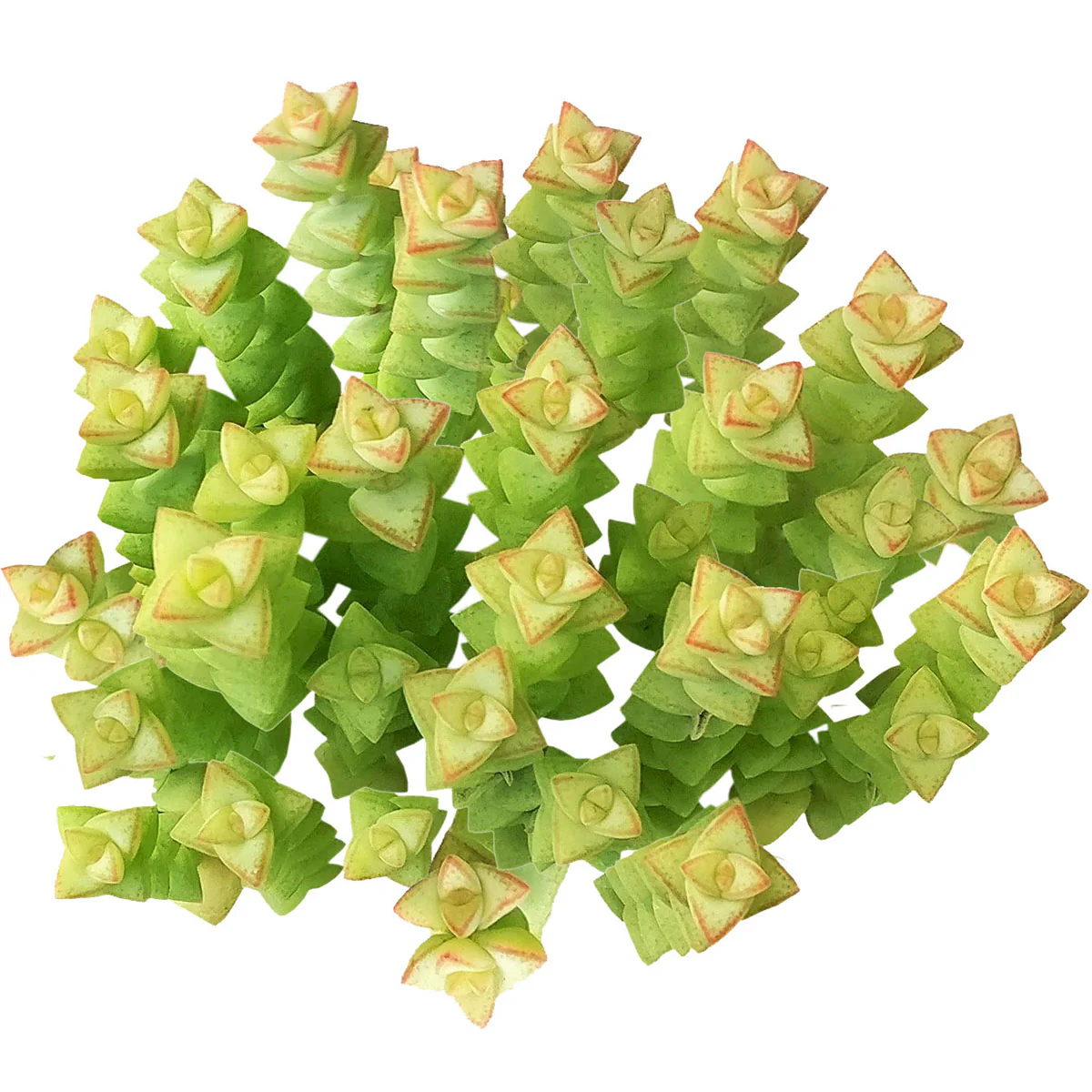
 Coral Cactus earns its name from the wavy, fan-shaped crest that ripples along the top of the graft, mimicking the look of brain coral or a mermaid tail. The crested portion displays striking blue-grey and green tones with a ruffled, almost alien texture, while the sturdy upright rootstock anchors the whole structure with a clean, sculptural silhouette. No two Coral Cactus plants are identical, which makes each one genuinely unique.
 Coral Cactus rarely flowers indoors, and when it does the blooms are tiny and inconspicuous, so its real showstopper is the crested form itself. Worth noting is that the sap of Coral Cactus causes skin and paw irritation on contact, so always wear gloves when handling and wash hands thoroughly afterward. This is a plant that rewards careful, attentive ownership.
 Coral Cactus is a standout choice for shelves, desks, and sunny windowsills where its sculptural shape can be appreciated up close. Because it is sensitive to being moved, find a bright spot it loves and let it settle. It thrives on benign neglect, survives a 10-day trip without a sitter, and can spend summer outdoors in a sheltered spot as long as it is protected from rain. Collectors prize Coral Cactus precisely because it is rare, visually dramatic, and surprisingly beginner-friendly.
-
 Coral Cactus thrives in bright indirect light and scorches easily in direct south-facing windows.
 Water Coral Cactus every 2-3 weeks in summer and once a month in winter, letting soil dry fully between waterings.
 Coral Cactus needs a fast-draining cactus and succulent mix amended with extra perlite to prevent root rot.
 Coral Cactus prefers temperatures between 60-95°F (15-35°C) and should never be exposed to frost or cold drafts from AC or heaters.
![]() Coral Cactus is a slow grower and benefits from a specialized low-nitrogen cactus fertilizer applied once in spring and once in early summer.
Coral Cactus is a slow grower and benefits from a specialized low-nitrogen cactus fertilizer applied once in spring and once in early summer.
 Coral Cactus is rated for USDA hardiness zones 10-11, tolerating temperatures no lower than 30-35°F (around -1 to 2°C) before suffering damage. Gardeners growing Coral Cactus outdoors year-round will find the right climate in Hawaii, southern Florida, and frost-free pockets of southern California. Warmer corners of Texas, Arizona, Louisiana, and coastal southern Georgia and South Carolina can also work with winter protection, though most growers in other states keep Coral Cactus as an indoor plant and move it outside only for the summer months.
-
Q: How often should I water Coral Cactus?
A: Water Coral Cactus every 2-3 weeks in the growing season and cut back to once a month in winter. Always let the soil dry out completely before watering again.
Q: Is Coral Cactus safe for pets?
A: Coral Cactus should be kept well out of reach of cats and dogs, as cats and dogs shouldn't be left to nibble or eat the plant. The sap also causes skin and paw irritation, so keep it on a high shelf where pets and small children cannot access it.
Q: How much light does Coral Cactus need?
A: Coral Cactus does best in bright indirect light and can even grow under strong office LEDs. Avoid placing it directly in a south-facing window, as the crested portion scorches easily.
Q: How fast does Coral Cactus grow?
A: Coral Cactus is a slow grower, typically adding just a little width to the crest each year. Its unhurried pace is part of what makes it such a long-lived, low-maintenance cactus for indoor spaces.
Q: Can I move my Coral Cactus outside for summer?
A: Yes, Coral Cactus can move outside once temperatures are reliably warm, but choose a sheltered spot with bright indirect light and always protect it from rain. Be aware that Coral Cactus is sensitive to being moved, so expect a brief adjustment period.
Q: Why is Coral Cactus considered rare?
A: Coral Cactus is rare because each plant is hand-grafted individually, and the crested form is a natural mutation that must be reproduced through skilled grafting rather than simple propagation. That uniqueness and the care required to produce each one is exactly why Coral Cactus is so prized by collectors.


Product Information
Product Information
Shipping & Returns
Shipping & Returns
Description
- Description
- Coral Cactus Care Guide
- FAQ/Common Issues
-
![]() Coral Cactus is a rare grafted succulent created by grafting a crested Euphorbia lactea onto an Euphorbia neriifolia rootstock, producing a one-of-a-kind sculptural plant that does not exist in the wild. The result is a living work of art that has become one of the most sought-after architectural indoor plants in the succulent world, beloved by collectors and beginners alike.
Coral Cactus is a rare grafted succulent created by grafting a crested Euphorbia lactea onto an Euphorbia neriifolia rootstock, producing a one-of-a-kind sculptural plant that does not exist in the wild. The result is a living work of art that has become one of the most sought-after architectural indoor plants in the succulent world, beloved by collectors and beginners alike.
Coral Cactus earns its name from the wavy, fan-shaped crest that ripples along the top of the graft, mimicking the look of brain coral or a mermaid tail. The crested portion displays striking blue-grey and green tones with a ruffled, almost alien texture, while the sturdy upright rootstock anchors the whole structure with a clean, sculptural silhouette. No two Coral Cactus plants are identical, which makes each one genuinely unique.
Coral Cactus rarely flowers indoors, and when it does the blooms are tiny and inconspicuous, so its real showstopper is the crested form itself. Worth noting is that the sap of Coral Cactus causes skin and paw irritation on contact, so always wear gloves when handling and wash hands thoroughly afterward. This is a plant that rewards careful, attentive ownership.
Coral Cactus is a standout choice for shelves, desks, and sunny windowsills where its sculptural shape can be appreciated up close. Because it is sensitive to being moved, find a bright spot it loves and let it settle. It thrives on benign neglect, survives a 10-day trip without a sitter, and can spend summer outdoors in a sheltered spot as long as it is protected from rain. Collectors prize Coral Cactus precisely because it is rare, visually dramatic, and surprisingly beginner-friendly.
-
Coral Cactus thrives in bright indirect light and scorches easily in direct south-facing windows.
Water Coral Cactus every 2-3 weeks in summer and once a month in winter, letting soil dry fully between waterings.
Coral Cactus needs a fast-draining cactus and succulent mix amended with extra perlite to prevent root rot.
Coral Cactus prefers temperatures between 60-95°F (15-35°C) and should never be exposed to frost or cold drafts from AC or heaters.
![]() Coral Cactus is a slow grower and benefits from a specialized low-nitrogen cactus fertilizer applied once in spring and once in early summer.
Coral Cactus is a slow grower and benefits from a specialized low-nitrogen cactus fertilizer applied once in spring and once in early summer.
Coral Cactus is rated for USDA hardiness zones 10-11, tolerating temperatures no lower than 30-35°F (around -1 to 2°C) before suffering damage. Gardeners growing Coral Cactus outdoors year-round will find the right climate in Hawaii, southern Florida, and frost-free pockets of southern California. Warmer corners of Texas, Arizona, Louisiana, and coastal southern Georgia and South Carolina can also work with winter protection, though most growers in other states keep Coral Cactus as an indoor plant and move it outside only for the summer months.
-
Q: How often should I water Coral Cactus?
A: Water Coral Cactus every 2-3 weeks in the growing season and cut back to once a month in winter. Always let the soil dry out completely before watering again.
Q: Is Coral Cactus safe for pets?
A: Coral Cactus should be kept well out of reach of cats and dogs, as cats and dogs shouldn't be left to nibble or eat the plant. The sap also causes skin and paw irritation, so keep it on a high shelf where pets and small children cannot access it.
Q: How much light does Coral Cactus need?
A: Coral Cactus does best in bright indirect light and can even grow under strong office LEDs. Avoid placing it directly in a south-facing window, as the crested portion scorches easily.
Q: How fast does Coral Cactus grow?
A: Coral Cactus is a slow grower, typically adding just a little width to the crest each year. Its unhurried pace is part of what makes it such a long-lived, low-maintenance cactus for indoor spaces.
Q: Can I move my Coral Cactus outside for summer?
A: Yes, Coral Cactus can move outside once temperatures are reliably warm, but choose a sheltered spot with bright indirect light and always protect it from rain. Be aware that Coral Cactus is sensitive to being moved, so expect a brief adjustment period.
Q: Why is Coral Cactus considered rare?
A: Coral Cactus is rare because each plant is hand-grafted individually, and the crested form is a natural mutation that must be reproduced through skilled grafting rather than simple propagation. That uniqueness and the care required to produce each one is exactly why Coral Cactus is so prized by collectors.