Echeveria Raindrops Succulent
- Description
- Echeveria Raindrops Care Guide
- FAQ/Common Issues
-
![]() The Echeveria Raindrops Succulent is a captivating member of the Echeveria genus, part of the Crassulaceae family, and native to the semi-arid highlands of Mexico. Like most echeverias, it evolved in rocky, well-draining terrain with bright light and distinct dry seasons, which shapes every aspect of its care today. This rare succulent has earned a loyal following among collectors who love unique succulents for sale that are as easy to grow as they are stunning to look at.
The Echeveria Raindrops Succulent is a captivating member of the Echeveria genus, part of the Crassulaceae family, and native to the semi-arid highlands of Mexico. Like most echeverias, it evolved in rocky, well-draining terrain with bright light and distinct dry seasons, which shapes every aspect of its care today. This rare succulent has earned a loyal following among collectors who love unique succulents for sale that are as easy to grow as they are stunning to look at.
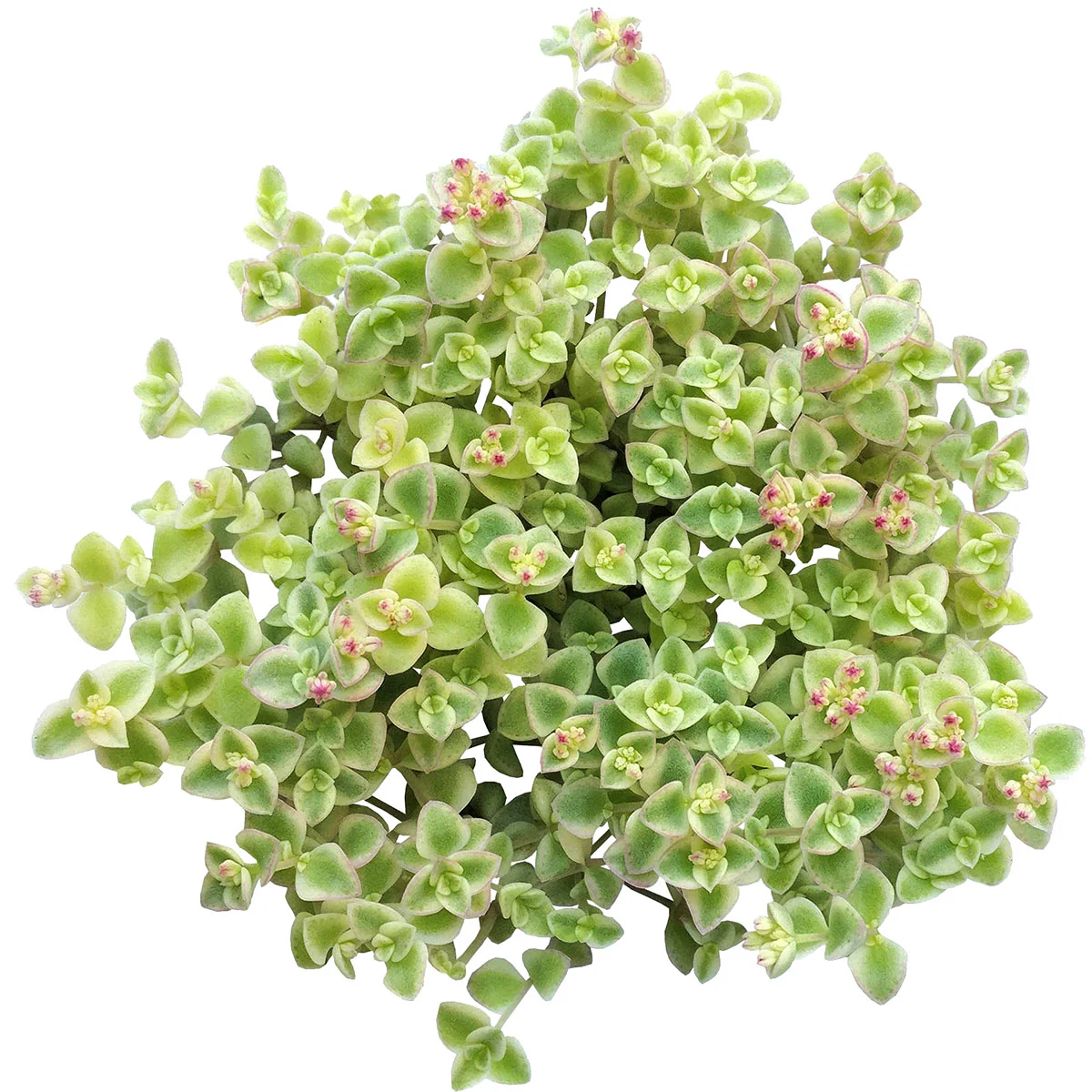
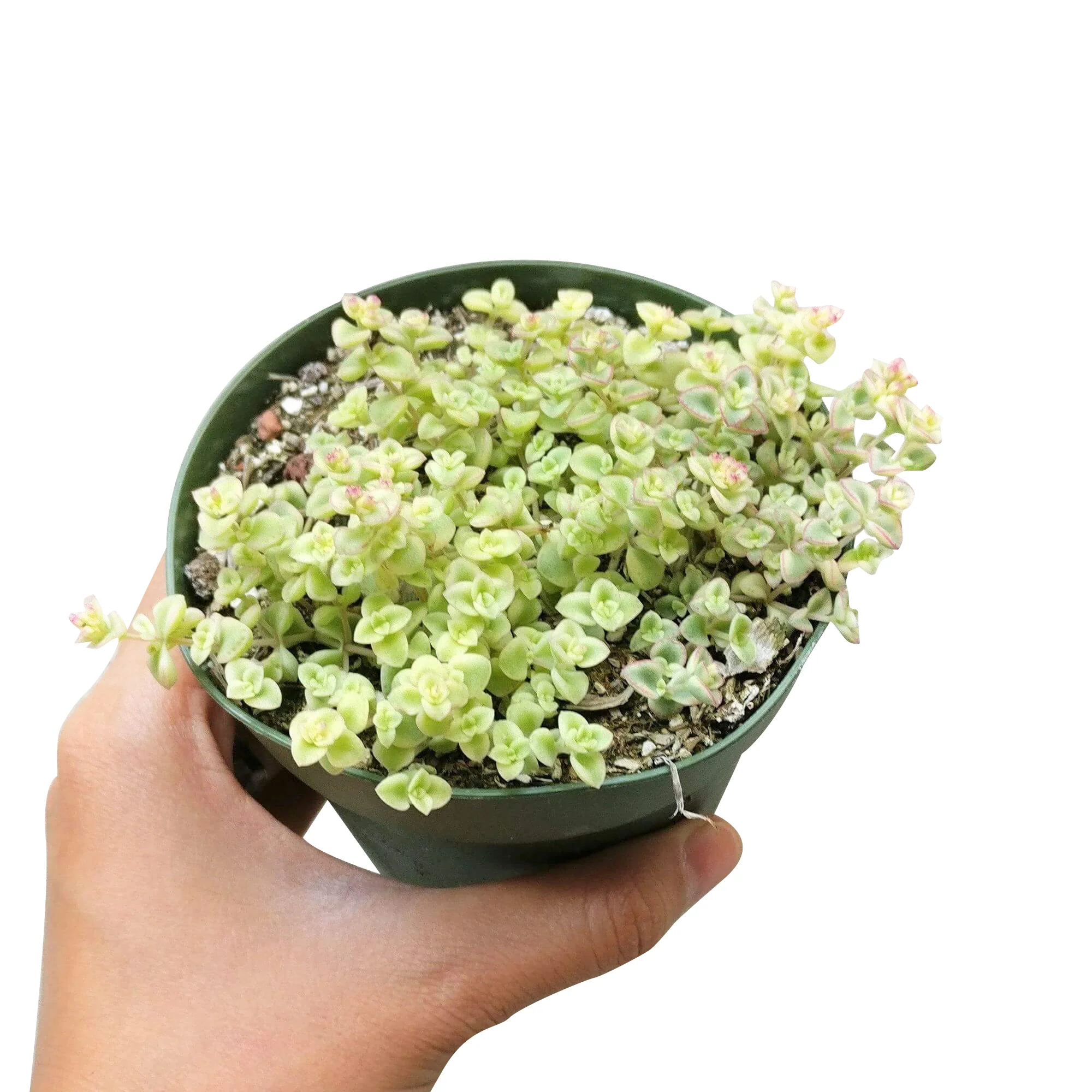
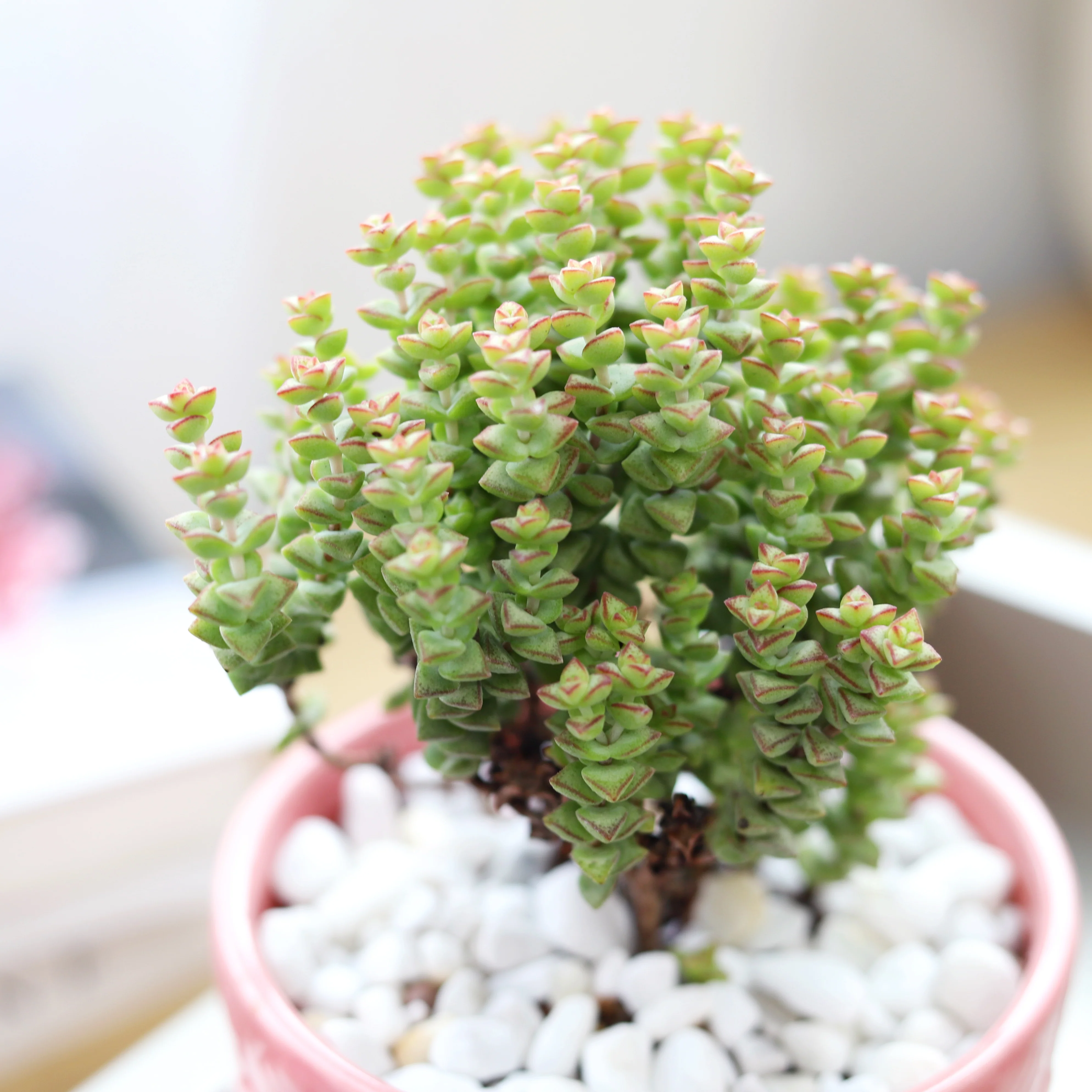
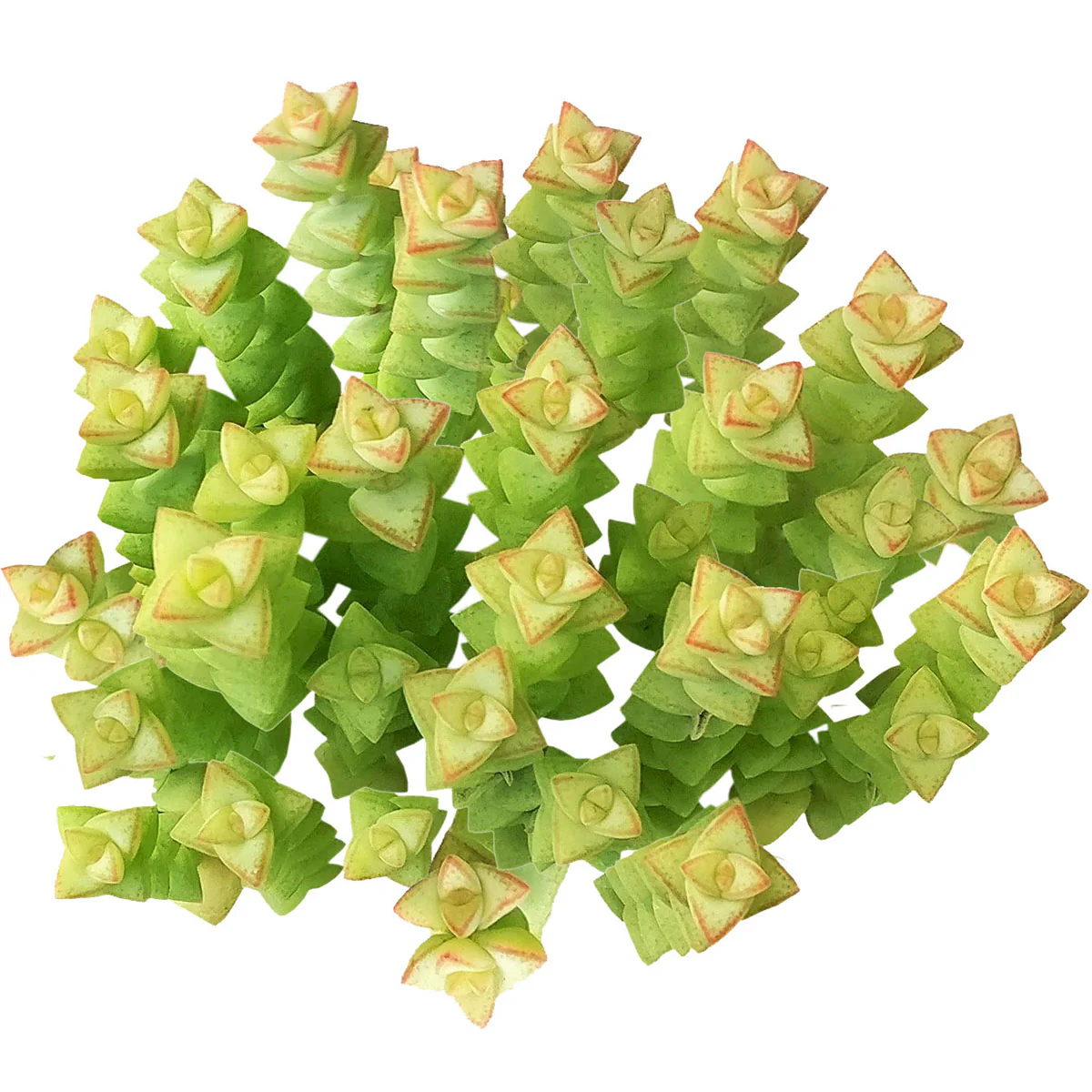
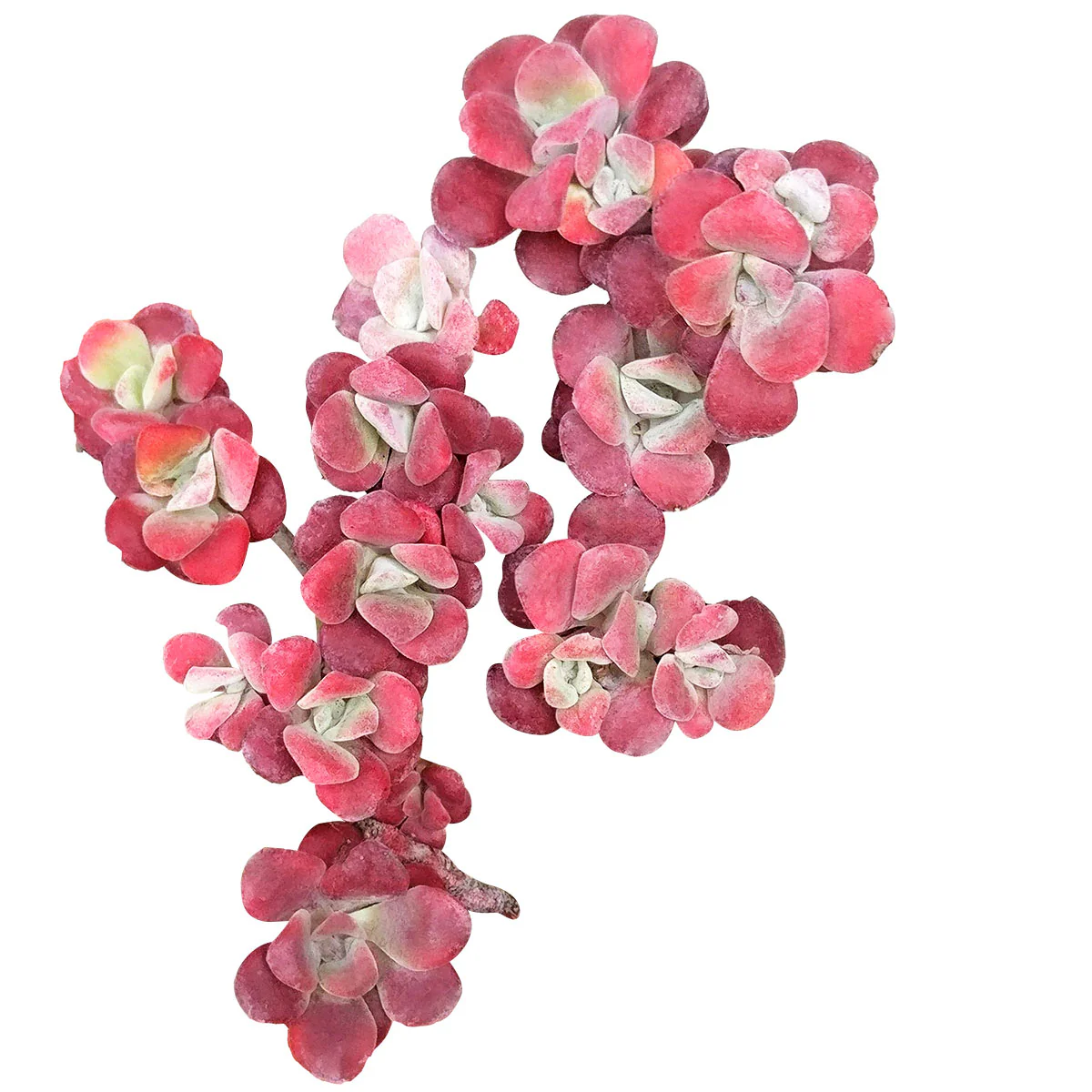
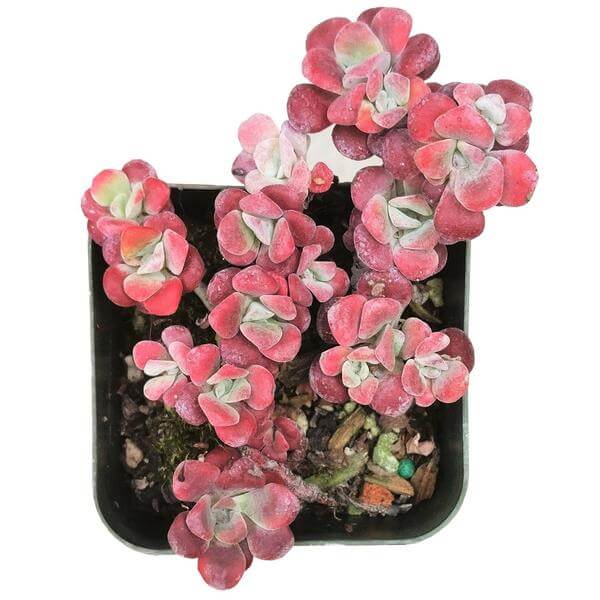
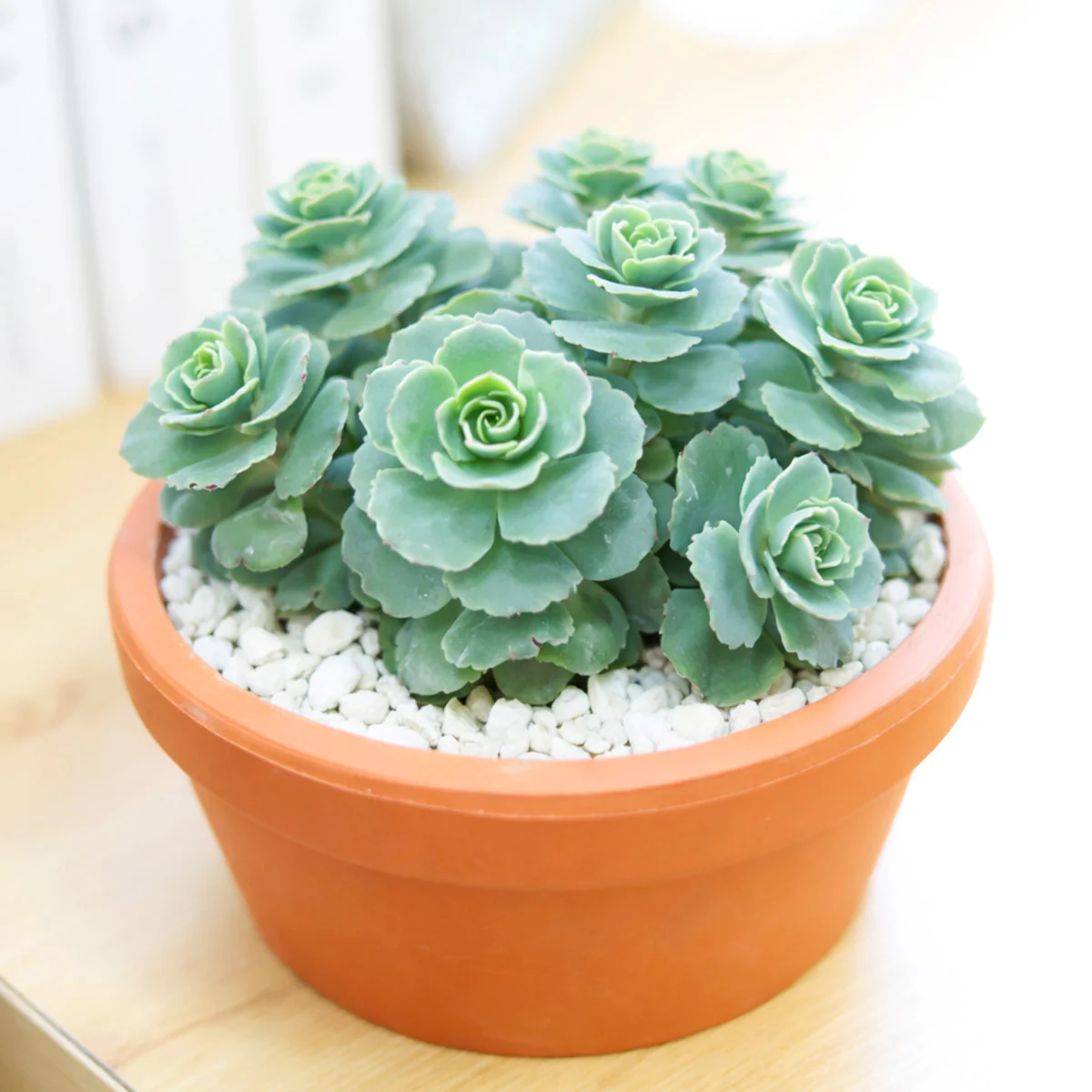
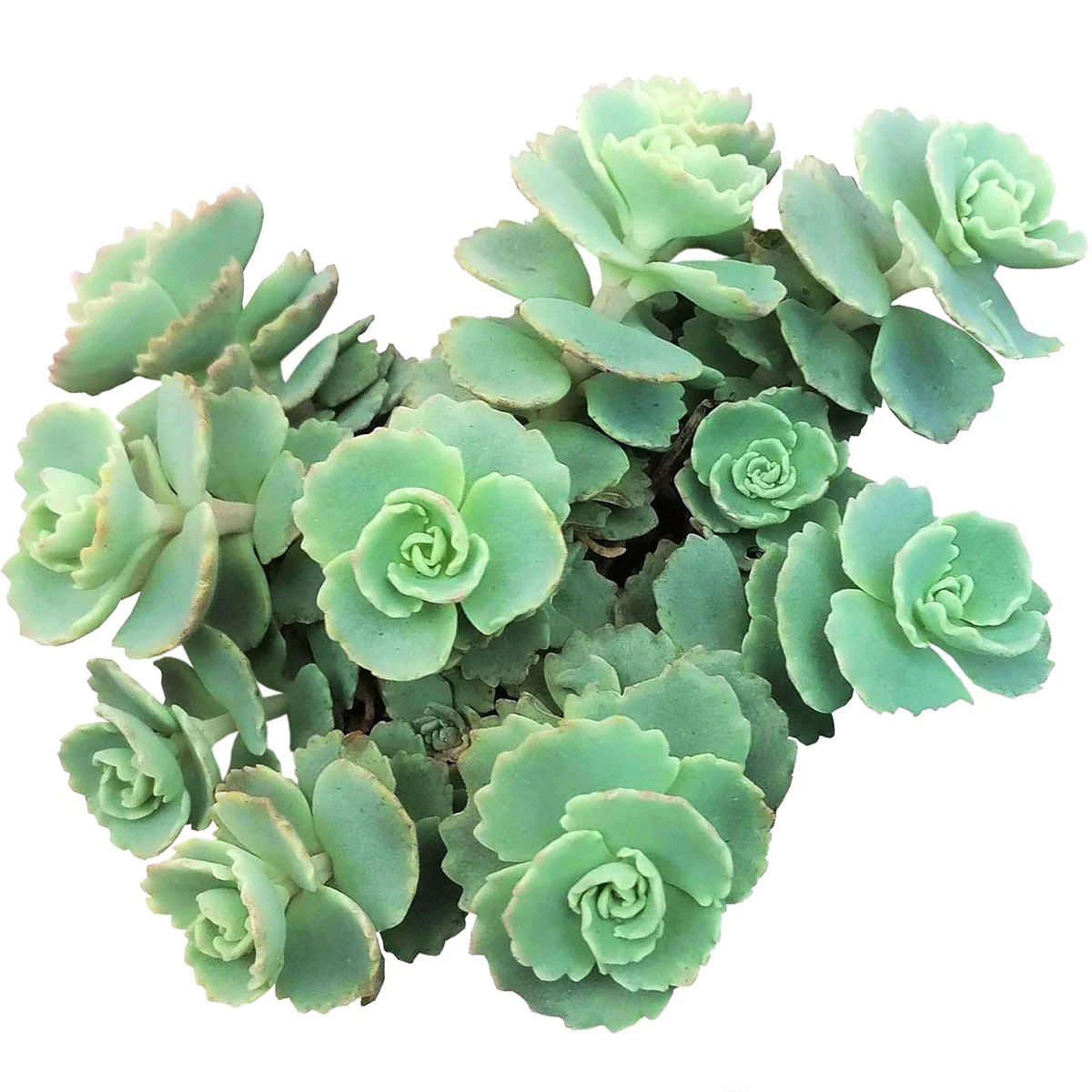
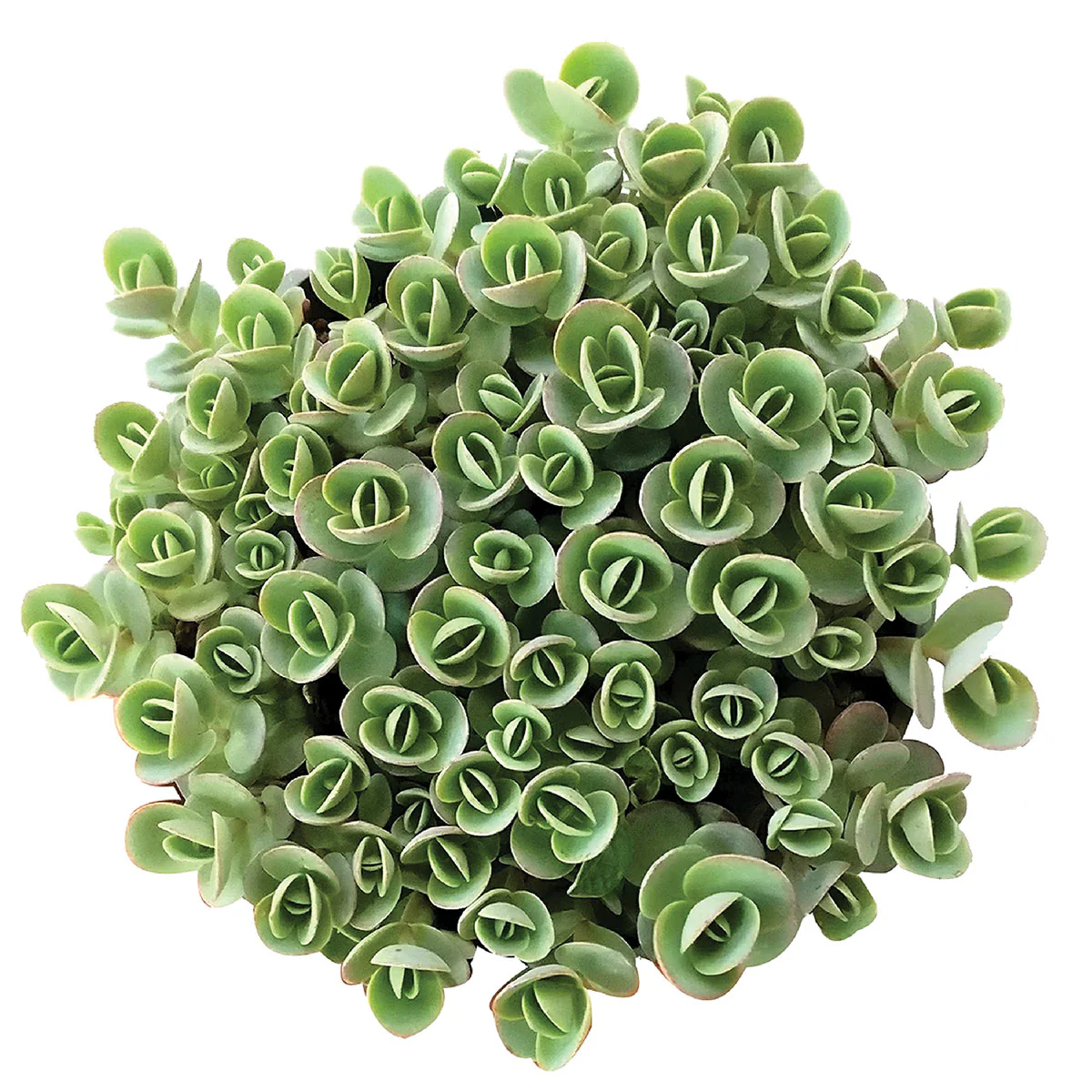
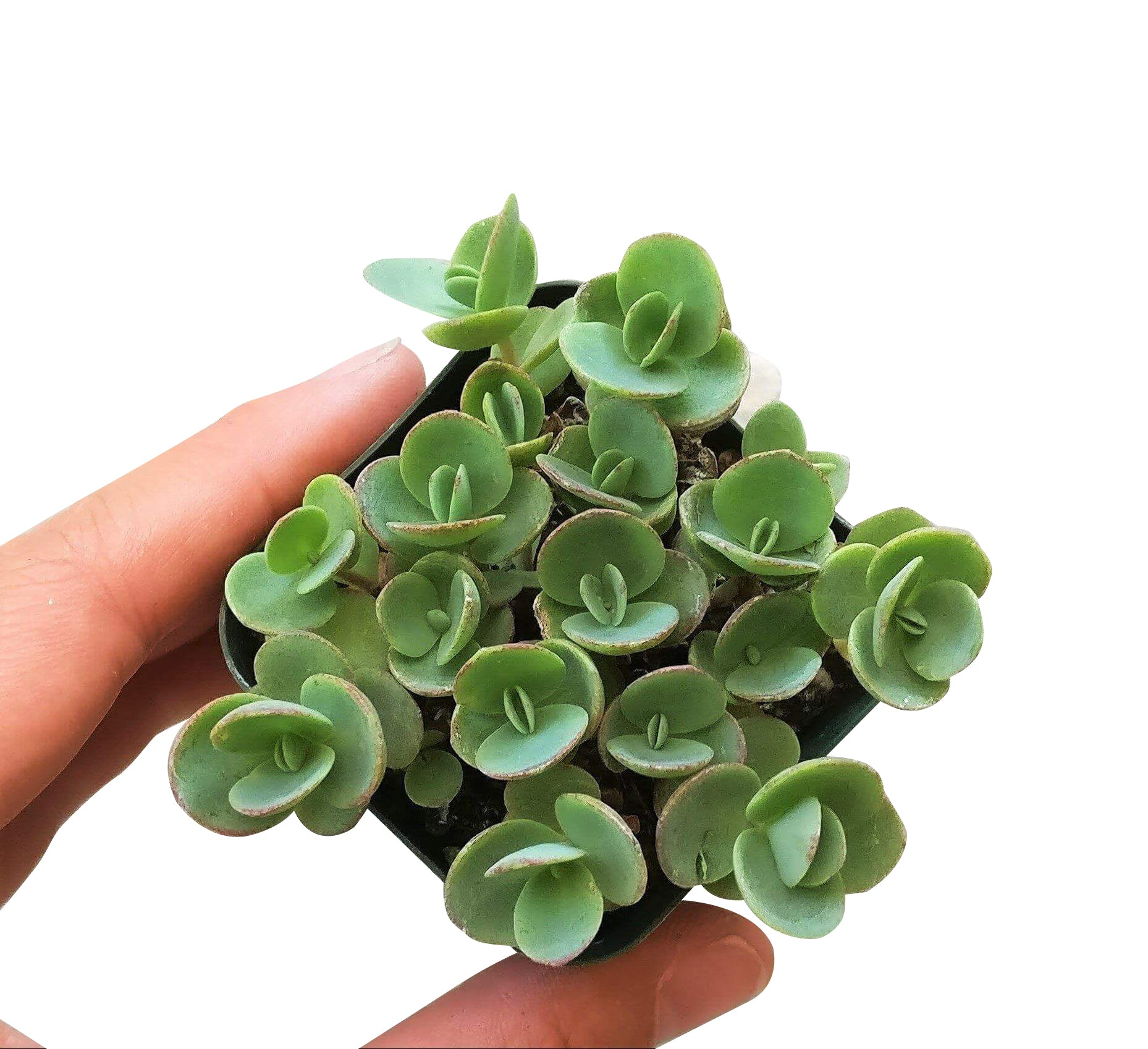
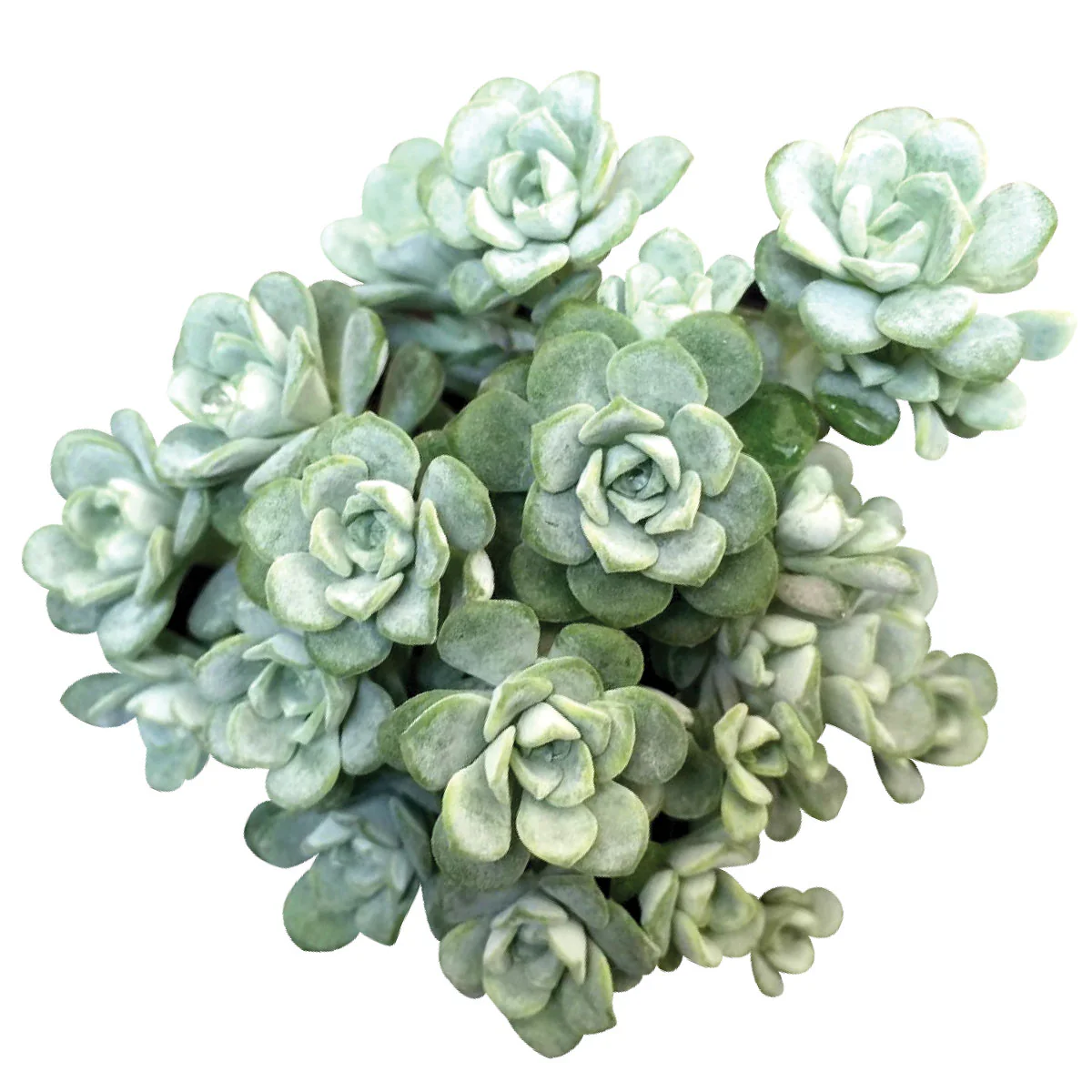
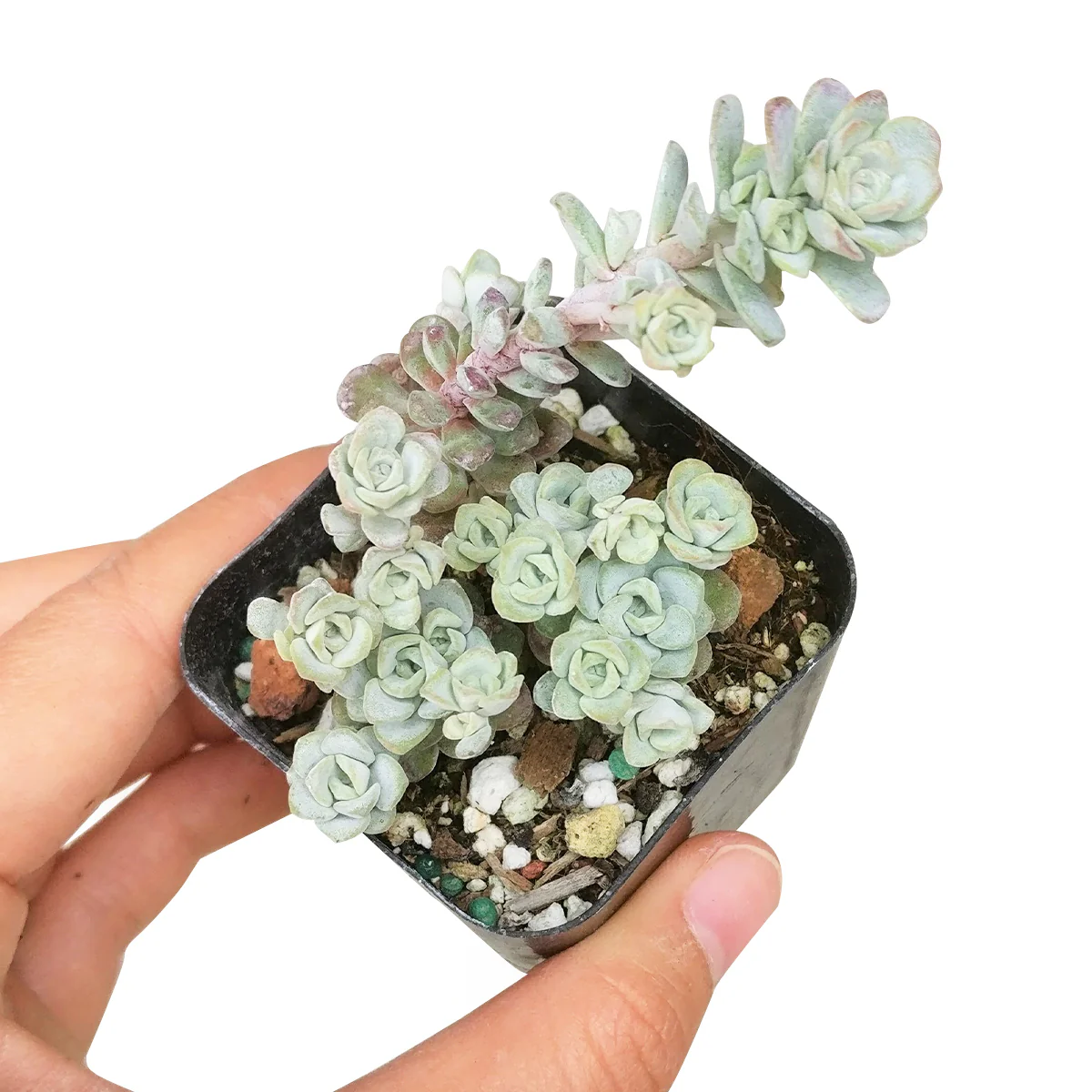
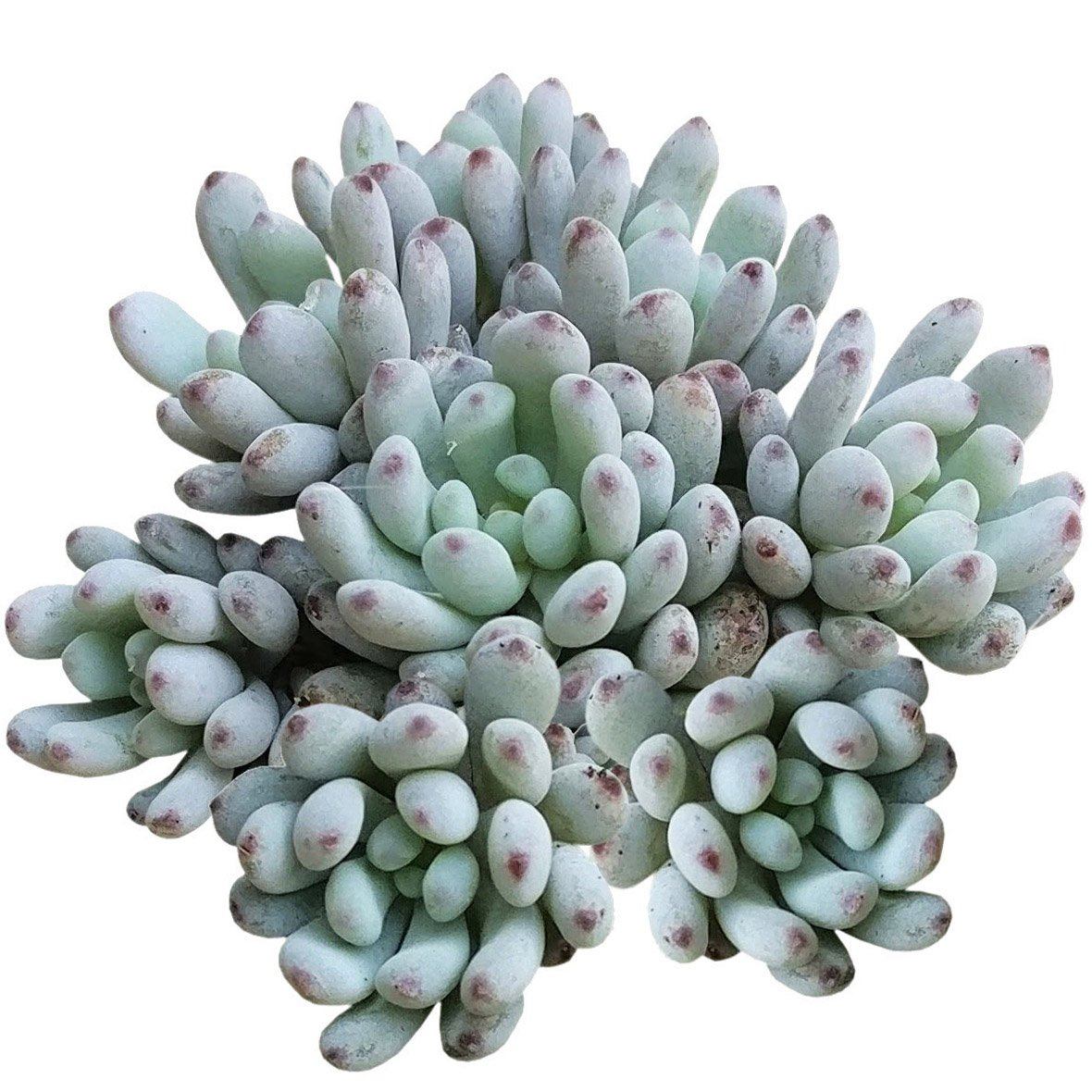
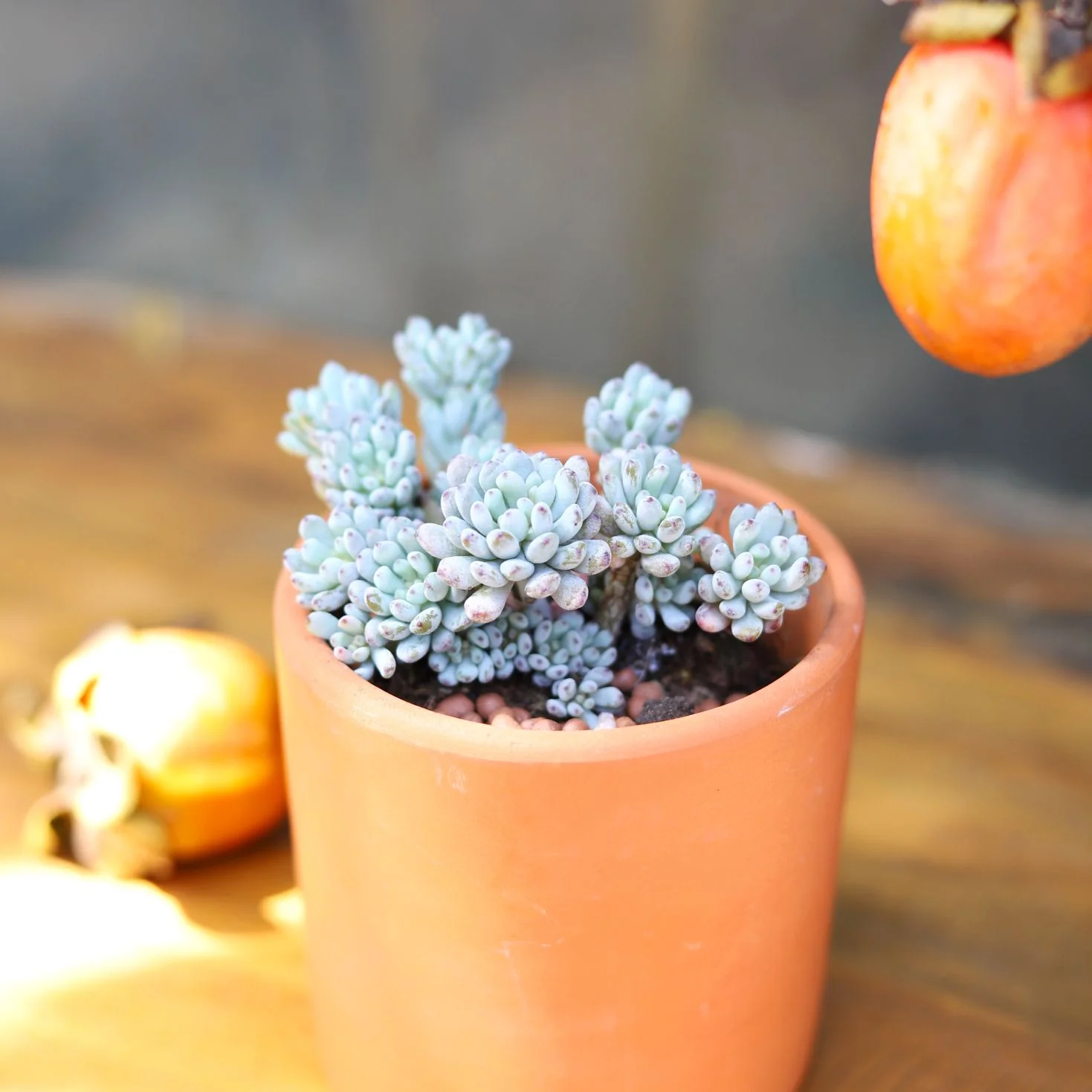
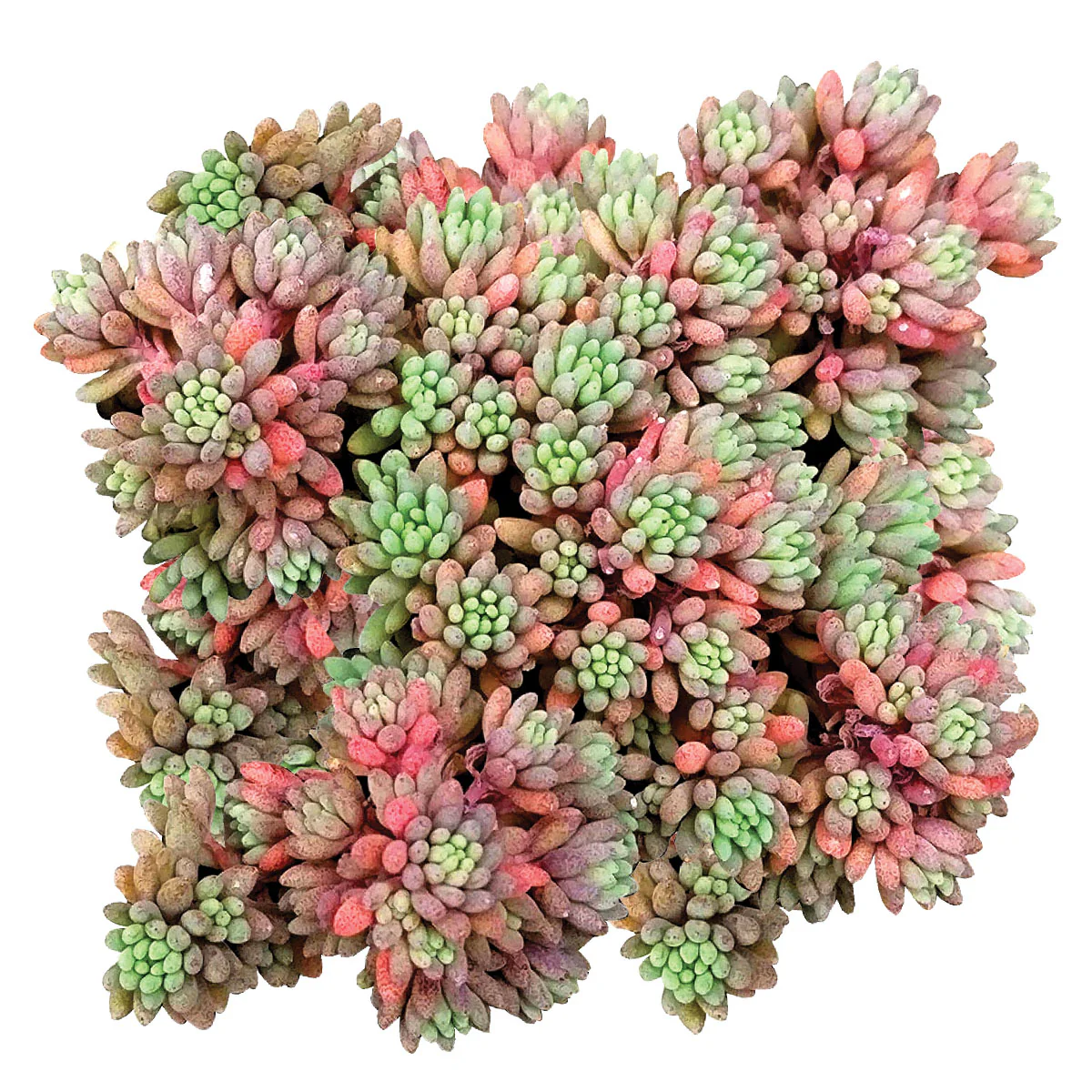
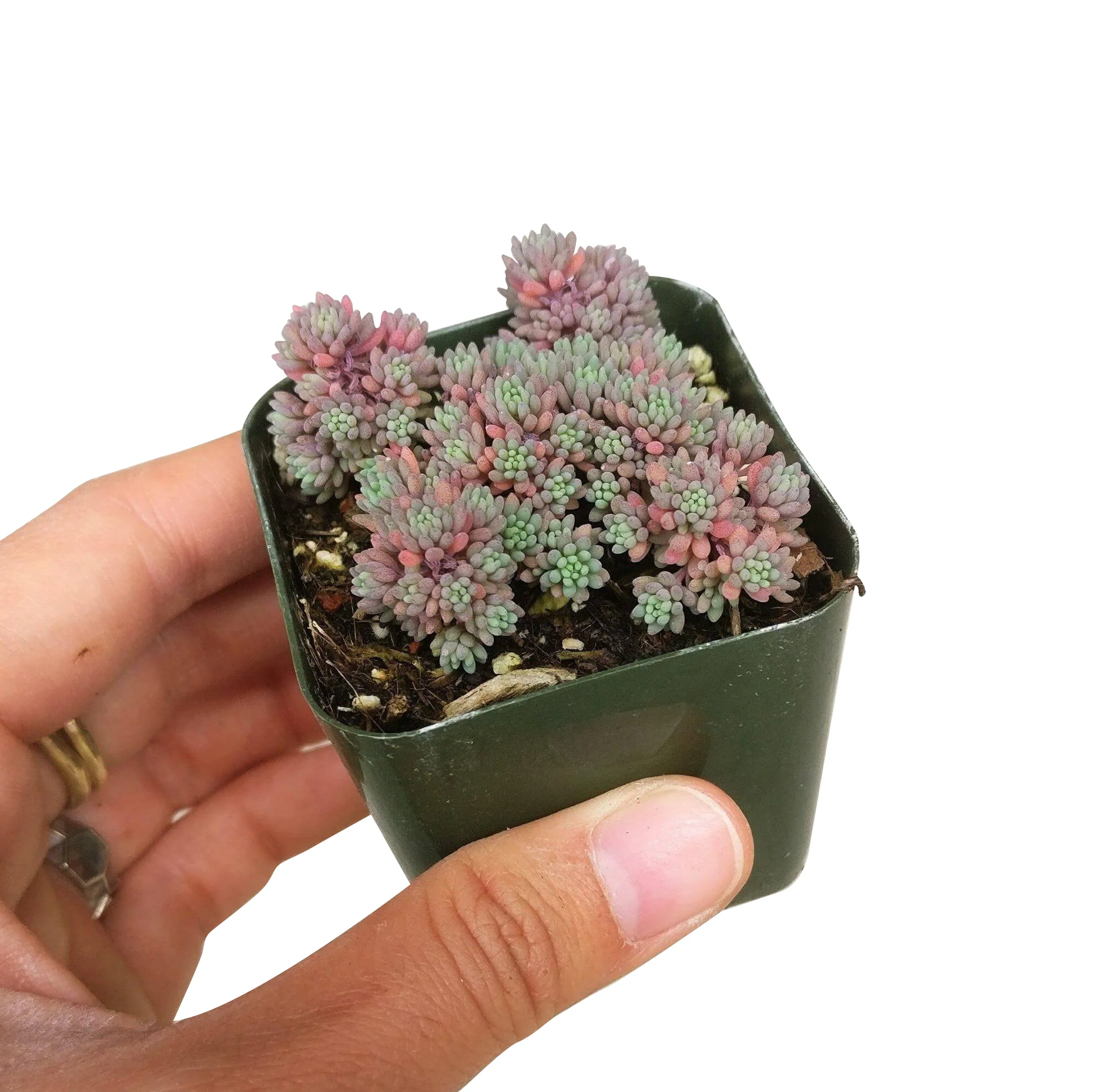
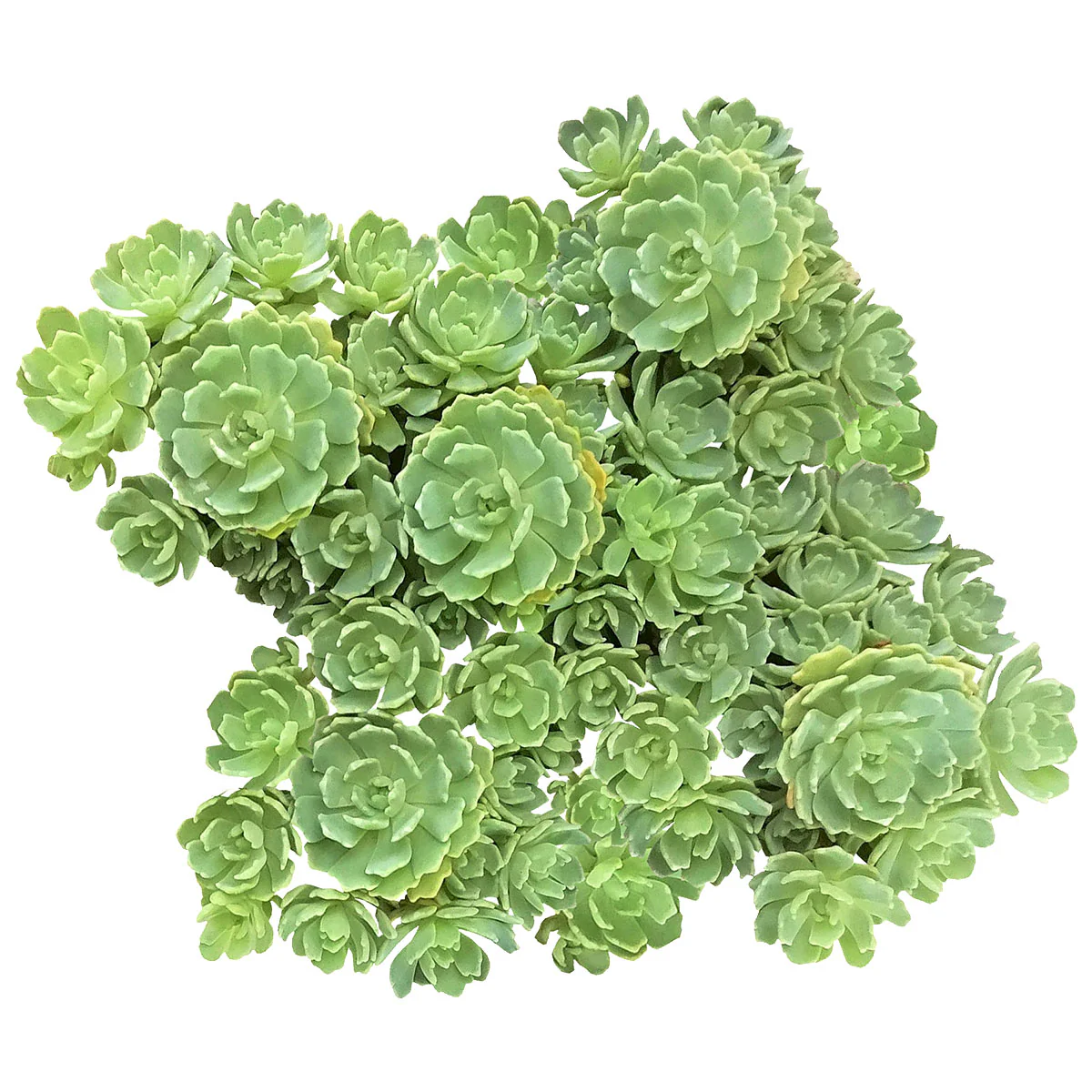
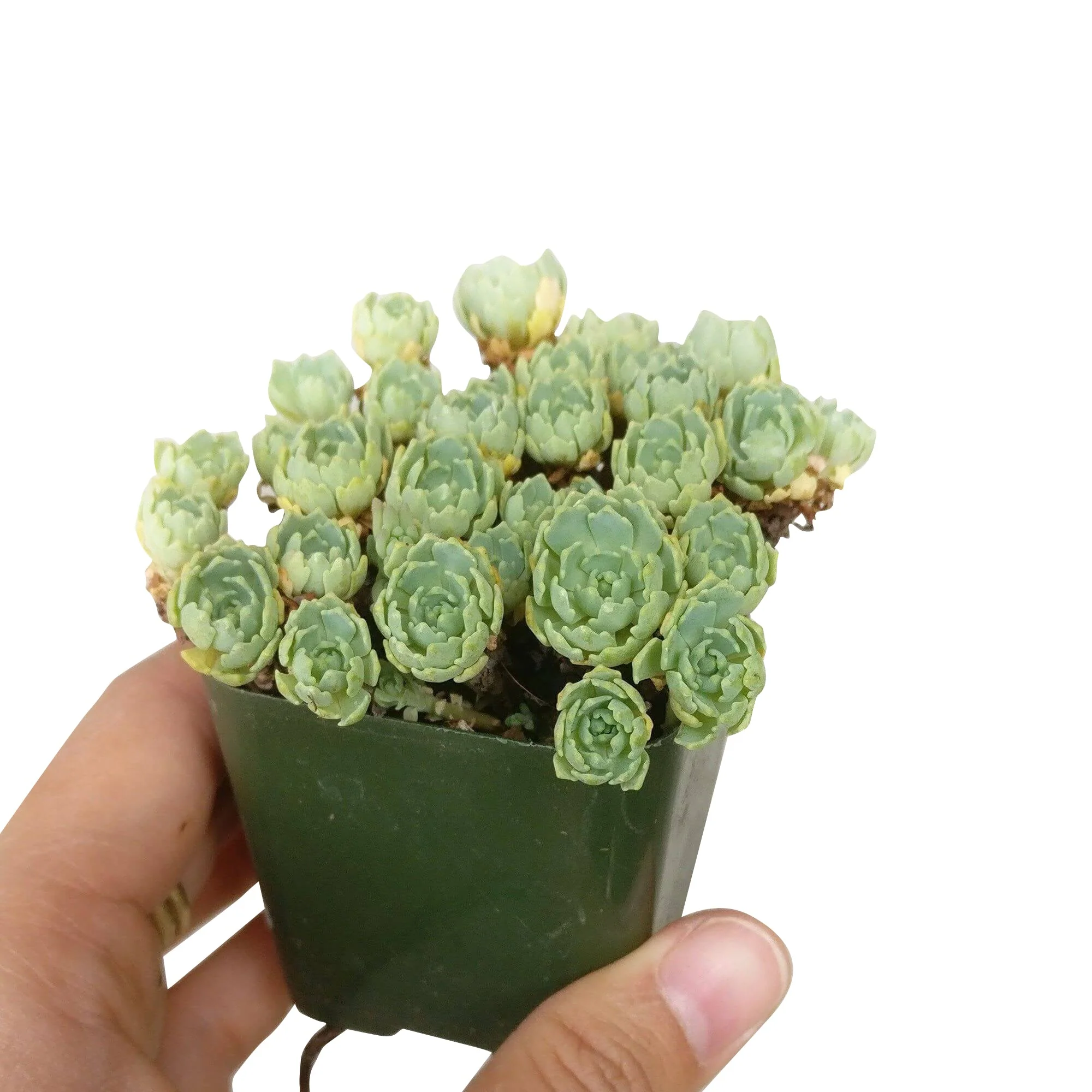
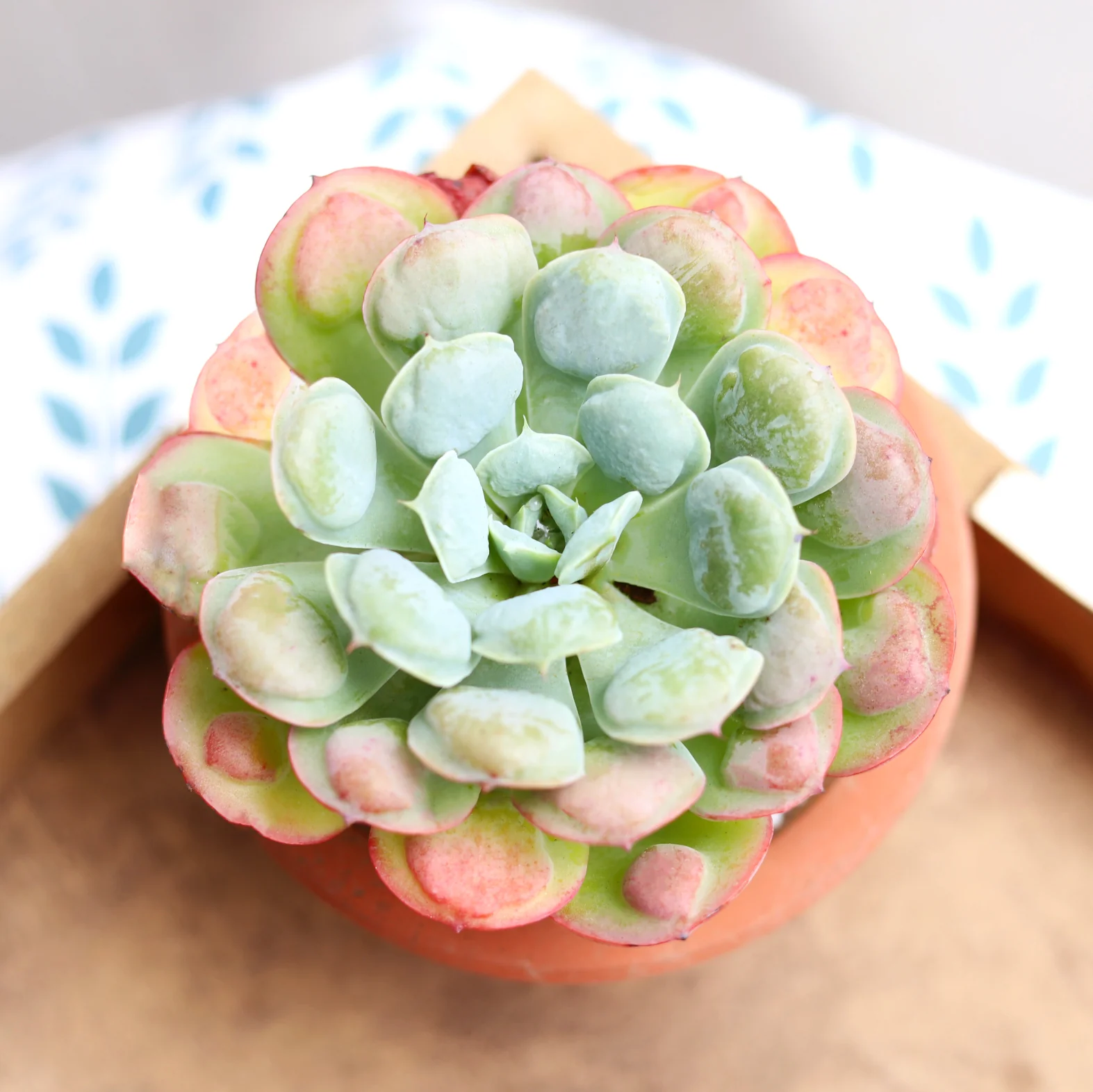
 What makes the Echeveria Raindrops Succulent instantly recognizable is the signature raised bump, or caruncle, that forms on the upper surface of each thick, spoon-shaped leaf, resembling a raindrop frozen mid-fall. The rosette grows in a tidy upright style, with powdery blue-green leaves edged in soft red or pink, especially when given bright indirect light or a little temperature stress. The color contrast between the blue foliage and red leaf tips makes this one of the most visually striking rare succulents you can add to any collection.
 When nighttime temperatures drop, the Echeveria Raindrops Succulent is triggered to push up tall, arching bloom stalks adorned with small, bell-shaped flowers in warm coral or orange tones, typically in late winter to spring. These blooms are a delightful bonus for patient growers who give their plant a seasonal night temperature drop, rewarding careful care with a vivid floral display. The Echeveria Raindrops Succulent also does something most people don't expect: it releases oxygen at night, making it a genuinely refreshing addition to a bedroom windowsill.
 The Echeveria Raindrops Succulent thrives in temps between 60 and 80°F and can move outside for summer or stay outdoors through autumn in mild climates, as long as you cover it from rain to protect its leaves and roots from rot. It is sensitive to being moved frequently and dislikes the direct blast of AC or heater vents, so find it a happy spot and let it settle in. Rotate it occasionally for even, symmetrical growth, and if you need to leave for a trip, rest easy: the Echeveria Raindrops Succulent survives comfortably for up to 10 days without watering. This plant is pet friendly, making it a worry-free choice for households with curious cats or dogs.
-
 Echeveria Raindrops Succulent thrives in bright indirect light and tolerates some partial direct sun, though it scorches in harsh south-facing windows.
 Water your Echeveria Raindrops Succulent every 10 to 14 days using the soak-and-dry method, allowing soil to fully dry between waterings.
 Echeveria Raindrops Succulent does best in well-draining succulent soil mixed with perlite or coarse sand to prevent root rot.
 Echeveria Raindrops Succulent prefers temps of 60 to 80°F (15 to 27°C) and should be protected from frost below 25°F (-4°C).
![]() Echeveria Raindrops Succulent grows at a slow to moderate pace and benefits from a light balanced fertilizer once in spring and once in summer.
Echeveria Raindrops Succulent grows at a slow to moderate pace and benefits from a light balanced fertilizer once in spring and once in summer.
 Echeveria Raindrops Succulent is hardy in USDA Zones 9 through 11, tolerating brief dips to around 25°F (-4°C) but needing frost protection below that. Growers in California, Texas, Arizona, Florida, Hawaii, Nevada, Louisiana, Georgia, South Carolina, Alabama, Mississippi, and coastal Oregon fall within these zones and can enjoy Echeveria Raindrops Succulent outdoors year-round with proper care. Gardeners in Zone 9 pockets of New Mexico, Arkansas, and the Pacific Northwest can also grow it outside seasonally, bringing it indoors before hard freezes arrive.
-
Q: How often should I water the Echeveria Raindrops Succulent?
A: Water your Echeveria Raindrops Succulent every 10 to 14 days using the soak-and-dry method, and let the soil dry completely before watering again. The plant will show you when it's thirsty by slightly softening or wilting its leaves.
Q: Is the Echeveria Raindrops Succulent safe for pets?
A: Yes, this plant is pet friendly, making it a great choice for homes with cats or dogs. You can display your Echeveria Raindrops Succulent anywhere without worrying about your furry companions.
Q: What light does the Echeveria Raindrops Succulent need indoors?
A: The Echeveria Raindrops Succulent does best in bright indirect light, such as near an east or west-facing window. Avoid harsh direct south window sun, which can scorch the leaves and fade the beautiful blue-green coloring.
Q: Is the Echeveria Raindrops Succulent rare?
A: Yes, the Echeveria Raindrops Succulent is considered a rare and highly sought-after collector's plant thanks to its distinctive raindrop caruncles and striking leaf coloration. It stands out among unique succulents for sale and is a conversation piece in any collection.
Q: Can I grow the Echeveria Raindrops Succulent outside?
A: The Echeveria Raindrops Succulent can move outdoors for summer and stay outside through autumn in mild climates within USDA Zones 9 to 11. Always cover it from rain and bring it in before temperatures drop below 25°F (-4°C).
Q: How do I propagate the Echeveria Raindrops Succulent?
A: The Echeveria Raindrops Succulent can be propagated from leaf cuttings or offsets that occasionally form at the base of a mature rosette. Allow cuttings to callous for a day or two before placing them on well-draining succulent soil, and roots should develop within a few weeks.


Original: $8.00
-70%$8.00
$2.40Product Information
Product Information
Shipping & Returns
Shipping & Returns
Description
- Description
- Echeveria Raindrops Care Guide
- FAQ/Common Issues
-
![]() The Echeveria Raindrops Succulent is a captivating member of the Echeveria genus, part of the Crassulaceae family, and native to the semi-arid highlands of Mexico. Like most echeverias, it evolved in rocky, well-draining terrain with bright light and distinct dry seasons, which shapes every aspect of its care today. This rare succulent has earned a loyal following among collectors who love unique succulents for sale that are as easy to grow as they are stunning to look at.
The Echeveria Raindrops Succulent is a captivating member of the Echeveria genus, part of the Crassulaceae family, and native to the semi-arid highlands of Mexico. Like most echeverias, it evolved in rocky, well-draining terrain with bright light and distinct dry seasons, which shapes every aspect of its care today. This rare succulent has earned a loyal following among collectors who love unique succulents for sale that are as easy to grow as they are stunning to look at.
What makes the Echeveria Raindrops Succulent instantly recognizable is the signature raised bump, or caruncle, that forms on the upper surface of each thick, spoon-shaped leaf, resembling a raindrop frozen mid-fall. The rosette grows in a tidy upright style, with powdery blue-green leaves edged in soft red or pink, especially when given bright indirect light or a little temperature stress. The color contrast between the blue foliage and red leaf tips makes this one of the most visually striking rare succulents you can add to any collection.
When nighttime temperatures drop, the Echeveria Raindrops Succulent is triggered to push up tall, arching bloom stalks adorned with small, bell-shaped flowers in warm coral or orange tones, typically in late winter to spring. These blooms are a delightful bonus for patient growers who give their plant a seasonal night temperature drop, rewarding careful care with a vivid floral display. The Echeveria Raindrops Succulent also does something most people don't expect: it releases oxygen at night, making it a genuinely refreshing addition to a bedroom windowsill.
The Echeveria Raindrops Succulent thrives in temps between 60 and 80°F and can move outside for summer or stay outdoors through autumn in mild climates, as long as you cover it from rain to protect its leaves and roots from rot. It is sensitive to being moved frequently and dislikes the direct blast of AC or heater vents, so find it a happy spot and let it settle in. Rotate it occasionally for even, symmetrical growth, and if you need to leave for a trip, rest easy: the Echeveria Raindrops Succulent survives comfortably for up to 10 days without watering. This plant is pet friendly, making it a worry-free choice for households with curious cats or dogs.
-
Echeveria Raindrops Succulent thrives in bright indirect light and tolerates some partial direct sun, though it scorches in harsh south-facing windows.
Water your Echeveria Raindrops Succulent every 10 to 14 days using the soak-and-dry method, allowing soil to fully dry between waterings.
Echeveria Raindrops Succulent does best in well-draining succulent soil mixed with perlite or coarse sand to prevent root rot.
Echeveria Raindrops Succulent prefers temps of 60 to 80°F (15 to 27°C) and should be protected from frost below 25°F (-4°C).
![]() Echeveria Raindrops Succulent grows at a slow to moderate pace and benefits from a light balanced fertilizer once in spring and once in summer.
Echeveria Raindrops Succulent grows at a slow to moderate pace and benefits from a light balanced fertilizer once in spring and once in summer.
Echeveria Raindrops Succulent is hardy in USDA Zones 9 through 11, tolerating brief dips to around 25°F (-4°C) but needing frost protection below that. Growers in California, Texas, Arizona, Florida, Hawaii, Nevada, Louisiana, Georgia, South Carolina, Alabama, Mississippi, and coastal Oregon fall within these zones and can enjoy Echeveria Raindrops Succulent outdoors year-round with proper care. Gardeners in Zone 9 pockets of New Mexico, Arkansas, and the Pacific Northwest can also grow it outside seasonally, bringing it indoors before hard freezes arrive.
-
Q: How often should I water the Echeveria Raindrops Succulent?
A: Water your Echeveria Raindrops Succulent every 10 to 14 days using the soak-and-dry method, and let the soil dry completely before watering again. The plant will show you when it's thirsty by slightly softening or wilting its leaves.
Q: Is the Echeveria Raindrops Succulent safe for pets?
A: Yes, this plant is pet friendly, making it a great choice for homes with cats or dogs. You can display your Echeveria Raindrops Succulent anywhere without worrying about your furry companions.
Q: What light does the Echeveria Raindrops Succulent need indoors?
A: The Echeveria Raindrops Succulent does best in bright indirect light, such as near an east or west-facing window. Avoid harsh direct south window sun, which can scorch the leaves and fade the beautiful blue-green coloring.
Q: Is the Echeveria Raindrops Succulent rare?
A: Yes, the Echeveria Raindrops Succulent is considered a rare and highly sought-after collector's plant thanks to its distinctive raindrop caruncles and striking leaf coloration. It stands out among unique succulents for sale and is a conversation piece in any collection.
Q: Can I grow the Echeveria Raindrops Succulent outside?
A: The Echeveria Raindrops Succulent can move outdoors for summer and stay outside through autumn in mild climates within USDA Zones 9 to 11. Always cover it from rain and bring it in before temperatures drop below 25°F (-4°C).
Q: How do I propagate the Echeveria Raindrops Succulent?
A: The Echeveria Raindrops Succulent can be propagated from leaf cuttings or offsets that occasionally form at the base of a mature rosette. Allow cuttings to callous for a day or two before placing them on well-draining succulent soil, and roots should develop within a few weeks.