🚚 Free Worldwide Shipping on All Orders!Shop Now

1 / 4
Opuntia microdasys var. pallida 'Bunny Ears'
- Description
- Light/Soil/Water
- Hardiness
-
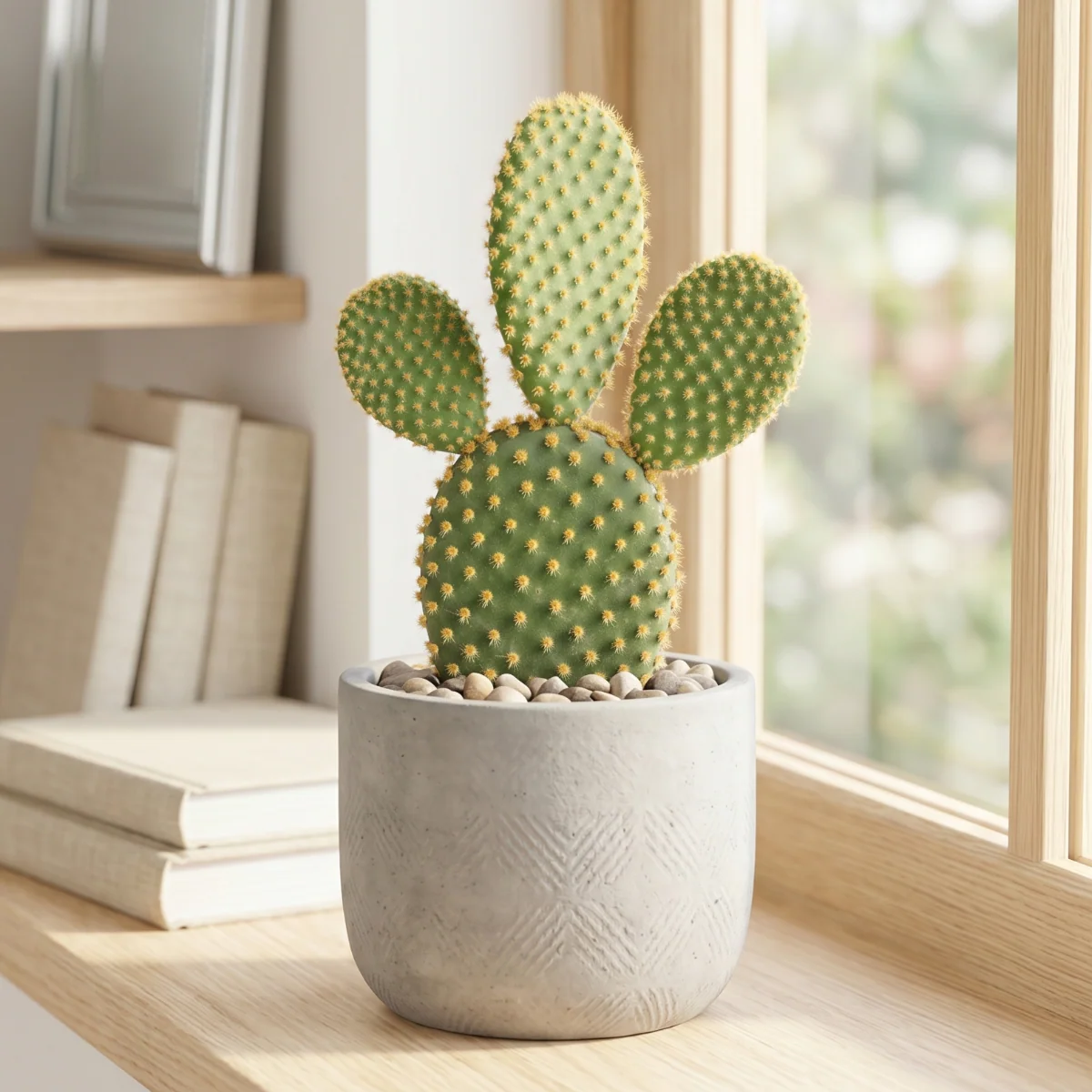
![]() Opuntia microdasys var. pallida, commonly known as the “Bunny Ears” cactus, is a charming and eye-catching addition to any cactus or succulent collection. Its flat, oval pads grow in pairs, resembling bunny ears, and gradually form a full, bush-like shape over time. The soft-looking yellow dots covering the pads are actually clusters of fine bristles called glochids, giving the plant its distinctive texture and appearance.
Opuntia microdasys var. pallida, commonly known as the “Bunny Ears” cactus, is a charming and eye-catching addition to any cactus or succulent collection. Its flat, oval pads grow in pairs, resembling bunny ears, and gradually form a full, bush-like shape over time. The soft-looking yellow dots covering the pads are actually clusters of fine bristles called glochids, giving the plant its distinctive texture and appearance.![]() In the right conditions, this cactus produces stunning, trumpet-shaped flowers in bright yellow to orange hues, blooming from the tops of the pads and adding a vibrant pop of color.
In the right conditions, this cactus produces stunning, trumpet-shaped flowers in bright yellow to orange hues, blooming from the tops of the pads and adding a vibrant pop of color. -
![]() Requires bright, direct sunlight for best growth
Requires bright, direct sunlight for best growth![]() Use well-draining cactus soil with 70–80% mineral grit (sand, pumice, or perlite)
Use well-draining cactus soil with 70–80% mineral grit (sand, pumice, or perlite)![]() Water deeply, then allow soil to dry completely before watering again
Water deeply, then allow soil to dry completely before watering again -
USDA Zone 9b – 11: around 25–30°F (-4 to -1°C)
![]()
 Opuntia microdasys var. pallida, commonly known as the “Bunny Ears” cactus, is a charming and eye-catching addition to any cactus or succulent collection. Its flat, oval pads grow in pairs, resembling bunny ears, and gradually form a full, bush-like shape over time. The soft-looking yellow dots covering the pads are actually clusters of fine bristles called glochids, giving the plant its distinctive texture and appearance.
 In the right conditions, this cactus produces stunning, trumpet-shaped flowers in bright yellow to orange hues, blooming from the tops of the pads and adding a vibrant pop of color.
 Requires bright, direct sunlight for best growth
 Use well-draining cactus soil with 70–80% mineral grit (sand, pumice, or perlite)
 Water deeply, then allow soil to dry completely before watering again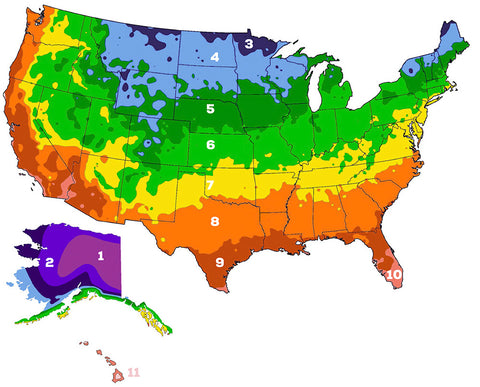
Select Size
Select Style
From $2.40
Original: $8.00
-70%Opuntia microdasys var. pallida 'Bunny Ears'—
$8.00
$2.40Product Information
Product Information
Shipping & Returns
Shipping & Returns
Description
- Description
- Light/Soil/Water
- Hardiness
-
![]() Opuntia microdasys var. pallida, commonly known as the “Bunny Ears” cactus, is a charming and eye-catching addition to any cactus or succulent collection. Its flat, oval pads grow in pairs, resembling bunny ears, and gradually form a full, bush-like shape over time. The soft-looking yellow dots covering the pads are actually clusters of fine bristles called glochids, giving the plant its distinctive texture and appearance.
Opuntia microdasys var. pallida, commonly known as the “Bunny Ears” cactus, is a charming and eye-catching addition to any cactus or succulent collection. Its flat, oval pads grow in pairs, resembling bunny ears, and gradually form a full, bush-like shape over time. The soft-looking yellow dots covering the pads are actually clusters of fine bristles called glochids, giving the plant its distinctive texture and appearance.![]() In the right conditions, this cactus produces stunning, trumpet-shaped flowers in bright yellow to orange hues, blooming from the tops of the pads and adding a vibrant pop of color.
In the right conditions, this cactus produces stunning, trumpet-shaped flowers in bright yellow to orange hues, blooming from the tops of the pads and adding a vibrant pop of color. -
![]() Requires bright, direct sunlight for best growth
Requires bright, direct sunlight for best growth![]() Use well-draining cactus soil with 70–80% mineral grit (sand, pumice, or perlite)
Use well-draining cactus soil with 70–80% mineral grit (sand, pumice, or perlite)![]() Water deeply, then allow soil to dry completely before watering again
Water deeply, then allow soil to dry completely before watering again -
USDA Zone 9b – 11: around 25–30°F (-4 to -1°C)
![]()