Adenium Socotranum Desert Rose
- Description
- Adenium Socotranum Desert Rose Care Guide
- FAQ/Common Issues
-
![]() Adenium Socotranum Desert Rose is a rare succulent native to Socotra Island, a remote archipelago off the Horn of Africa with extreme heat and seasonal drought. This remarkable drought tolerant succulent belongs to the Adenium genus within the Apocynaceae family, where it has evolved a massively swollen trunk base called a caudex to store water through the harshest dry seasons. Collectors worldwide prize it as one of the most sought-after rare desert rose specimens available, combining the sculptural drama of a bonsai succulent plant with genuine rarity.
Adenium Socotranum Desert Rose is a rare succulent native to Socotra Island, a remote archipelago off the Horn of Africa with extreme heat and seasonal drought. This remarkable drought tolerant succulent belongs to the Adenium genus within the Apocynaceae family, where it has evolved a massively swollen trunk base called a caudex to store water through the harshest dry seasons. Collectors worldwide prize it as one of the most sought-after rare desert rose specimens available, combining the sculptural drama of a bonsai succulent plant with genuine rarity.
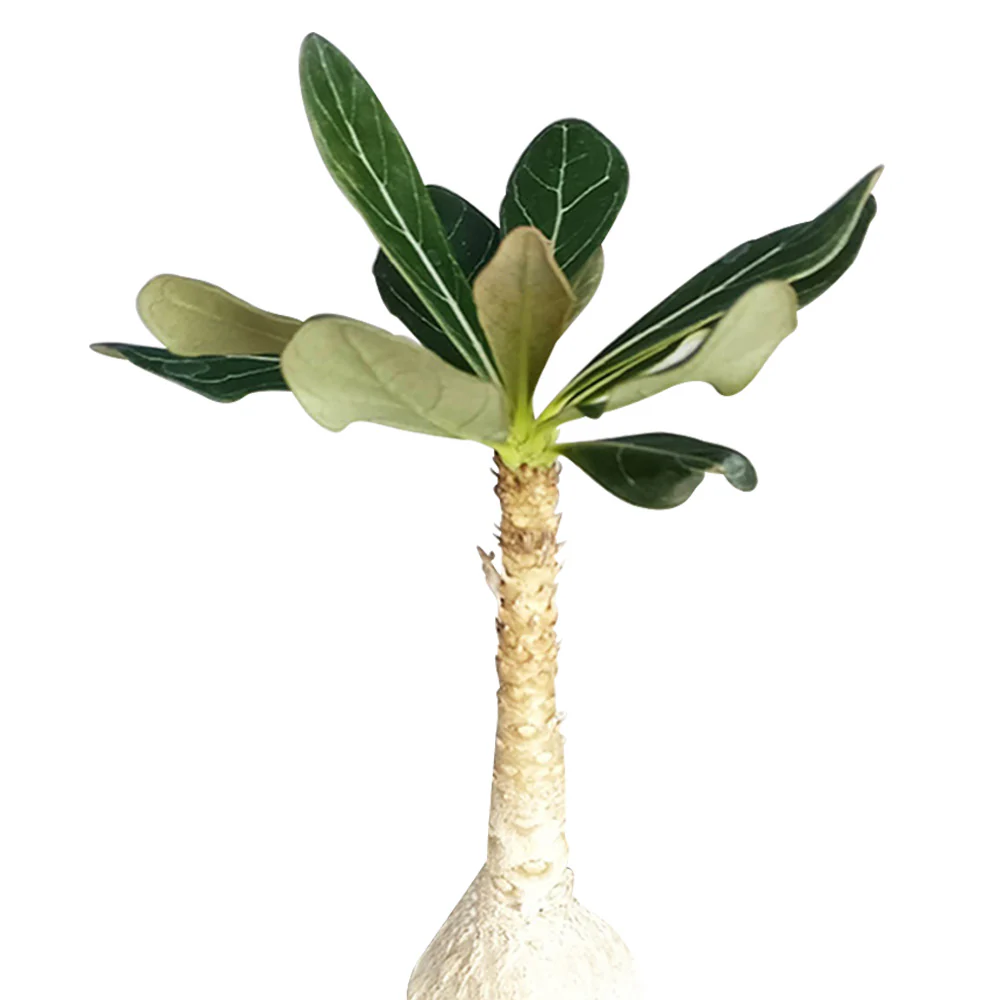
 Adenium Socotranum Desert Rose grows in a striking upright, tree-like form with a dramatically thickened, bottle-shaped caudex that can dwarf the rest of the plant over time. Leaves are glossy, leathery, and deep green, clustering near the branch tips and giving the plant a naturally manicured silhouette. That swollen base is the signature identifier of this full sun succulent, immediately setting it apart from more common Adenium species on any shelf or windowsill.
 Adenium Socotranum Desert Rose produces its blooms after a natural night temperature drop, which triggers the flowering cycle, so cooler evenings are a key part of coaxing this rare desert rose into its full display. Keeping it in direct sun through the growing season and allowing that nighttime temperature dip will reward you with the blooms this species is known for. Because this plant is sensitive to being moved, find it a stable sunny spot before the season shifts and let it settle in.
 Adenium Socotranum Desert Rose thrives outdoors in summer heat and can remain outside into autumn in mild climates, but always bring it under cover when rain moves in since excess moisture at the caudex causes rot. Its deep root system means a heavy, stable pot is essential, both for anchoring the plant and preventing tip-over as the caudex swells over the years. Cats, dogs, and small children should not be left to nibble or handle this plant, as the sap can cause skin and paw irritation, and it should be kept on a high shelf well out of reach. For collectors, this bonsai succulent plant is a genuine conversation piece and one of the rarest drought tolerant succulents available for sale today.
-
 Adenium Socotranum Desert Rose thrives in bright, direct full sun for at least six hours daily.
 Water Adenium Socotranum Desert Rose deeply every 10-14 days in summer, far less in winter dormancy.
 Adenium Socotranum Desert Rose prefers a fast-draining cactus and perlite mix to prevent root rot.
 Adenium Socotranum Desert Rose prefers 60-95°F (15-35°C) and should never experience frost or freezing temperatures.
![]() Adenium Socotranum Desert Rose is a slow to moderate grower and benefits from a balanced fertilizer during the active growing season.
Adenium Socotranum Desert Rose is a slow to moderate grower and benefits from a balanced fertilizer during the active growing season.
 Adenium Socotranum Desert Rose is best suited to USDA Hardiness Zones 10-12, where temperatures stay reliably above 30°F (-1°C) year-round. In the United States, these zones cover South Florida, Hawaii, the southernmost tip of Texas, and the warmest pockets of Southern California and coastal Southern Arizona. Gardeners in adjacent Zone 9 areas, including Central and Northern California, the Gulf Coast regions of Louisiana, Mississippi, Alabama, and Georgia, parts of South Carolina, Nevada, and the mild Oregon coast, can grow Adenium Socotranum Desert Rose outdoors in summer with winter protection indoors.
-
Q: How much light does Adenium Socotranum Desert Rose need?
A: Adenium Socotranum Desert Rose needs at least six hours of direct, full sun daily and does best in the brightest spot you can offer. Rotate the pot periodically so every side receives even light exposure.
Q: Is Adenium Socotranum Desert Rose safe around pets?
A: Cats and dogs should not be left to nibble or eat Adenium Socotranum Desert Rose, and the sap can cause skin and paw irritation on contact. Keep it on a high shelf well out of reach of pets and small children.
Q: How often should I water Adenium Socotranum Desert Rose?
A: Water Adenium Socotranum Desert Rose deeply every 10-14 days during the warm growing season, then reduce watering significantly in winter when the plant is dormant. If you notice wilting, that is a reliable sign it is ready for a drink.
Q: Can Adenium Socotranum Desert Rose survive while I travel?
A: Yes, Adenium Socotranum Desert Rose can comfortably handle a 10-day trip without watering, making it one of the more travel-friendly rare succulents for busy plant lovers. Just ensure it has a sunny spot and stable temperatures before you leave.
Q: How do I get Adenium Socotranum Desert Rose to bloom?
A: Adenium Socotranum Desert Rose needs a natural night temperature drop to trigger its bloom cycle, so cooler evenings combined with consistent direct sun are key. Avoid moving the plant once it has settled, as Adenium Socotranum Desert Rose is sensitive to location changes during this stage.
Q: What pot should I use for Adenium Socotranum Desert Rose?
A: Adenium Socotranum Desert Rose develops deep roots and a heavy caudex, so a sturdy, heavy pot with excellent drainage holes is the best choice. A weighty terra cotta or ceramic pot keeps the plant stable and prevents tipping as the base expands over time.


Original: $28.70
-70%$28.70
$8.61Product Information
Product Information
Shipping & Returns
Shipping & Returns
Description
- Description
- Adenium Socotranum Desert Rose Care Guide
- FAQ/Common Issues
-
![]() Adenium Socotranum Desert Rose is a rare succulent native to Socotra Island, a remote archipelago off the Horn of Africa with extreme heat and seasonal drought. This remarkable drought tolerant succulent belongs to the Adenium genus within the Apocynaceae family, where it has evolved a massively swollen trunk base called a caudex to store water through the harshest dry seasons. Collectors worldwide prize it as one of the most sought-after rare desert rose specimens available, combining the sculptural drama of a bonsai succulent plant with genuine rarity.
Adenium Socotranum Desert Rose is a rare succulent native to Socotra Island, a remote archipelago off the Horn of Africa with extreme heat and seasonal drought. This remarkable drought tolerant succulent belongs to the Adenium genus within the Apocynaceae family, where it has evolved a massively swollen trunk base called a caudex to store water through the harshest dry seasons. Collectors worldwide prize it as one of the most sought-after rare desert rose specimens available, combining the sculptural drama of a bonsai succulent plant with genuine rarity.
Adenium Socotranum Desert Rose grows in a striking upright, tree-like form with a dramatically thickened, bottle-shaped caudex that can dwarf the rest of the plant over time. Leaves are glossy, leathery, and deep green, clustering near the branch tips and giving the plant a naturally manicured silhouette. That swollen base is the signature identifier of this full sun succulent, immediately setting it apart from more common Adenium species on any shelf or windowsill.
Adenium Socotranum Desert Rose produces its blooms after a natural night temperature drop, which triggers the flowering cycle, so cooler evenings are a key part of coaxing this rare desert rose into its full display. Keeping it in direct sun through the growing season and allowing that nighttime temperature dip will reward you with the blooms this species is known for. Because this plant is sensitive to being moved, find it a stable sunny spot before the season shifts and let it settle in.
Adenium Socotranum Desert Rose thrives outdoors in summer heat and can remain outside into autumn in mild climates, but always bring it under cover when rain moves in since excess moisture at the caudex causes rot. Its deep root system means a heavy, stable pot is essential, both for anchoring the plant and preventing tip-over as the caudex swells over the years. Cats, dogs, and small children should not be left to nibble or handle this plant, as the sap can cause skin and paw irritation, and it should be kept on a high shelf well out of reach. For collectors, this bonsai succulent plant is a genuine conversation piece and one of the rarest drought tolerant succulents available for sale today.
-
Adenium Socotranum Desert Rose thrives in bright, direct full sun for at least six hours daily.
Water Adenium Socotranum Desert Rose deeply every 10-14 days in summer, far less in winter dormancy.
Adenium Socotranum Desert Rose prefers a fast-draining cactus and perlite mix to prevent root rot.
Adenium Socotranum Desert Rose prefers 60-95°F (15-35°C) and should never experience frost or freezing temperatures.
![]() Adenium Socotranum Desert Rose is a slow to moderate grower and benefits from a balanced fertilizer during the active growing season.
Adenium Socotranum Desert Rose is a slow to moderate grower and benefits from a balanced fertilizer during the active growing season.
Adenium Socotranum Desert Rose is best suited to USDA Hardiness Zones 10-12, where temperatures stay reliably above 30°F (-1°C) year-round. In the United States, these zones cover South Florida, Hawaii, the southernmost tip of Texas, and the warmest pockets of Southern California and coastal Southern Arizona. Gardeners in adjacent Zone 9 areas, including Central and Northern California, the Gulf Coast regions of Louisiana, Mississippi, Alabama, and Georgia, parts of South Carolina, Nevada, and the mild Oregon coast, can grow Adenium Socotranum Desert Rose outdoors in summer with winter protection indoors.
-
Q: How much light does Adenium Socotranum Desert Rose need?
A: Adenium Socotranum Desert Rose needs at least six hours of direct, full sun daily and does best in the brightest spot you can offer. Rotate the pot periodically so every side receives even light exposure.
Q: Is Adenium Socotranum Desert Rose safe around pets?
A: Cats and dogs should not be left to nibble or eat Adenium Socotranum Desert Rose, and the sap can cause skin and paw irritation on contact. Keep it on a high shelf well out of reach of pets and small children.
Q: How often should I water Adenium Socotranum Desert Rose?
A: Water Adenium Socotranum Desert Rose deeply every 10-14 days during the warm growing season, then reduce watering significantly in winter when the plant is dormant. If you notice wilting, that is a reliable sign it is ready for a drink.
Q: Can Adenium Socotranum Desert Rose survive while I travel?
A: Yes, Adenium Socotranum Desert Rose can comfortably handle a 10-day trip without watering, making it one of the more travel-friendly rare succulents for busy plant lovers. Just ensure it has a sunny spot and stable temperatures before you leave.
Q: How do I get Adenium Socotranum Desert Rose to bloom?
A: Adenium Socotranum Desert Rose needs a natural night temperature drop to trigger its bloom cycle, so cooler evenings combined with consistent direct sun are key. Avoid moving the plant once it has settled, as Adenium Socotranum Desert Rose is sensitive to location changes during this stage.
Q: What pot should I use for Adenium Socotranum Desert Rose?
A: Adenium Socotranum Desert Rose develops deep roots and a heavy caudex, so a sturdy, heavy pot with excellent drainage holes is the best choice. A weighty terra cotta or ceramic pot keeps the plant stable and prevents tipping as the base expands over time.