🚚 Free Worldwide Shipping on All Orders!Shop Now

1 / 4
Peperomia 'Parallel'
- Description
- Light/Soil/Water
- Hardiness
-
![]() Peperomia ‘Parallel’ (botanical name Peperomia tetragona, formerly known as Peperomia puteolata) is a compact, semi-succulent houseplant admired for its striking foliage and easy-care nature. It belongs to the Peperomia genus, a group known for decorative leaves and suitability for indoor growing.
Peperomia ‘Parallel’ (botanical name Peperomia tetragona, formerly known as Peperomia puteolata) is a compact, semi-succulent houseplant admired for its striking foliage and easy-care nature. It belongs to the Peperomia genus, a group known for decorative leaves and suitability for indoor growing.![]() This plant originates from the tropical regions of South America, where it typically grows as an understory plant in warm, humid environments.
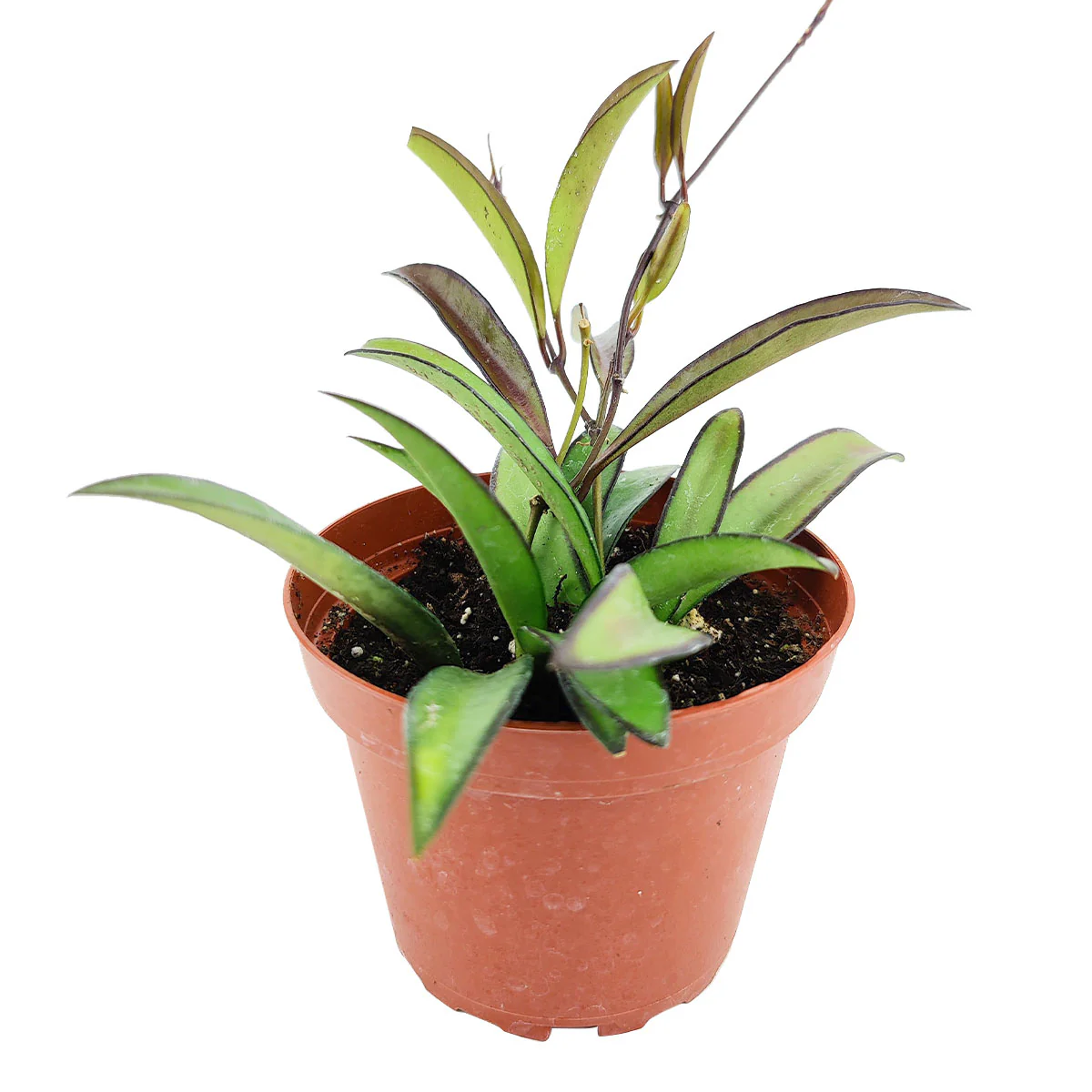
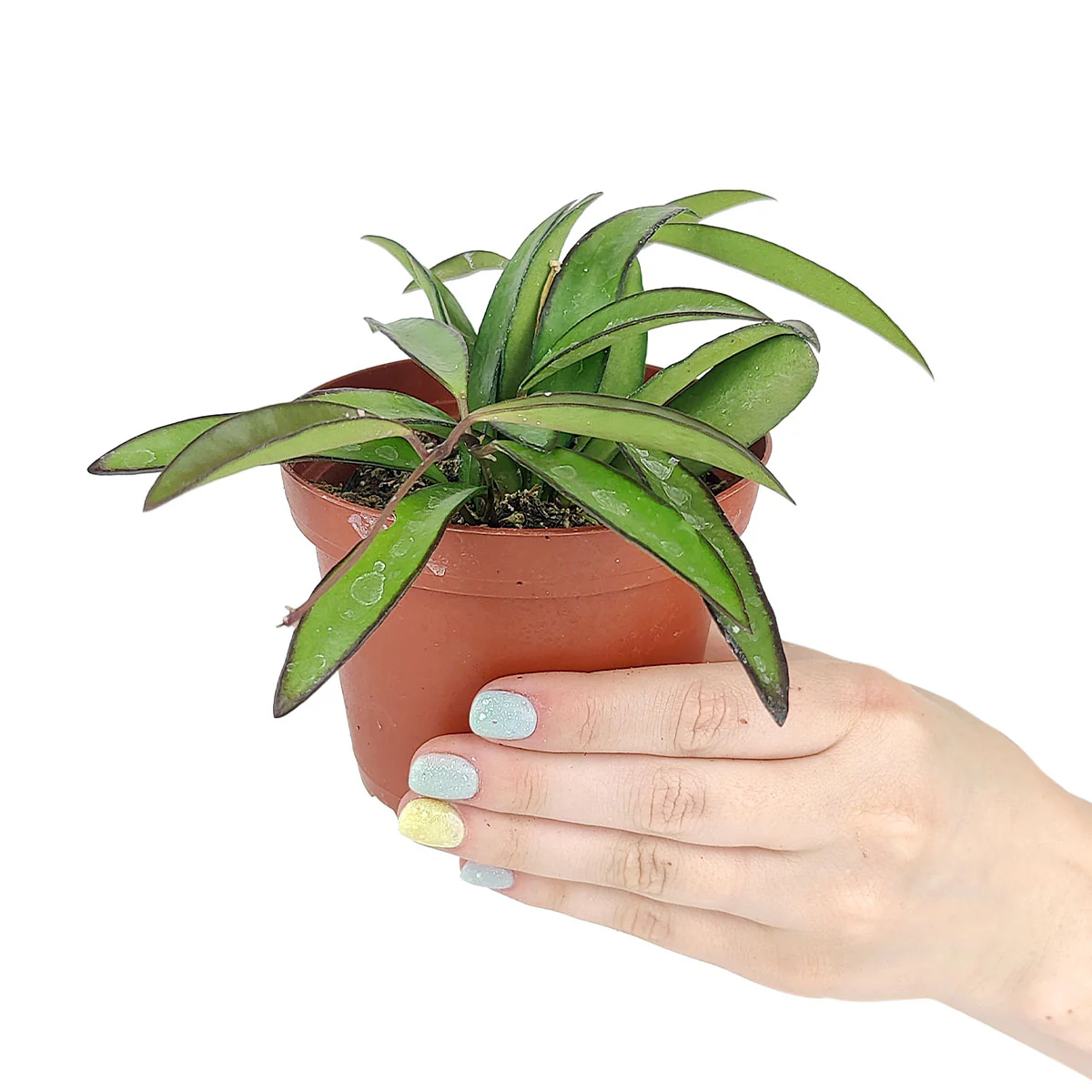
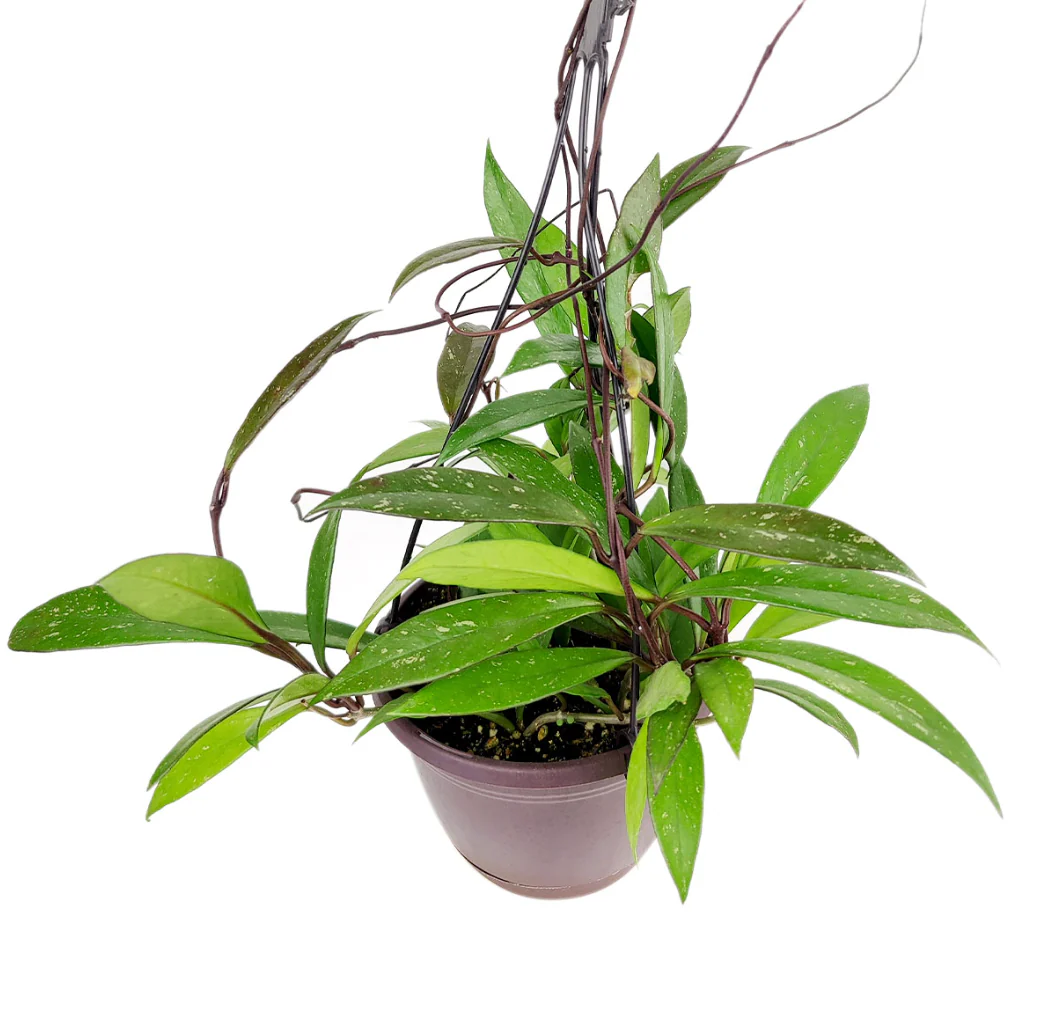
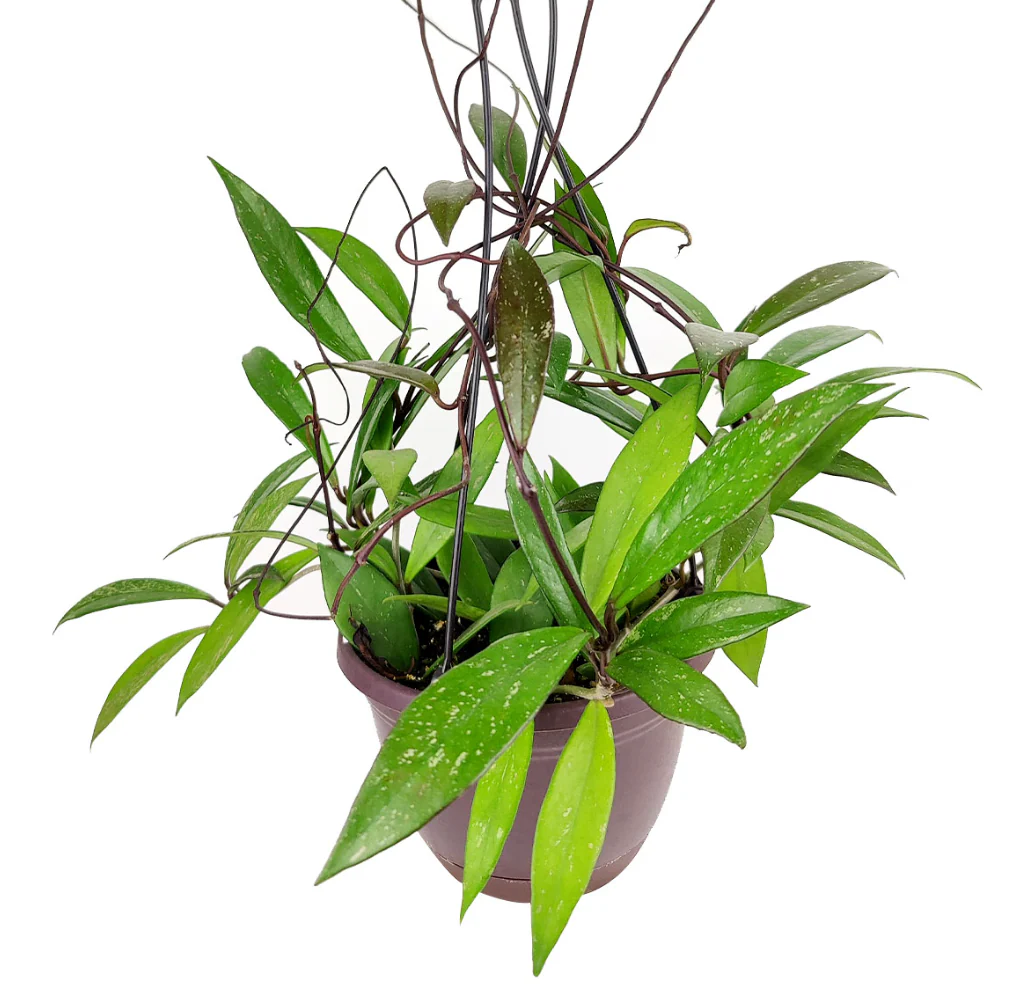
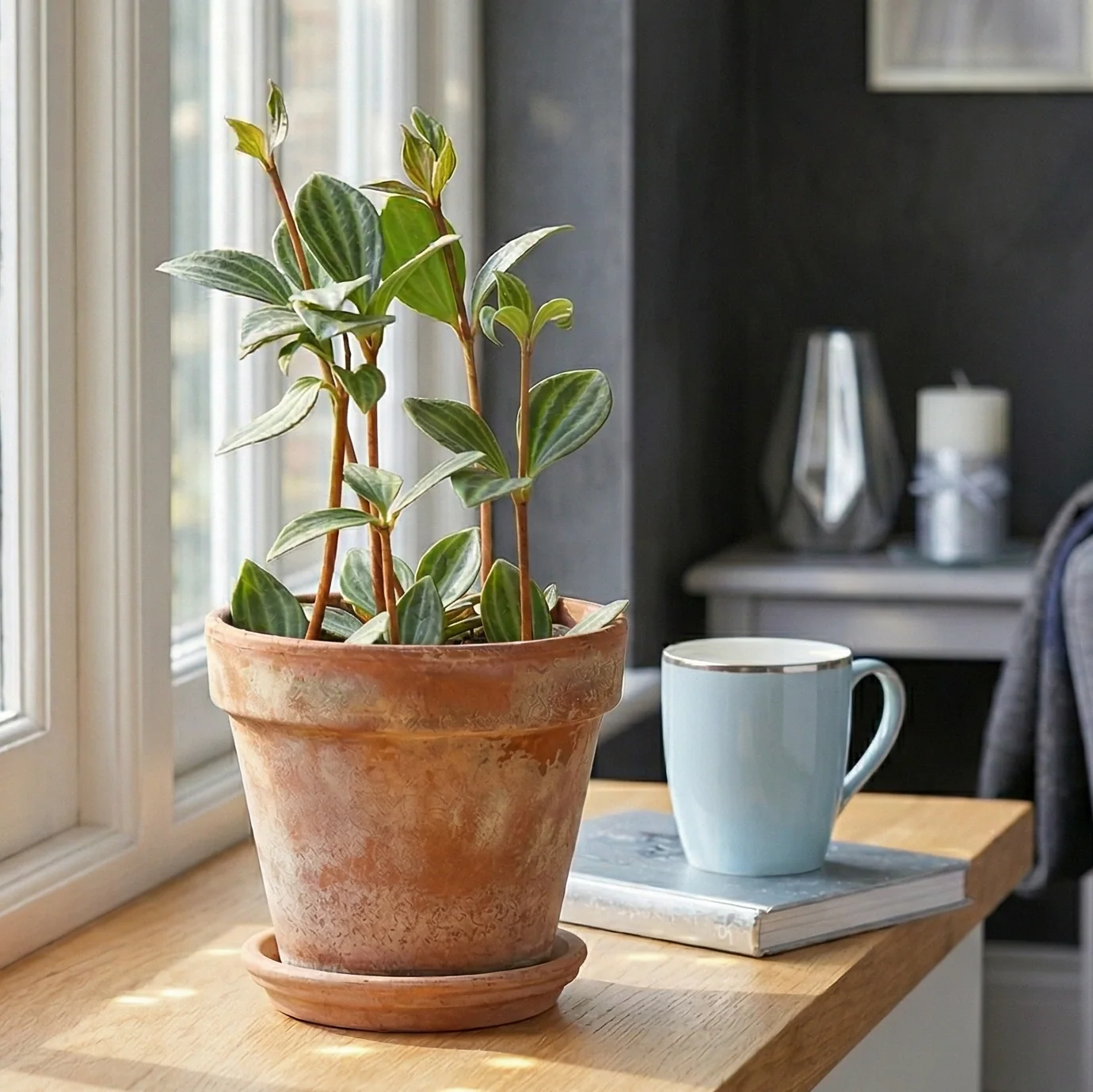
This plant originates from the tropical regions of South America, where it typically grows as an understory plant in warm, humid environments.![]() Peperomia ‘Parallel’ features almond-shaped leaves patterned with alternating dark and light green stripes, resembling the rind of a watermelon. The leaves grow in distinctive whorls of three to four along upright reddish stems, giving the plant a structured, almost architectural look. Its flowers are small, slender spikes that are not particularly showy but add subtle charm.
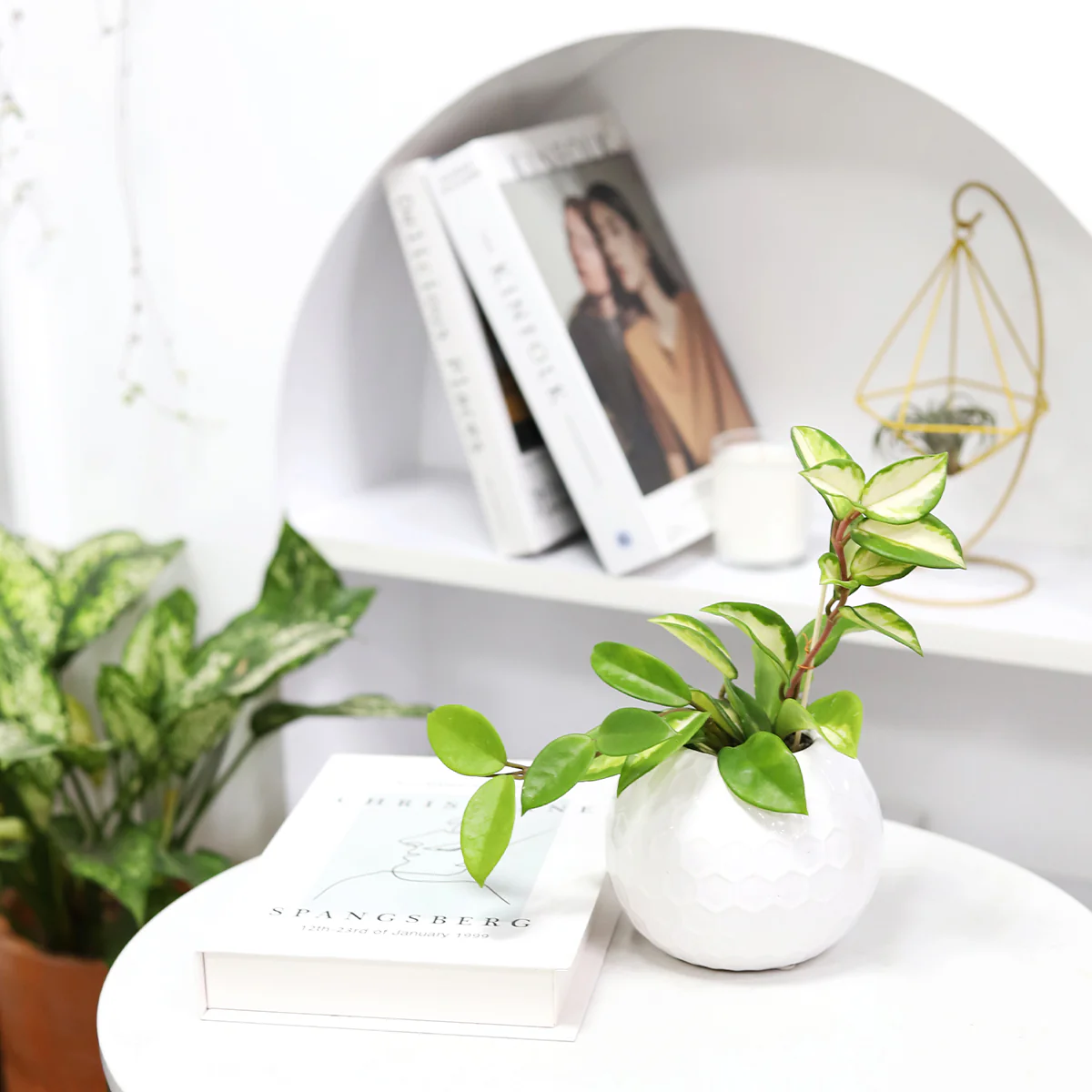
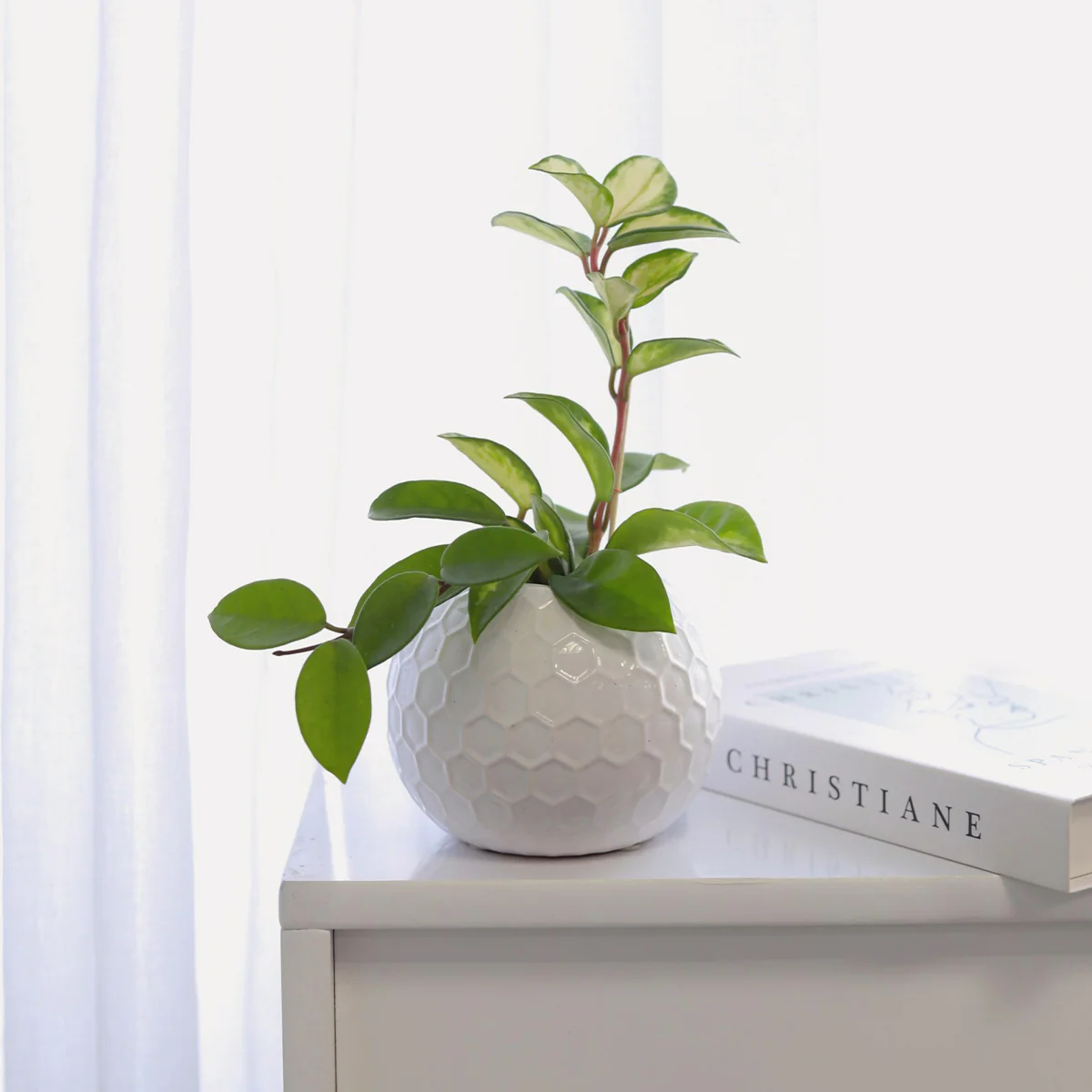
Peperomia ‘Parallel’ features almond-shaped leaves patterned with alternating dark and light green stripes, resembling the rind of a watermelon. The leaves grow in distinctive whorls of three to four along upright reddish stems, giving the plant a structured, almost architectural look. Its flowers are small, slender spikes that are not particularly showy but add subtle charm.![]() Peperomia ‘Parallel’ stands out for its uniquely patterned foliage and compact growth habit. Its striking striped leaves and upright red stems create a visually appealing contrast, making it a perfect decorative plant for desks, shelves, or small indoor gardens. Additionally, its low maintenance requirements make it an excellent choice for beginners.
Peperomia ‘Parallel’ stands out for its uniquely patterned foliage and compact growth habit. Its striking striped leaves and upright red stems create a visually appealing contrast, making it a perfect decorative plant for desks, shelves, or small indoor gardens. Additionally, its low maintenance requirements make it an excellent choice for beginners.
-
![]() Prefers bright, indirect light. It can tolerate medium light but should be kept out of direct sun to avoid leaf burn.
Prefers bright, indirect light. It can tolerate medium light but should be kept out of direct sun to avoid leaf burn.![]() Water moderately, allowing the top layer of soil to dry out between waterings. Overwatering should be avoided, as the plant is somewhat drought-tolerant.
Water moderately, allowing the top layer of soil to dry out between waterings. Overwatering should be avoided, as the plant is somewhat drought-tolerant.![]() Well-draining soil is essential. A mix designed for succulents or houseplants with added perlite works well.
Well-draining soil is essential. A mix designed for succulents or houseplants with added perlite works well.![]() Thrives in temperatures between 18°C and 26°C (65°F to 80°F). Avoid exposure to temperatures below 10°C (50°F).
Thrives in temperatures between 18°C and 26°C (65°F to 80°F). Avoid exposure to temperatures below 10°C (50°F).![]() Slow to moderate growth rate, making it ideal for small spaces and low-maintenance collections.
Slow to moderate growth rate, making it ideal for small spaces and low-maintenance collections.
-
![]() USDA Zone 10–12 when grown outdoors; typically grown as an indoor plant elsewhere.
USDA Zone 10–12 when grown outdoors; typically grown as an indoor plant elsewhere.
 Peperomia ‘Parallel’ (botanical name Peperomia tetragona, formerly known as Peperomia puteolata) is a compact, semi-succulent houseplant admired for its striking foliage and easy-care nature. It belongs to the Peperomia genus, a group known for decorative leaves and suitability for indoor growing.
 This plant originates from the tropical regions of South America, where it typically grows as an understory plant in warm, humid environments.
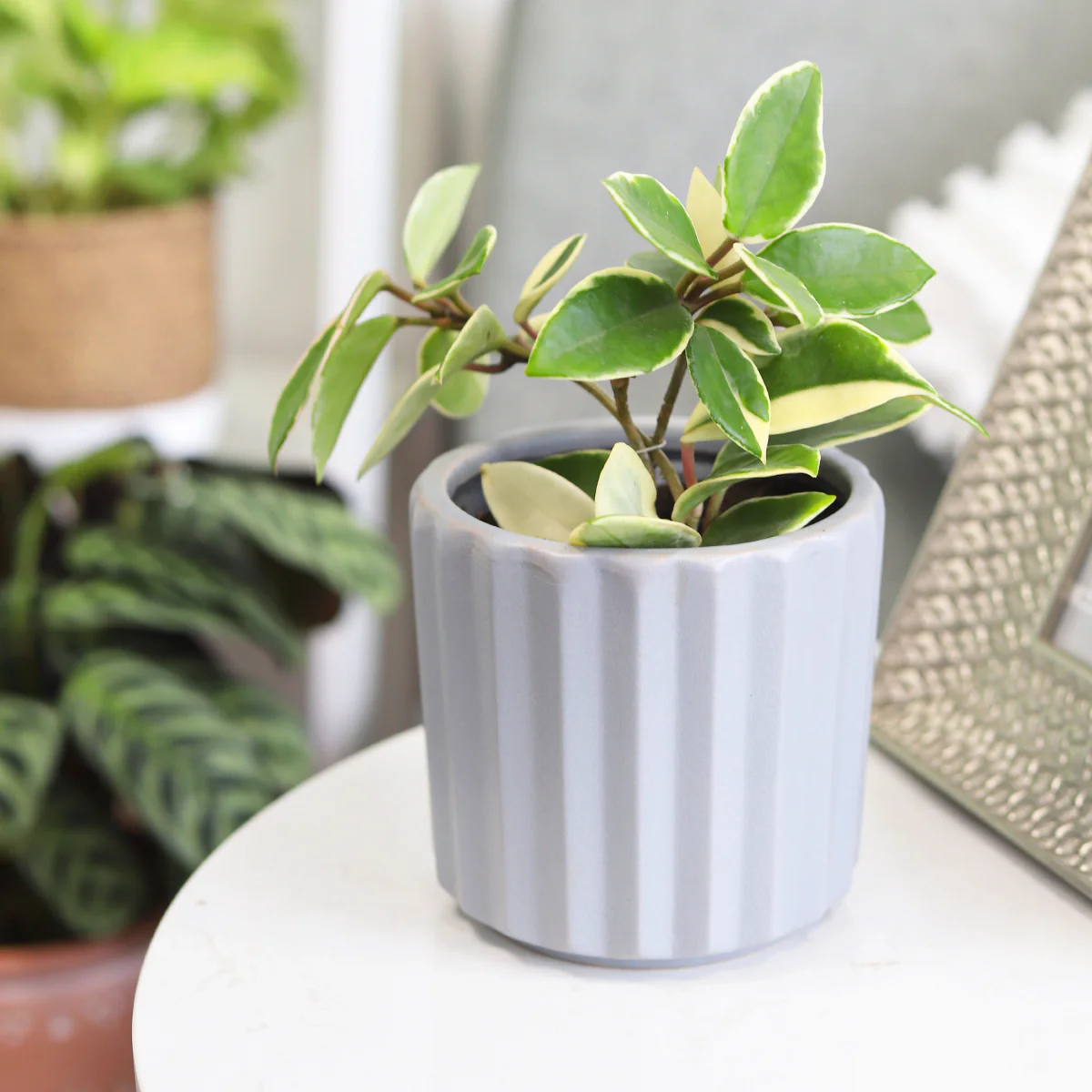
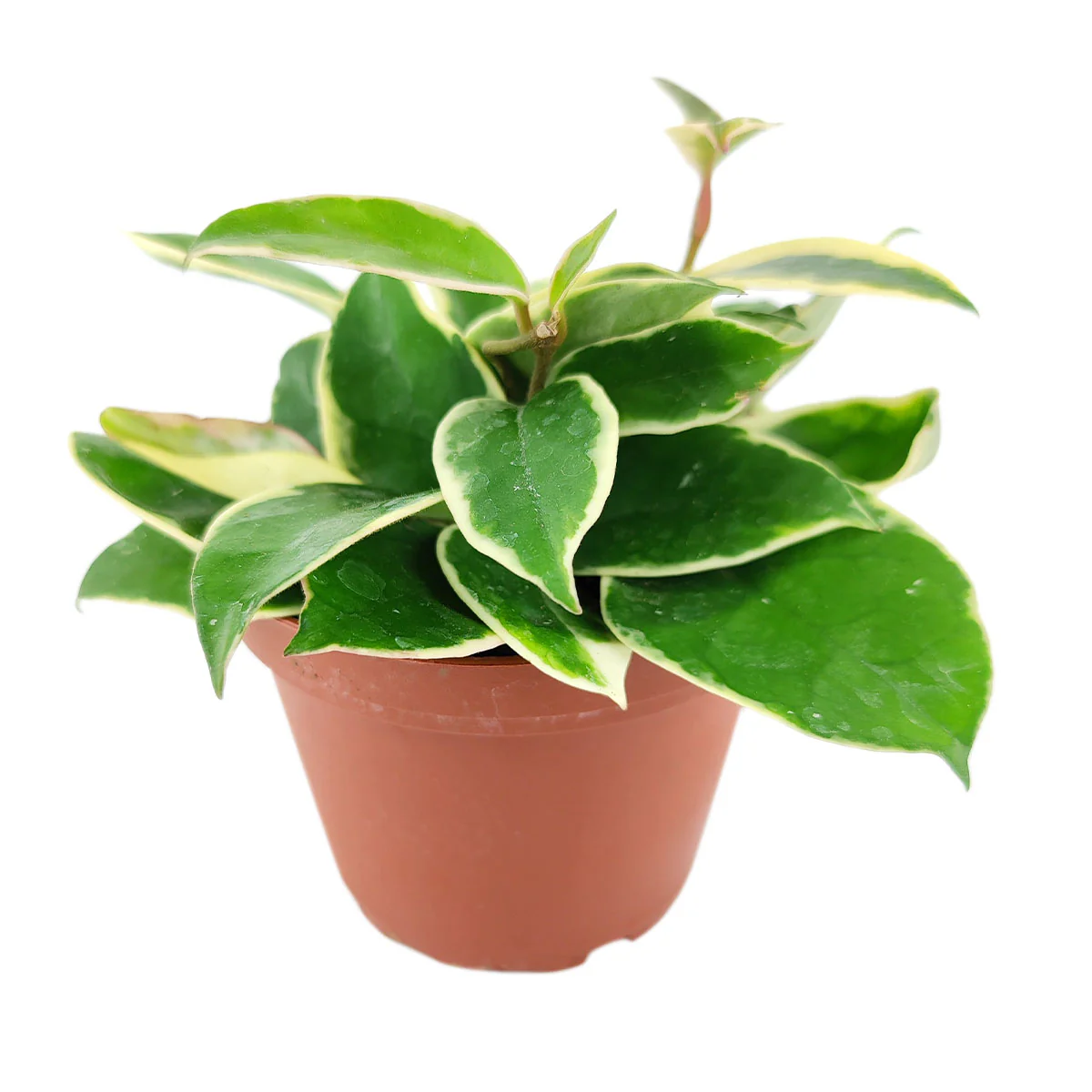
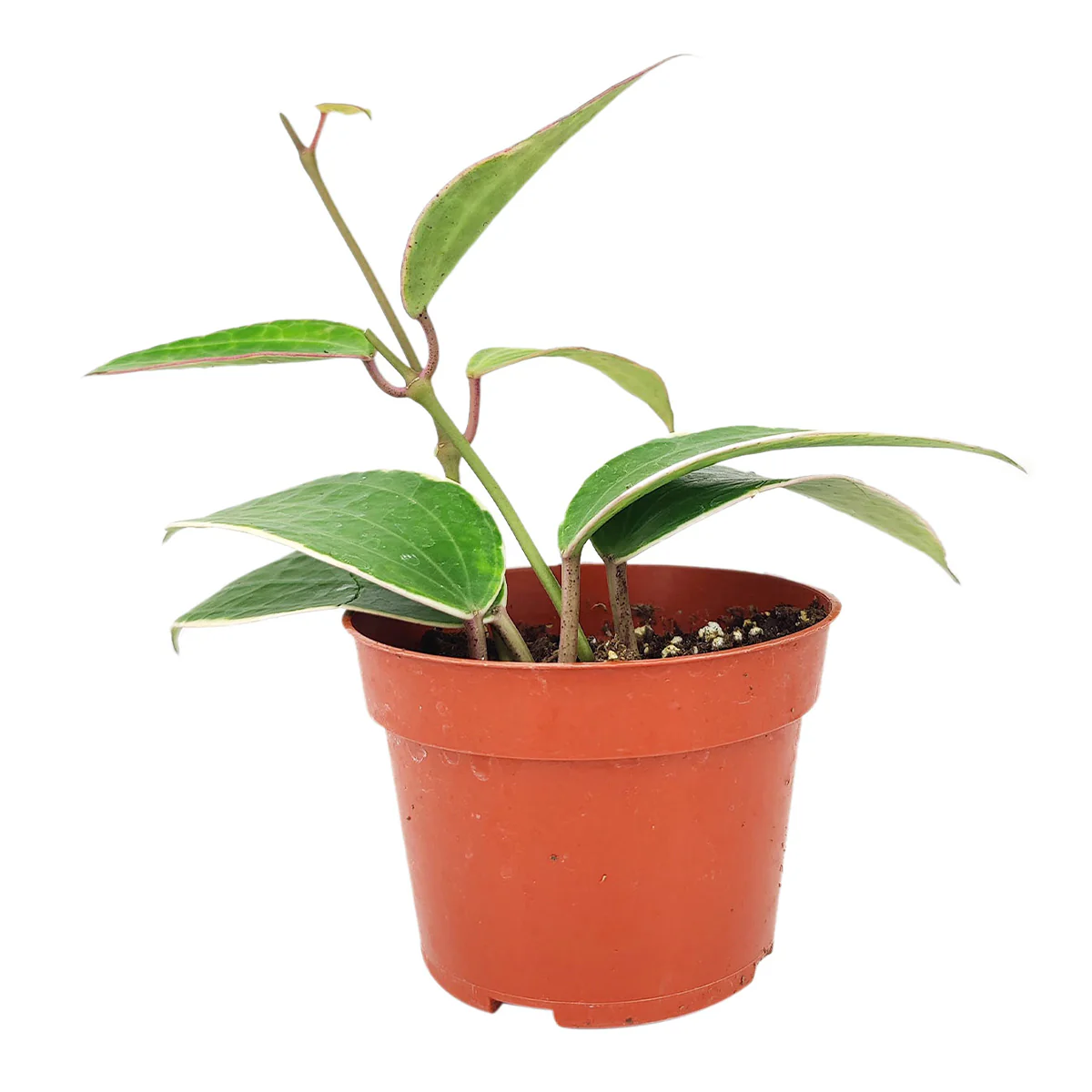
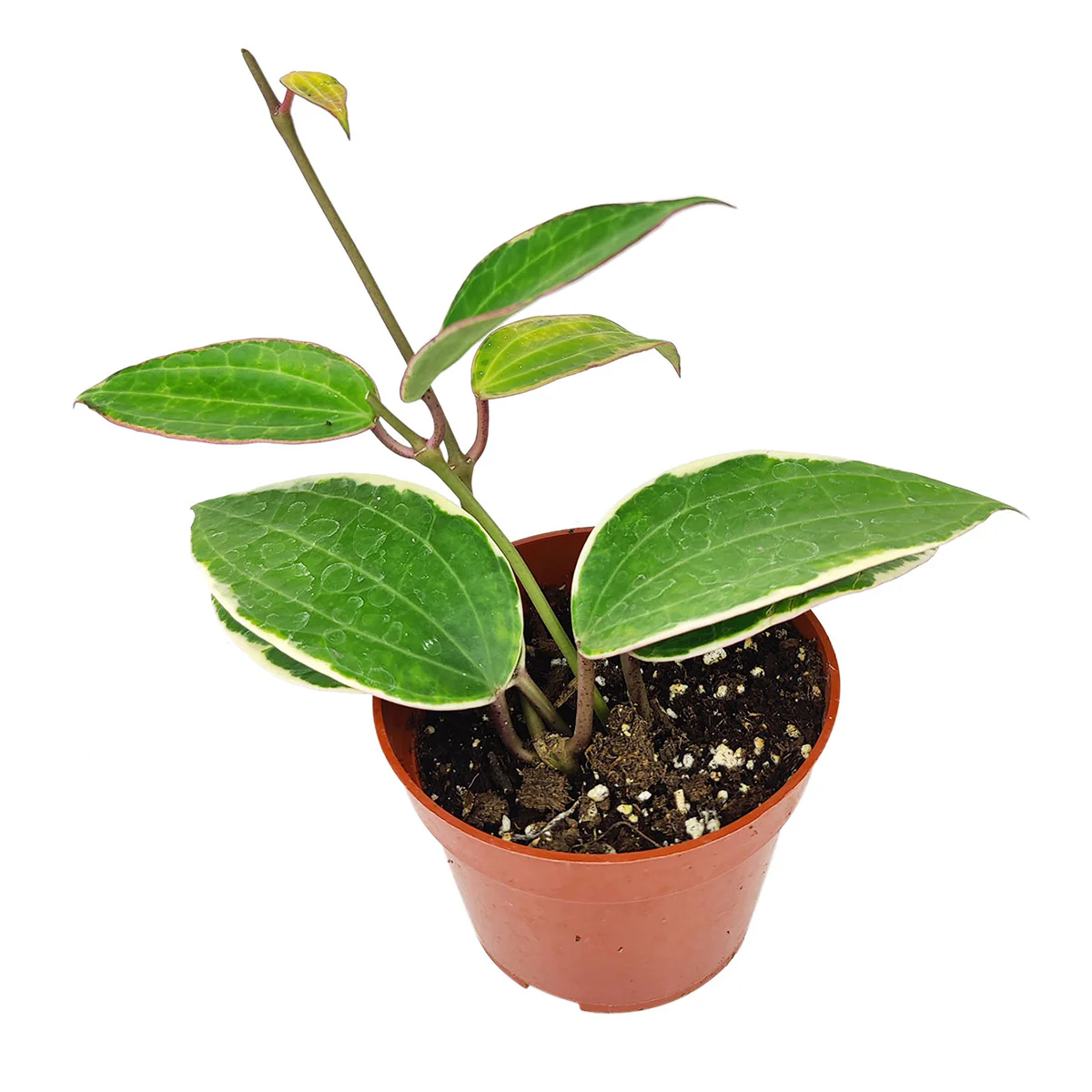
 Peperomia ‘Parallel’ features almond-shaped leaves patterned with alternating dark and light green stripes, resembling the rind of a watermelon. The leaves grow in distinctive whorls of three to four along upright reddish stems, giving the plant a structured, almost architectural look. Its flowers are small, slender spikes that are not particularly showy but add subtle charm.
 Peperomia ‘Parallel’ stands out for its uniquely patterned foliage and compact growth habit. Its striking striped leaves and upright red stems create a visually appealing contrast, making it a perfect decorative plant for desks, shelves, or small indoor gardens. Additionally, its low maintenance requirements make it an excellent choice for beginners.
 Prefers bright, indirect light. It can tolerate medium light but should be kept out of direct sun to avoid leaf burn.
 Water moderately, allowing the top layer of soil to dry out between waterings. Overwatering should be avoided, as the plant is somewhat drought-tolerant.
 Well-draining soil is essential. A mix designed for succulents or houseplants with added perlite works well.
 Thrives in temperatures between 18°C and 26°C (65°F to 80°F). Avoid exposure to temperatures below 10°C (50°F).
 Slow to moderate growth rate, making it ideal for small spaces and low-maintenance collections.
 USDA Zone 10–12 when grown outdoors; typically grown as an indoor plant elsewhere.
Select Size
From $4.72
Original: $15.75
-70%Peperomia 'Parallel'—
$15.75
$4.72Product Information
Product Information
Shipping & Returns
Shipping & Returns
Description
- Description
- Light/Soil/Water
- Hardiness
-
![]() Peperomia ‘Parallel’ (botanical name Peperomia tetragona, formerly known as Peperomia puteolata) is a compact, semi-succulent houseplant admired for its striking foliage and easy-care nature. It belongs to the Peperomia genus, a group known for decorative leaves and suitability for indoor growing.
Peperomia ‘Parallel’ (botanical name Peperomia tetragona, formerly known as Peperomia puteolata) is a compact, semi-succulent houseplant admired for its striking foliage and easy-care nature. It belongs to the Peperomia genus, a group known for decorative leaves and suitability for indoor growing.![]() This plant originates from the tropical regions of South America, where it typically grows as an understory plant in warm, humid environments.
This plant originates from the tropical regions of South America, where it typically grows as an understory plant in warm, humid environments.![]() Peperomia ‘Parallel’ features almond-shaped leaves patterned with alternating dark and light green stripes, resembling the rind of a watermelon. The leaves grow in distinctive whorls of three to four along upright reddish stems, giving the plant a structured, almost architectural look. Its flowers are small, slender spikes that are not particularly showy but add subtle charm.
Peperomia ‘Parallel’ features almond-shaped leaves patterned with alternating dark and light green stripes, resembling the rind of a watermelon. The leaves grow in distinctive whorls of three to four along upright reddish stems, giving the plant a structured, almost architectural look. Its flowers are small, slender spikes that are not particularly showy but add subtle charm.![]() Peperomia ‘Parallel’ stands out for its uniquely patterned foliage and compact growth habit. Its striking striped leaves and upright red stems create a visually appealing contrast, making it a perfect decorative plant for desks, shelves, or small indoor gardens. Additionally, its low maintenance requirements make it an excellent choice for beginners.
Peperomia ‘Parallel’ stands out for its uniquely patterned foliage and compact growth habit. Its striking striped leaves and upright red stems create a visually appealing contrast, making it a perfect decorative plant for desks, shelves, or small indoor gardens. Additionally, its low maintenance requirements make it an excellent choice for beginners.
-
![]() Prefers bright, indirect light. It can tolerate medium light but should be kept out of direct sun to avoid leaf burn.
Prefers bright, indirect light. It can tolerate medium light but should be kept out of direct sun to avoid leaf burn.![]() Water moderately, allowing the top layer of soil to dry out between waterings. Overwatering should be avoided, as the plant is somewhat drought-tolerant.
Water moderately, allowing the top layer of soil to dry out between waterings. Overwatering should be avoided, as the plant is somewhat drought-tolerant.![]() Well-draining soil is essential. A mix designed for succulents or houseplants with added perlite works well.
Well-draining soil is essential. A mix designed for succulents or houseplants with added perlite works well.![]() Thrives in temperatures between 18°C and 26°C (65°F to 80°F). Avoid exposure to temperatures below 10°C (50°F).
Thrives in temperatures between 18°C and 26°C (65°F to 80°F). Avoid exposure to temperatures below 10°C (50°F).![]() Slow to moderate growth rate, making it ideal for small spaces and low-maintenance collections.
Slow to moderate growth rate, making it ideal for small spaces and low-maintenance collections.
-
![]() USDA Zone 10–12 when grown outdoors; typically grown as an indoor plant elsewhere.
USDA Zone 10–12 when grown outdoors; typically grown as an indoor plant elsewhere.