Palm Ponytail
- Description
- Palm Ponytail Care Guide
- FAQ/Common Issues
-
![]() The Palm Ponytail (Beaucarnea recurvata) is a striking drought tolerant plant native to the semi-arid scrublands of eastern Mexico. Despite its common name, it is not a true palm but a member of the Asparagaceae family, often called elephant foot palm or bottle palm for its swollen base that stores water.
The Palm Ponytail (Beaucarnea recurvata) is a striking drought tolerant plant native to the semi-arid scrublands of eastern Mexico. Despite its common name, it is not a true palm but a member of the Asparagaceae family, often called elephant foot palm or bottle palm for its swollen base that stores water.
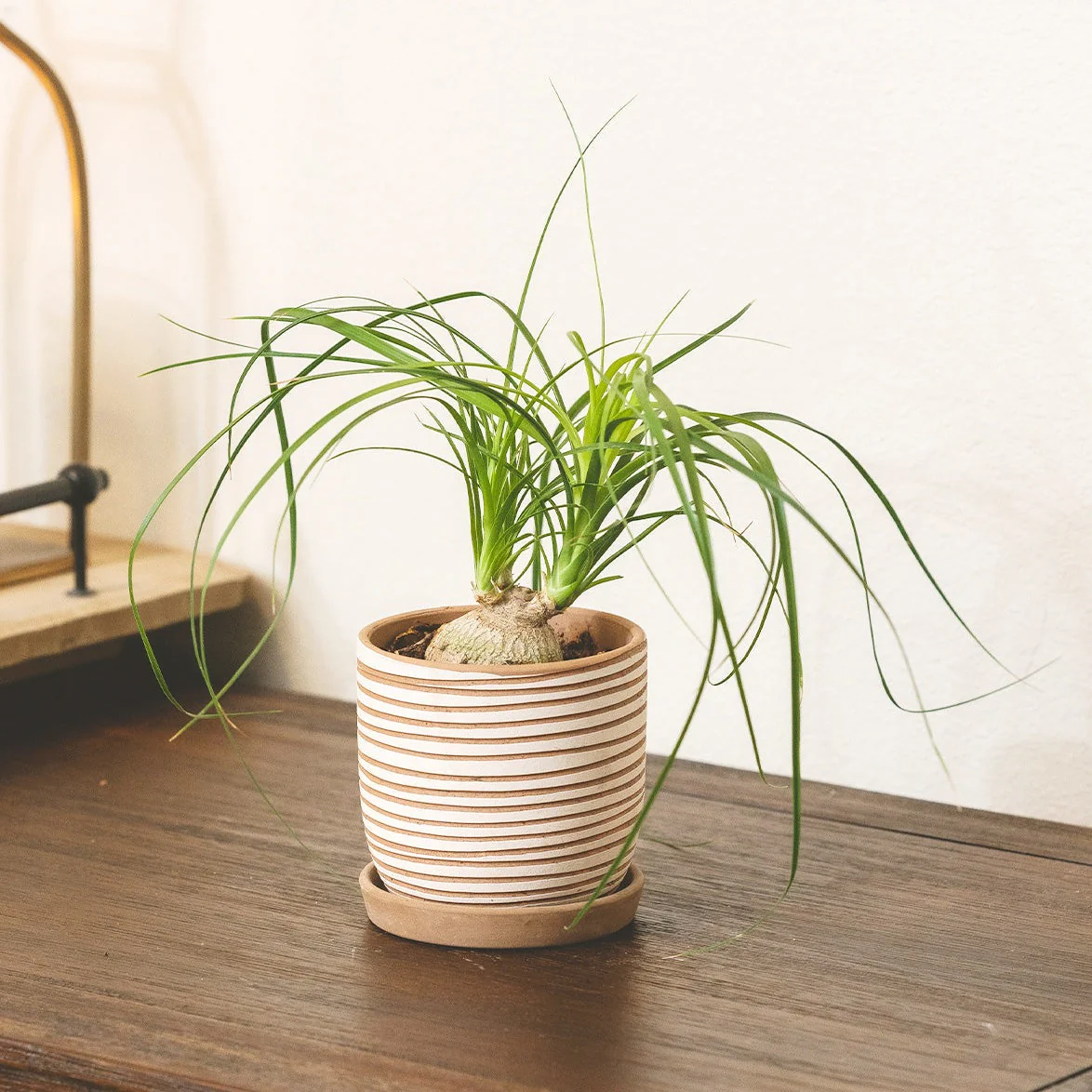
 The Palm Ponytail is instantly recognizable by its bulbous, water-storing trunk base and long, arching, strap-like leaves that cascade from a single growing point like a fountain of green ribbons. Leaves are narrow, slightly rough-edged, and can reach several feet in length, creating a dramatic sculptural silhouette that earns it a reputation as a standout architectural indoor plant. This slow growing plant develops real character over time, with older specimens forming a thick, textured trunk that looks almost prehistoric.
 Mature Palm Ponytail plants occasionally produce tall plumes of tiny cream or white flowers, though blooming indoors is rare and typically requires a noticeable drop in nighttime temperatures to trigger. On younger or non-blooming plants, the real showstopper remains the cascading foliage and the ever-thickening trunk base, which signals a healthy, well-established specimen storing plenty of energy for the season ahead.
 The Palm Ponytail is a genuinely low maintenance succulent tree that thrives with minimal attention, making it a favorite gift plant and a prized find for collectors. It moves happily outdoors for summer but appreciates shelter from heavy rain, and it can remain outside into early autumn in milder climates. Keep it away from direct AC or heater vents, which dry and damage the leaf tips, though it handles the general dry air of a heated home with ease. This plant is pet friendly, survives a 10-day trip without a sitter, and is considered a rare find in many markets, adding real collectible appeal.
-
 Palm Ponytail thrives in bright direct sun but adapts well to lower light conditions indoors.
 Water Palm Ponytail deeply every 2 to 3 weeks in summer and once a month or less in winter.
 Palm Ponytail prefers a fast-draining cactus and succulent mix amended with extra perlite for best results.
 Palm Ponytail does best between 60 and 85°F (15 to 29°C) and should be protected from frost below 25°F (-4°C).
![]() Palm Ponytail is a slow growing plant and needs only a light balanced fertilizer once or twice during the growing season.
Palm Ponytail is a slow growing plant and needs only a light balanced fertilizer once or twice during the growing season.
 Palm Ponytail is hardy in USDA zones 9 through 11, tolerating brief dips to around 25°F (-4°C) before frost becomes damaging. Outdoor year-round growing suits warm states like Florida, California, Texas, Arizona, Hawaii, Louisiana, Georgia, South Carolina, Alabama, Mississippi, and Nevada. Parts of Oregon, New Mexico, and coastal regions of North Carolina also fall within these zones, giving growers across the Sun Belt real options for keeping Palm Ponytail in the garden.
-
Q: How often should I water my Palm Ponytail?
A: Water Palm Ponytail every 2 to 3 weeks in the growing season, allowing the soil to dry out completely between waterings. In winter, once a month or even less is plenty.
Q: Is Palm Ponytail safe for cats and dogs?
A: Yes, Palm Ponytail is pet friendly and is not considered toxic to cats or dogs. It is a great choice for homes with curious pets.
Q: How much light does Palm Ponytail need?
A: Palm Ponytail loves bright direct sun and does best near a sunny window. It can adapt to lower light but grows more slowly and may not develop its characteristic thick trunk as quickly.
Q: How fast does Palm Ponytail grow?
A: Palm Ponytail is a slow growing plant, typically gaining just a few inches per year indoors. This slow pace is part of its appeal as a long-lived, low maintenance succulent tree.
Q: Can I put my Palm Ponytail outside in summer?
A: Absolutely, Palm Ponytail loves spending summer outdoors in a sunny spot. Just make sure to shelter it from heavy rain and bring it back inside before temperatures drop in autumn.
Q: Why are the tips of my Palm Ponytail turning brown?
A: Brown tips on Palm Ponytail are usually caused by dry air from heating or AC vents, inconsistent watering, or a south-facing window causing leaf scorch. Move it away from direct air flow and rotate it occasionally for even, healthy growth.


Original: $13.25
-70%$13.25
$3.97Product Information
Product Information
Shipping & Returns
Shipping & Returns
Description
- Description
- Palm Ponytail Care Guide
- FAQ/Common Issues
-
![]() The Palm Ponytail (Beaucarnea recurvata) is a striking drought tolerant plant native to the semi-arid scrublands of eastern Mexico. Despite its common name, it is not a true palm but a member of the Asparagaceae family, often called elephant foot palm or bottle palm for its swollen base that stores water.
The Palm Ponytail (Beaucarnea recurvata) is a striking drought tolerant plant native to the semi-arid scrublands of eastern Mexico. Despite its common name, it is not a true palm but a member of the Asparagaceae family, often called elephant foot palm or bottle palm for its swollen base that stores water.
The Palm Ponytail is instantly recognizable by its bulbous, water-storing trunk base and long, arching, strap-like leaves that cascade from a single growing point like a fountain of green ribbons. Leaves are narrow, slightly rough-edged, and can reach several feet in length, creating a dramatic sculptural silhouette that earns it a reputation as a standout architectural indoor plant. This slow growing plant develops real character over time, with older specimens forming a thick, textured trunk that looks almost prehistoric.
Mature Palm Ponytail plants occasionally produce tall plumes of tiny cream or white flowers, though blooming indoors is rare and typically requires a noticeable drop in nighttime temperatures to trigger. On younger or non-blooming plants, the real showstopper remains the cascading foliage and the ever-thickening trunk base, which signals a healthy, well-established specimen storing plenty of energy for the season ahead.
The Palm Ponytail is a genuinely low maintenance succulent tree that thrives with minimal attention, making it a favorite gift plant and a prized find for collectors. It moves happily outdoors for summer but appreciates shelter from heavy rain, and it can remain outside into early autumn in milder climates. Keep it away from direct AC or heater vents, which dry and damage the leaf tips, though it handles the general dry air of a heated home with ease. This plant is pet friendly, survives a 10-day trip without a sitter, and is considered a rare find in many markets, adding real collectible appeal.
-
Palm Ponytail thrives in bright direct sun but adapts well to lower light conditions indoors.
Water Palm Ponytail deeply every 2 to 3 weeks in summer and once a month or less in winter.
Palm Ponytail prefers a fast-draining cactus and succulent mix amended with extra perlite for best results.
Palm Ponytail does best between 60 and 85°F (15 to 29°C) and should be protected from frost below 25°F (-4°C).
![]() Palm Ponytail is a slow growing plant and needs only a light balanced fertilizer once or twice during the growing season.
Palm Ponytail is a slow growing plant and needs only a light balanced fertilizer once or twice during the growing season.
Palm Ponytail is hardy in USDA zones 9 through 11, tolerating brief dips to around 25°F (-4°C) before frost becomes damaging. Outdoor year-round growing suits warm states like Florida, California, Texas, Arizona, Hawaii, Louisiana, Georgia, South Carolina, Alabama, Mississippi, and Nevada. Parts of Oregon, New Mexico, and coastal regions of North Carolina also fall within these zones, giving growers across the Sun Belt real options for keeping Palm Ponytail in the garden.
-
Q: How often should I water my Palm Ponytail?
A: Water Palm Ponytail every 2 to 3 weeks in the growing season, allowing the soil to dry out completely between waterings. In winter, once a month or even less is plenty.
Q: Is Palm Ponytail safe for cats and dogs?
A: Yes, Palm Ponytail is pet friendly and is not considered toxic to cats or dogs. It is a great choice for homes with curious pets.
Q: How much light does Palm Ponytail need?
A: Palm Ponytail loves bright direct sun and does best near a sunny window. It can adapt to lower light but grows more slowly and may not develop its characteristic thick trunk as quickly.
Q: How fast does Palm Ponytail grow?
A: Palm Ponytail is a slow growing plant, typically gaining just a few inches per year indoors. This slow pace is part of its appeal as a long-lived, low maintenance succulent tree.
Q: Can I put my Palm Ponytail outside in summer?
A: Absolutely, Palm Ponytail loves spending summer outdoors in a sunny spot. Just make sure to shelter it from heavy rain and bring it back inside before temperatures drop in autumn.
Q: Why are the tips of my Palm Ponytail turning brown?
A: Brown tips on Palm Ponytail are usually caused by dry air from heating or AC vents, inconsistent watering, or a south-facing window causing leaf scorch. Move it away from direct air flow and rotate it occasionally for even, healthy growth.