🚚 Free Worldwide Shipping on All Orders!Shop Now

1 / 3
Alocasia Reginula 'Black Velvet'
- Description
- Light/Soil/Water
- Hardiness
-
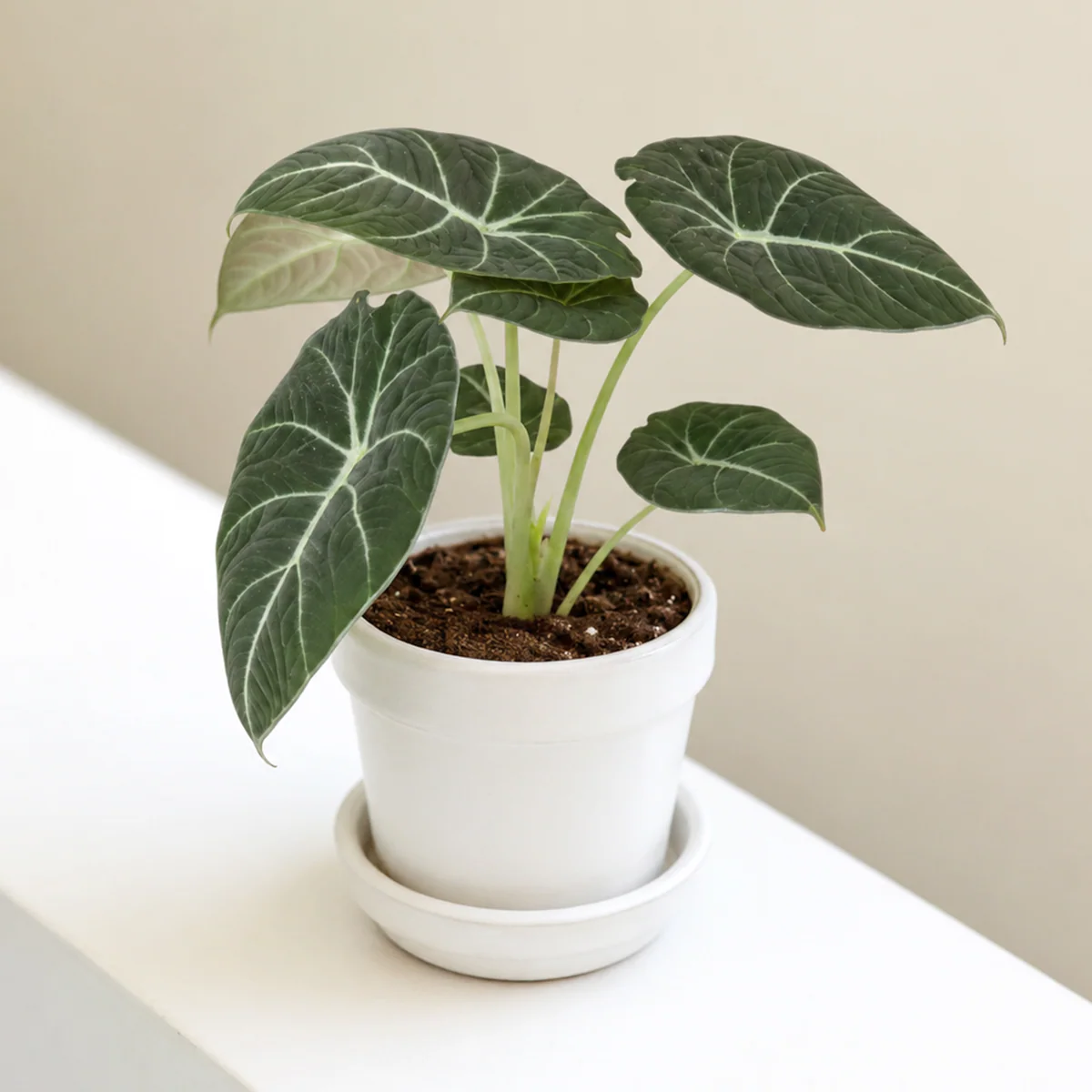
![]() The Alocasia Reginula 'Black Velvet', often called the Little Queen or Black Velvet Elephant Ear, is a highly sought-after "Jewel Alocasia" known for its deep, luxurious foliage. This plant is a compact, slow-growing species of the Alocasia genus, native to the tropical rainforest underbrush of Southeast Asia, particularly Borneo.
The Alocasia Reginula 'Black Velvet', often called the Little Queen or Black Velvet Elephant Ear, is a highly sought-after "Jewel Alocasia" known for its deep, luxurious foliage. This plant is a compact, slow-growing species of the Alocasia genus, native to the tropical rainforest underbrush of Southeast Asia, particularly Borneo.![]() The leaves are its defining feature: thick, rigid, heart-shaped ovals with a surface that appears velvety and matte-black (deep, dark green), dramatically contrasted by striking silvery-white veins.
The leaves are its defining feature: thick, rigid, heart-shaped ovals with a surface that appears velvety and matte-black (deep, dark green), dramatically contrasted by striking silvery-white veins.
-
![]() Bright, indirect light is essential for maintaining its dark color.
Bright, indirect light is essential for maintaining its dark color.![]() Allow the top 1–2 inches of soil to dry out completely before watering thoroughly.
Allow the top 1–2 inches of soil to dry out completely before watering thoroughly.![]() A loose, airy, and very well-draining aroid mix is critical.
A loose, airy, and very well-draining aroid mix is critical.
-
![]() USDA Zone 10-11
USDA Zone 10-11USDA Zone 9b: to -3.8 °C (25 °F)
USDA Zone 10a: to -1.1 °C (30 °F)
USDA Zone 10b: to 1.7 °C (35 °F)
USDA Zone 11: above 4.5 °C (40 °F)
 The Alocasia Reginula 'Black Velvet', often called the Little Queen or Black Velvet Elephant Ear, is a highly sought-after "Jewel Alocasia" known for its deep, luxurious foliage
 The leaves are its defining feature: thick, rigid, heart-shaped ovals with a surface that appears velvety and matte-black (deep, dark green), dramatically contrasted by striking silvery-white veins
 Bright, indirect light is essential for maintaining its dark color
 Allow the top 1–2 inches of soil to dry out completely before watering thoroughly
 A loose, airy, and very well-draining aroid mix is critical.
 USDA Zone 10-11
Select Size
From $23.25
Alocasia Reginula 'Black Velvet'—
$23.25
Product Information
Product Information
Shipping & Returns
Shipping & Returns
Description
- Description
- Light/Soil/Water
- Hardiness
-
![]() The Alocasia Reginula 'Black Velvet', often called the Little Queen or Black Velvet Elephant Ear, is a highly sought-after "Jewel Alocasia" known for its deep, luxurious foliage. This plant is a compact, slow-growing species of the Alocasia genus, native to the tropical rainforest underbrush of Southeast Asia, particularly Borneo.
The Alocasia Reginula 'Black Velvet', often called the Little Queen or Black Velvet Elephant Ear, is a highly sought-after "Jewel Alocasia" known for its deep, luxurious foliage. This plant is a compact, slow-growing species of the Alocasia genus, native to the tropical rainforest underbrush of Southeast Asia, particularly Borneo.![]() The leaves are its defining feature: thick, rigid, heart-shaped ovals with a surface that appears velvety and matte-black (deep, dark green), dramatically contrasted by striking silvery-white veins.
The leaves are its defining feature: thick, rigid, heart-shaped ovals with a surface that appears velvety and matte-black (deep, dark green), dramatically contrasted by striking silvery-white veins.
-
![]() Bright, indirect light is essential for maintaining its dark color.
Bright, indirect light is essential for maintaining its dark color.![]() Allow the top 1–2 inches of soil to dry out completely before watering thoroughly.
Allow the top 1–2 inches of soil to dry out completely before watering thoroughly.![]() A loose, airy, and very well-draining aroid mix is critical.
A loose, airy, and very well-draining aroid mix is critical.
-
![]() USDA Zone 10-11
USDA Zone 10-11USDA Zone 9b: to -3.8 °C (25 °F)
USDA Zone 10a: to -1.1 °C (30 °F)
USDA Zone 10b: to 1.7 °C (35 °F)
USDA Zone 11: above 4.5 °C (40 °F)