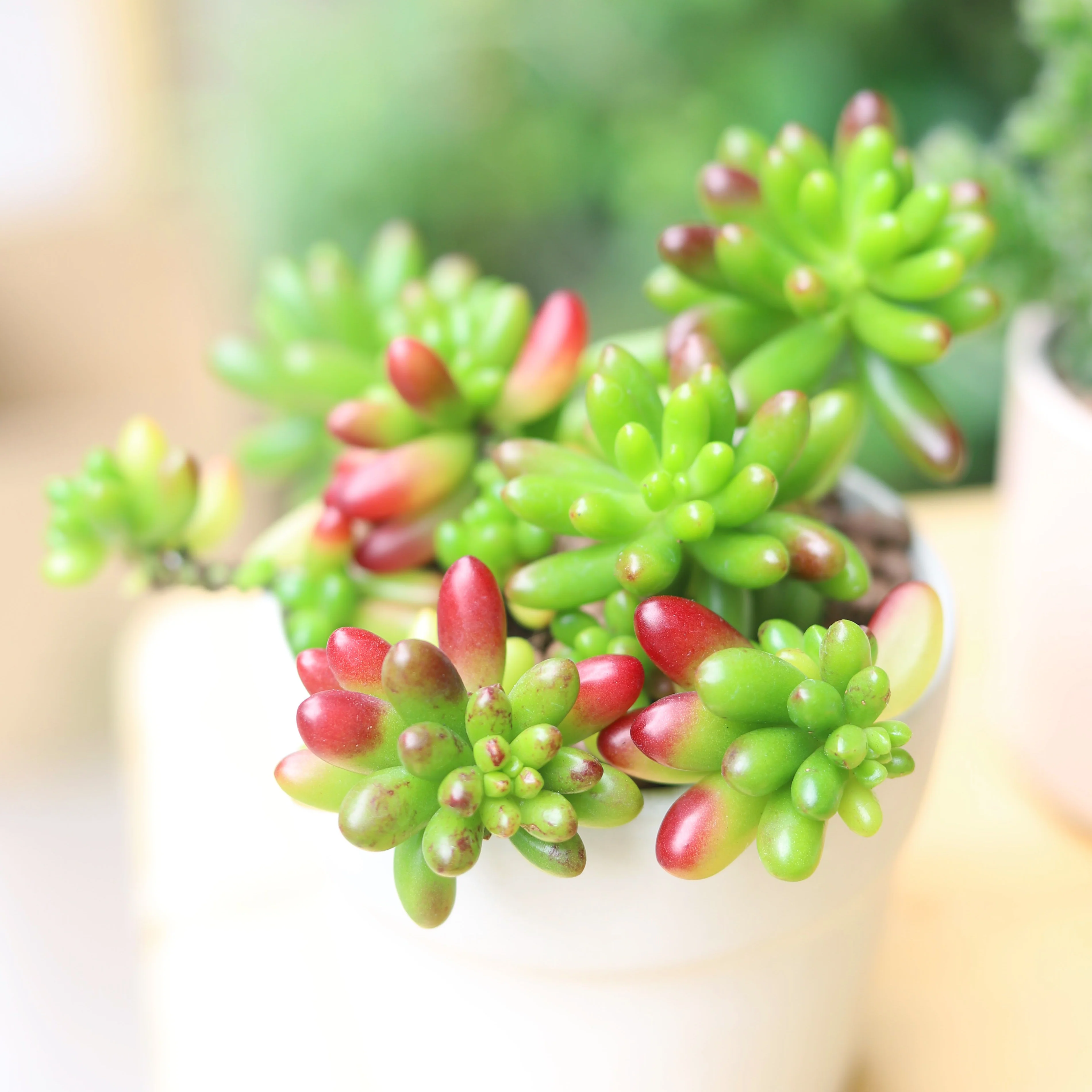
Pink Jelly Bean Sedum - Sedum rubrotinctum
- Description
- Pink Jelly Bean Sedum - Sedum rubrotinctum Care Guide
- FAQ/Common Issues
-
![]() Pink Jelly Bean Sedum - Sedum rubrotinctum is a charming succulent in the Crassulaceae family, native to Mexico where it evolved in rocky, sun-drenched slopes with fast-draining soil. Its easy care nature and drought-tolerant constitution make it one of the most rewarding sedums you can grow indoors or out.
Pink Jelly Bean Sedum - Sedum rubrotinctum is a charming succulent in the Crassulaceae family, native to Mexico where it evolved in rocky, sun-drenched slopes with fast-draining soil. Its easy care nature and drought-tolerant constitution make it one of the most rewarding sedums you can grow indoors or out.
 Pink Jelly Bean Sedum - Sedum rubrotinctum gets its name from its plump, rounded leaves that look exactly like tiny jelly beans, typically green at the base and flushing vivid pink to red at the tips when kissed by sun stress. The plant grows in a trailing, clustering habit, spreading wide over time as stems arch outward and root where they touch soil, creating a lush, colorful carpet effect.
 Pink Jelly Bean Sedum - Sedum rubrotinctum produces small, star-shaped yellow flowers that typically appear in late winter to early spring, rising on slender stalks above the foliage. Blooms are most reliably triggered by a nighttime temperature drop, so moving plants to a cooler spot in autumn genuinely pays off come flowering season.
 Pink Jelly Bean Sedum - Sedum rubrotinctum is a wide spreader that earns a spot in rock gardens, container arrangements, and hanging baskets where its trailing stems can cascade beautifully. It handles dry heated air well but dislikes direct blasts from AC or heater vents, and it is sensitive to being moved frequently, so find it a good bright spot and let it settle. The sap can cause skin and paw irritation, so keep Pink Jelly Bean Sedum - Sedum rubrotinctum on a high shelf out of reach of pets and toddlers. Collectors in Zones 9-11 can move it outside for summer and bring it back in before first frost, covering it from heavy rain to prevent rot.
-
 Pink Jelly Bean Sedum - Sedum rubrotinctum thrives in bright indirect light, partial sun, or full sun, needing rotation for even, balanced growth.
 Water Pink Jelly Bean Sedum - Sedum rubrotinctum deeply every 10-14 days in summer, pulling back to once monthly in winter.
 Pink Jelly Bean Sedum - Sedum rubrotinctum performs best in a well-draining cactus and succulent mix blended with coarse perlite.
 Pink Jelly Bean Sedum - Sedum rubrotinctum prefers temperatures between 65-80°F (18-27°C) and should be protected from frost below 25°F (-4°C).
![]() Pink Jelly Bean Sedum - Sedum rubrotinctum is a moderate grower needing only a light balanced fertilizer once in spring and once in early summer.
Pink Jelly Bean Sedum - Sedum rubrotinctum is a moderate grower needing only a light balanced fertilizer once in spring and once in early summer.
 Pink Jelly Bean Sedum - Sedum rubrotinctum is hardy in USDA Zones 9-11, tolerating brief dips to around 25°F (-4°C) but performing best where winters stay mild. Gardeners growing Pink Jelly Bean Sedum - Sedum rubrotinctum outdoors year-round will find it perfectly at home across California, Arizona, Nevada, Texas, Florida, Hawaii, Louisiana, Mississippi, Alabama, Georgia, and South Carolina. It also thrives along the Oregon coast, in coastal portions of North Carolina, and throughout the warmer corridors of New Mexico and Arkansas where Zone 9 conditions apply.
-
Q: How often should I water Pink Jelly Bean Sedum - Sedum rubrotinctum?
A: Water Pink Jelly Bean Sedum - Sedum rubrotinctum every 10-14 days in the growing season, allowing soil to dry out completely between waterings. In winter, reduce to once a month to prevent root rot.
Q: Is Pink Jelly Bean Sedum - Sedum rubrotinctum safe for pets?
A: Pink Jelly Bean Sedum - Sedum rubrotinctum is considered mildly toxic to cats and dogs, and its sap can irritate skin and paws. Keep it on a high shelf well out of reach of curious pets and toddlers.
Q: How do I propagate Pink Jelly Bean Sedum - Sedum rubrotinctum?
A: Propagating Pink Jelly Bean Sedum - Sedum rubrotinctum is easy with leaf or stem cuttings. Let cut ends callous for a day or two, then lay them on dry succulent mix and mist lightly until roots appear.
Q: Why are the leaves on my Pink Jelly Bean Sedum - Sedum rubrotinctum turning yellow?
A: Yellow leaves on Pink Jelly Bean Sedum - Sedum rubrotinctum are usually a sign of overwatering or poor drainage. Reduce watering frequency, ensure the pot drains freely, and remove any mushy leaves at the base.
Q: Can Pink Jelly Bean Sedum - Sedum rubrotinctum go outside for summer?
A: Yes, Pink Jelly Bean Sedum - Sedum rubrotinctum loves spending summer outdoors in a bright, sheltered spot. Protect it from heavy rain and bring it back inside before nighttime temperatures drop near freezing.
Q: What light does Pink Jelly Bean Sedum - Sedum rubrotinctum need indoors?
A: Pink Jelly Bean Sedum - Sedum rubrotinctum does best in a bright south- or east-facing window with several hours of direct or bright indirect light daily. Rotate the pot regularly so all sides develop evenly and stay compact.


Original: $8.00
-70%$8.00
$2.40Product Information
Product Information
Shipping & Returns
Shipping & Returns
Description
- Description
- Pink Jelly Bean Sedum - Sedum rubrotinctum Care Guide
- FAQ/Common Issues
-
![]() Pink Jelly Bean Sedum - Sedum rubrotinctum is a charming succulent in the Crassulaceae family, native to Mexico where it evolved in rocky, sun-drenched slopes with fast-draining soil. Its easy care nature and drought-tolerant constitution make it one of the most rewarding sedums you can grow indoors or out.
Pink Jelly Bean Sedum - Sedum rubrotinctum is a charming succulent in the Crassulaceae family, native to Mexico where it evolved in rocky, sun-drenched slopes with fast-draining soil. Its easy care nature and drought-tolerant constitution make it one of the most rewarding sedums you can grow indoors or out.
Pink Jelly Bean Sedum - Sedum rubrotinctum gets its name from its plump, rounded leaves that look exactly like tiny jelly beans, typically green at the base and flushing vivid pink to red at the tips when kissed by sun stress. The plant grows in a trailing, clustering habit, spreading wide over time as stems arch outward and root where they touch soil, creating a lush, colorful carpet effect.
Pink Jelly Bean Sedum - Sedum rubrotinctum produces small, star-shaped yellow flowers that typically appear in late winter to early spring, rising on slender stalks above the foliage. Blooms are most reliably triggered by a nighttime temperature drop, so moving plants to a cooler spot in autumn genuinely pays off come flowering season.
Pink Jelly Bean Sedum - Sedum rubrotinctum is a wide spreader that earns a spot in rock gardens, container arrangements, and hanging baskets where its trailing stems can cascade beautifully. It handles dry heated air well but dislikes direct blasts from AC or heater vents, and it is sensitive to being moved frequently, so find it a good bright spot and let it settle. The sap can cause skin and paw irritation, so keep Pink Jelly Bean Sedum - Sedum rubrotinctum on a high shelf out of reach of pets and toddlers. Collectors in Zones 9-11 can move it outside for summer and bring it back in before first frost, covering it from heavy rain to prevent rot.
-
Pink Jelly Bean Sedum - Sedum rubrotinctum thrives in bright indirect light, partial sun, or full sun, needing rotation for even, balanced growth.
Water Pink Jelly Bean Sedum - Sedum rubrotinctum deeply every 10-14 days in summer, pulling back to once monthly in winter.
Pink Jelly Bean Sedum - Sedum rubrotinctum performs best in a well-draining cactus and succulent mix blended with coarse perlite.
Pink Jelly Bean Sedum - Sedum rubrotinctum prefers temperatures between 65-80°F (18-27°C) and should be protected from frost below 25°F (-4°C).
![]() Pink Jelly Bean Sedum - Sedum rubrotinctum is a moderate grower needing only a light balanced fertilizer once in spring and once in early summer.
Pink Jelly Bean Sedum - Sedum rubrotinctum is a moderate grower needing only a light balanced fertilizer once in spring and once in early summer.
Pink Jelly Bean Sedum - Sedum rubrotinctum is hardy in USDA Zones 9-11, tolerating brief dips to around 25°F (-4°C) but performing best where winters stay mild. Gardeners growing Pink Jelly Bean Sedum - Sedum rubrotinctum outdoors year-round will find it perfectly at home across California, Arizona, Nevada, Texas, Florida, Hawaii, Louisiana, Mississippi, Alabama, Georgia, and South Carolina. It also thrives along the Oregon coast, in coastal portions of North Carolina, and throughout the warmer corridors of New Mexico and Arkansas where Zone 9 conditions apply.
-
Q: How often should I water Pink Jelly Bean Sedum - Sedum rubrotinctum?
A: Water Pink Jelly Bean Sedum - Sedum rubrotinctum every 10-14 days in the growing season, allowing soil to dry out completely between waterings. In winter, reduce to once a month to prevent root rot.
Q: Is Pink Jelly Bean Sedum - Sedum rubrotinctum safe for pets?
A: Pink Jelly Bean Sedum - Sedum rubrotinctum is considered mildly toxic to cats and dogs, and its sap can irritate skin and paws. Keep it on a high shelf well out of reach of curious pets and toddlers.
Q: How do I propagate Pink Jelly Bean Sedum - Sedum rubrotinctum?
A: Propagating Pink Jelly Bean Sedum - Sedum rubrotinctum is easy with leaf or stem cuttings. Let cut ends callous for a day or two, then lay them on dry succulent mix and mist lightly until roots appear.
Q: Why are the leaves on my Pink Jelly Bean Sedum - Sedum rubrotinctum turning yellow?
A: Yellow leaves on Pink Jelly Bean Sedum - Sedum rubrotinctum are usually a sign of overwatering or poor drainage. Reduce watering frequency, ensure the pot drains freely, and remove any mushy leaves at the base.
Q: Can Pink Jelly Bean Sedum - Sedum rubrotinctum go outside for summer?
A: Yes, Pink Jelly Bean Sedum - Sedum rubrotinctum loves spending summer outdoors in a bright, sheltered spot. Protect it from heavy rain and bring it back inside before nighttime temperatures drop near freezing.
Q: What light does Pink Jelly Bean Sedum - Sedum rubrotinctum need indoors?
A: Pink Jelly Bean Sedum - Sedum rubrotinctum does best in a bright south- or east-facing window with several hours of direct or bright indirect light daily. Rotate the pot regularly so all sides develop evenly and stay compact.