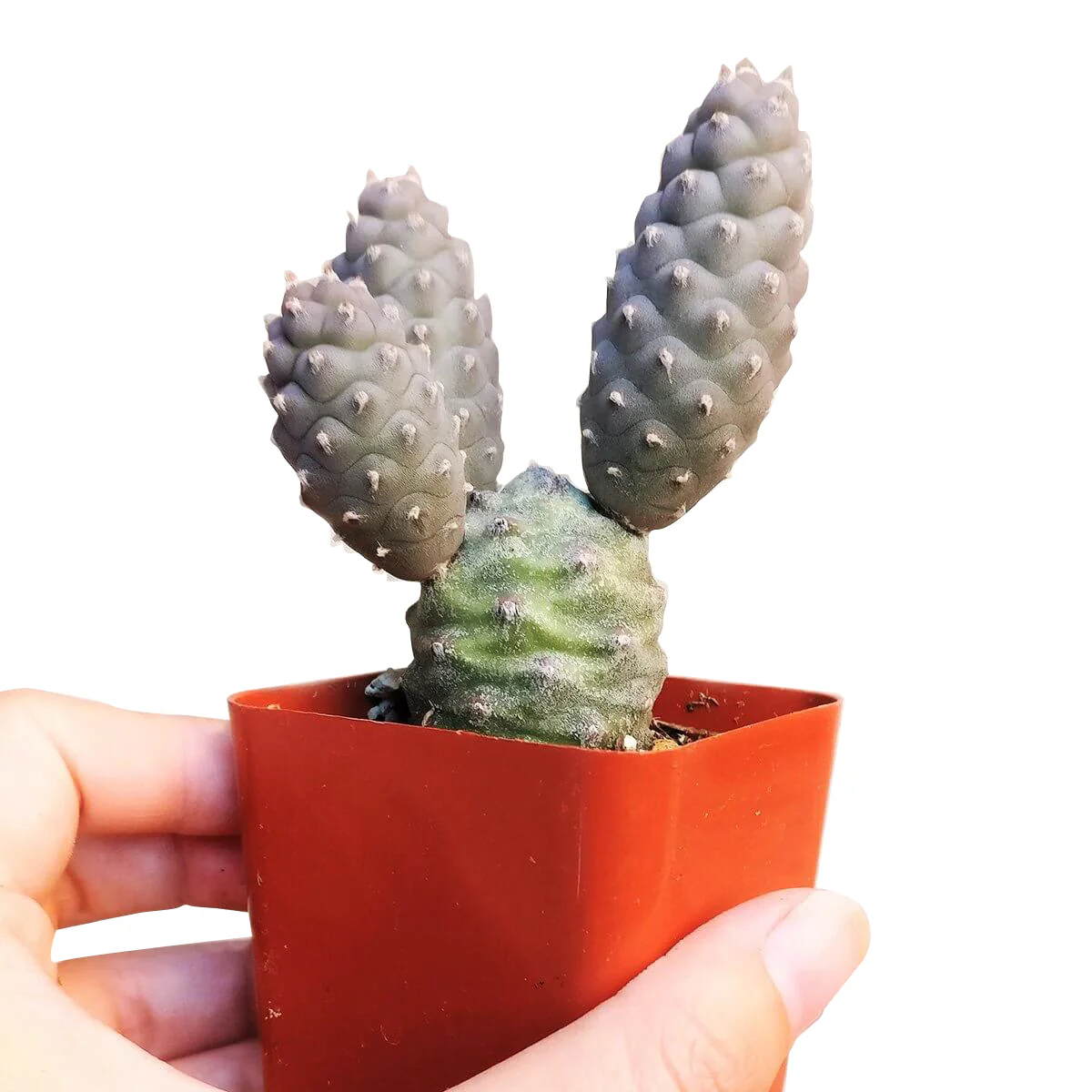
Devil's Tongue Cactus - Ferocactus latispinus
- Description
- Devil's Tongue Cactus - Ferocactus latispinus Care Guide
- FAQ/Common Issues
-
![]() Devil's Tongue Cactus - Ferocactus latispinus is a bold barrel cactus in the family Cactaceae, native to the dry highlands and rocky slopes of central and southern Mexico. It earns its striking common names, including candy cactus and crow's claw cactus, from its fierce, flattened spines. An easy-care drought-tolerant species, it is a fantastic choice for beginners and seasoned collectors alike.
Devil's Tongue Cactus - Ferocactus latispinus is a bold barrel cactus in the family Cactaceae, native to the dry highlands and rocky slopes of central and southern Mexico. It earns its striking common names, including candy cactus and crow's claw cactus, from its fierce, flattened spines. An easy-care drought-tolerant species, it is a fantastic choice for beginners and seasoned collectors alike.
 Devil's Tongue Cactus - Ferocactus latispinus forms a squat, globose to short-cylindrical green body with prominent ribs lined in clusters of radial spines and one dramatic, broad, hooked central spine that is often red or purplish in young plants. This signature flattened "tongue" spine is the defining feature that sets the devil's tongue barrel cactus apart from other Ferocactus species. The ribbed form has a sculptural, architectural quality that looks stunning in a 3-inch pot on a sunny windowsill or scaled up in a landscape setting.
 When given a nighttime temperature drop in autumn, Devil's Tongue Cactus - Ferocactus latispinus may reward you with a crown of small, funnel-shaped flowers in shades of purple-pink to violet, typically appearing at the top of the plant in late summer to autumn. The blooms are a delightful bonus on a mature specimen and add a pop of color to an already eye-catching plant. This species also has a history of edible and medicinal use among Indigenous communities in its native Mexico, adding cultural depth to its appeal.
 Devil's Tongue Cactus - Ferocactus latispinus is wonderfully beginner-friendly and survives happily on its own for up to ten days, making it ideal for travelers. It releases oxygen at night, which is a fun conversation starter on a bedroom or living room shelf. Keep this ferocactus latispinus away from air conditioning and heating vents to avoid drying drafts that stress the plant, though it does tolerate dry heated indoor air well. Place it high and away from small children and curious pets, since its spines are sharp, though the plant itself is pet-friendly.
-
 Devil's Tongue Cactus - Ferocactus latispinus thrives in partial to full sun and benefits from rotating regularly for even, balanced growth.
 Water Devil's Tongue Cactus - Ferocactus latispinus every two to three weeks in summer, reducing to once a month or less in winter.
 Devil's Tongue Cactus - Ferocactus latispinus does best in a fast-draining cactus and perlite mix to prevent root rot.
 Devil's Tongue Cactus - Ferocactus latispinus prefers temperatures between 50-95°F (10-35°C) and should be protected from frost below 25°F (-4°C).
![]() Devil's Tongue Cactus - Ferocactus latispinus is a slow to moderate grower needing only a light balanced cactus fertilizer once monthly during the active growing season.
Devil's Tongue Cactus - Ferocactus latispinus is a slow to moderate grower needing only a light balanced cactus fertilizer once monthly during the active growing season.
 Devil's Tongue Cactus - Ferocactus latispinus is rated for USDA Hardiness Zones 9 through 11, tolerating brief dips to around 25°F (-4°C) but performing best without frost exposure. Gardeners in California, Arizona, Texas, Nevada, New Mexico, Florida, Hawaii, and Louisiana will find this devil's tongue barrel cactus thrives outdoors year-round in their climates. It can also be grown outside through the warmer months in Georgia, South Carolina, Alabama, Mississippi, and along the milder coastal stretches of Oregon, with a move indoors before the first frost.
-
Q: How often should I water Devil's Tongue Cactus - Ferocactus latispinus?
A: Water every two to three weeks during spring and summer, then cut back to once a month or less in winter when the plant is dormant.
Q: Is Devil's Tongue Cactus - Ferocactus latispinus pet-friendly?
A: This plant is pet friendly, though its sharp spines can irritate skin or paws on contact, so placing it out of reach is still a smart idea.
Q: How much light does Devil's Tongue Cactus - Ferocactus latispinus need?
A: It thrives in partial to full sun and handles direct sun well. Rotate it regularly to encourage even, symmetrical growth.
Q: How big does Devil's Tongue Cactus - Ferocactus latispinus get?
A: This ferocactus latispinus is a slow grower that typically reaches six to twelve inches in diameter indoors, staying compact and manageable for most spaces.
Q: Can I move my Devil's Tongue Cactus - Ferocactus latispinus outside in summer?
A: Yes, it loves spending summer outdoors in a sunny spot. Just make sure to cover it from heavy rain and bring it back inside before autumn frosts arrive.
Q: Does Devil's Tongue Cactus - Ferocactus latispinus bloom indoors?
A: It can produce purple-pink flowers when mature, especially if given a cooler nighttime temperature drop in autumn to trigger budding. Patience pays off with this rewarding species.


Original: $8.00
-70%$8.00
$2.40Product Information
Product Information
Shipping & Returns
Shipping & Returns
Description
- Description
- Devil's Tongue Cactus - Ferocactus latispinus Care Guide
- FAQ/Common Issues
-
![]() Devil's Tongue Cactus - Ferocactus latispinus is a bold barrel cactus in the family Cactaceae, native to the dry highlands and rocky slopes of central and southern Mexico. It earns its striking common names, including candy cactus and crow's claw cactus, from its fierce, flattened spines. An easy-care drought-tolerant species, it is a fantastic choice for beginners and seasoned collectors alike.
Devil's Tongue Cactus - Ferocactus latispinus is a bold barrel cactus in the family Cactaceae, native to the dry highlands and rocky slopes of central and southern Mexico. It earns its striking common names, including candy cactus and crow's claw cactus, from its fierce, flattened spines. An easy-care drought-tolerant species, it is a fantastic choice for beginners and seasoned collectors alike.
Devil's Tongue Cactus - Ferocactus latispinus forms a squat, globose to short-cylindrical green body with prominent ribs lined in clusters of radial spines and one dramatic, broad, hooked central spine that is often red or purplish in young plants. This signature flattened "tongue" spine is the defining feature that sets the devil's tongue barrel cactus apart from other Ferocactus species. The ribbed form has a sculptural, architectural quality that looks stunning in a 3-inch pot on a sunny windowsill or scaled up in a landscape setting.
When given a nighttime temperature drop in autumn, Devil's Tongue Cactus - Ferocactus latispinus may reward you with a crown of small, funnel-shaped flowers in shades of purple-pink to violet, typically appearing at the top of the plant in late summer to autumn. The blooms are a delightful bonus on a mature specimen and add a pop of color to an already eye-catching plant. This species also has a history of edible and medicinal use among Indigenous communities in its native Mexico, adding cultural depth to its appeal.
Devil's Tongue Cactus - Ferocactus latispinus is wonderfully beginner-friendly and survives happily on its own for up to ten days, making it ideal for travelers. It releases oxygen at night, which is a fun conversation starter on a bedroom or living room shelf. Keep this ferocactus latispinus away from air conditioning and heating vents to avoid drying drafts that stress the plant, though it does tolerate dry heated indoor air well. Place it high and away from small children and curious pets, since its spines are sharp, though the plant itself is pet-friendly.
-
Devil's Tongue Cactus - Ferocactus latispinus thrives in partial to full sun and benefits from rotating regularly for even, balanced growth.
Water Devil's Tongue Cactus - Ferocactus latispinus every two to three weeks in summer, reducing to once a month or less in winter.
Devil's Tongue Cactus - Ferocactus latispinus does best in a fast-draining cactus and perlite mix to prevent root rot.
Devil's Tongue Cactus - Ferocactus latispinus prefers temperatures between 50-95°F (10-35°C) and should be protected from frost below 25°F (-4°C).
![]() Devil's Tongue Cactus - Ferocactus latispinus is a slow to moderate grower needing only a light balanced cactus fertilizer once monthly during the active growing season.
Devil's Tongue Cactus - Ferocactus latispinus is a slow to moderate grower needing only a light balanced cactus fertilizer once monthly during the active growing season.
Devil's Tongue Cactus - Ferocactus latispinus is rated for USDA Hardiness Zones 9 through 11, tolerating brief dips to around 25°F (-4°C) but performing best without frost exposure. Gardeners in California, Arizona, Texas, Nevada, New Mexico, Florida, Hawaii, and Louisiana will find this devil's tongue barrel cactus thrives outdoors year-round in their climates. It can also be grown outside through the warmer months in Georgia, South Carolina, Alabama, Mississippi, and along the milder coastal stretches of Oregon, with a move indoors before the first frost.
-
Q: How often should I water Devil's Tongue Cactus - Ferocactus latispinus?
A: Water every two to three weeks during spring and summer, then cut back to once a month or less in winter when the plant is dormant.
Q: Is Devil's Tongue Cactus - Ferocactus latispinus pet-friendly?
A: This plant is pet friendly, though its sharp spines can irritate skin or paws on contact, so placing it out of reach is still a smart idea.
Q: How much light does Devil's Tongue Cactus - Ferocactus latispinus need?
A: It thrives in partial to full sun and handles direct sun well. Rotate it regularly to encourage even, symmetrical growth.
Q: How big does Devil's Tongue Cactus - Ferocactus latispinus get?
A: This ferocactus latispinus is a slow grower that typically reaches six to twelve inches in diameter indoors, staying compact and manageable for most spaces.
Q: Can I move my Devil's Tongue Cactus - Ferocactus latispinus outside in summer?
A: Yes, it loves spending summer outdoors in a sunny spot. Just make sure to cover it from heavy rain and bring it back inside before autumn frosts arrive.
Q: Does Devil's Tongue Cactus - Ferocactus latispinus bloom indoors?
A: It can produce purple-pink flowers when mature, especially if given a cooler nighttime temperature drop in autumn to trigger budding. Patience pays off with this rewarding species.