Crassula Mesembryanthemoides
- Description
- Crassula Mesembryanthemoides Care Guide
- FAQ/Common Issues
-
![]() Crassula Mesembryanthemoides is a rare fuzzy succulent belonging to the Crassula genus within the Crassulaceae family. Native to the Eastern Cape of South Africa, it grows naturally in rocky, dry hillsides where drainage is excellent and sunlight is intense. This easy care gem has built a devoted following among succulent collectors who love its unusual texture and upright clustering habit.
Crassula Mesembryanthemoides is a rare fuzzy succulent belonging to the Crassula genus within the Crassulaceae family. Native to the Eastern Cape of South Africa, it grows naturally in rocky, dry hillsides where drainage is excellent and sunlight is intense. This easy care gem has built a devoted following among succulent collectors who love its unusual texture and upright clustering habit.
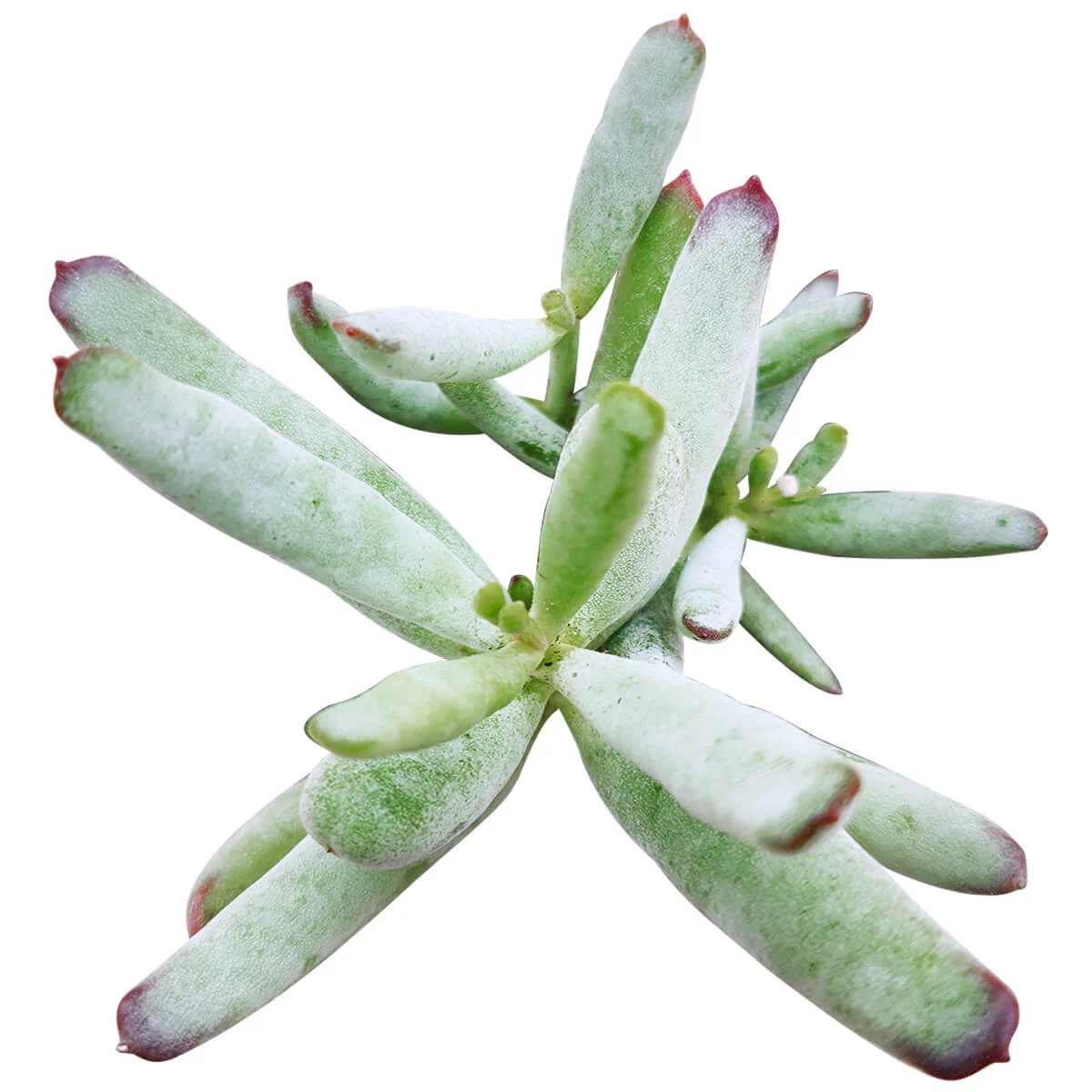
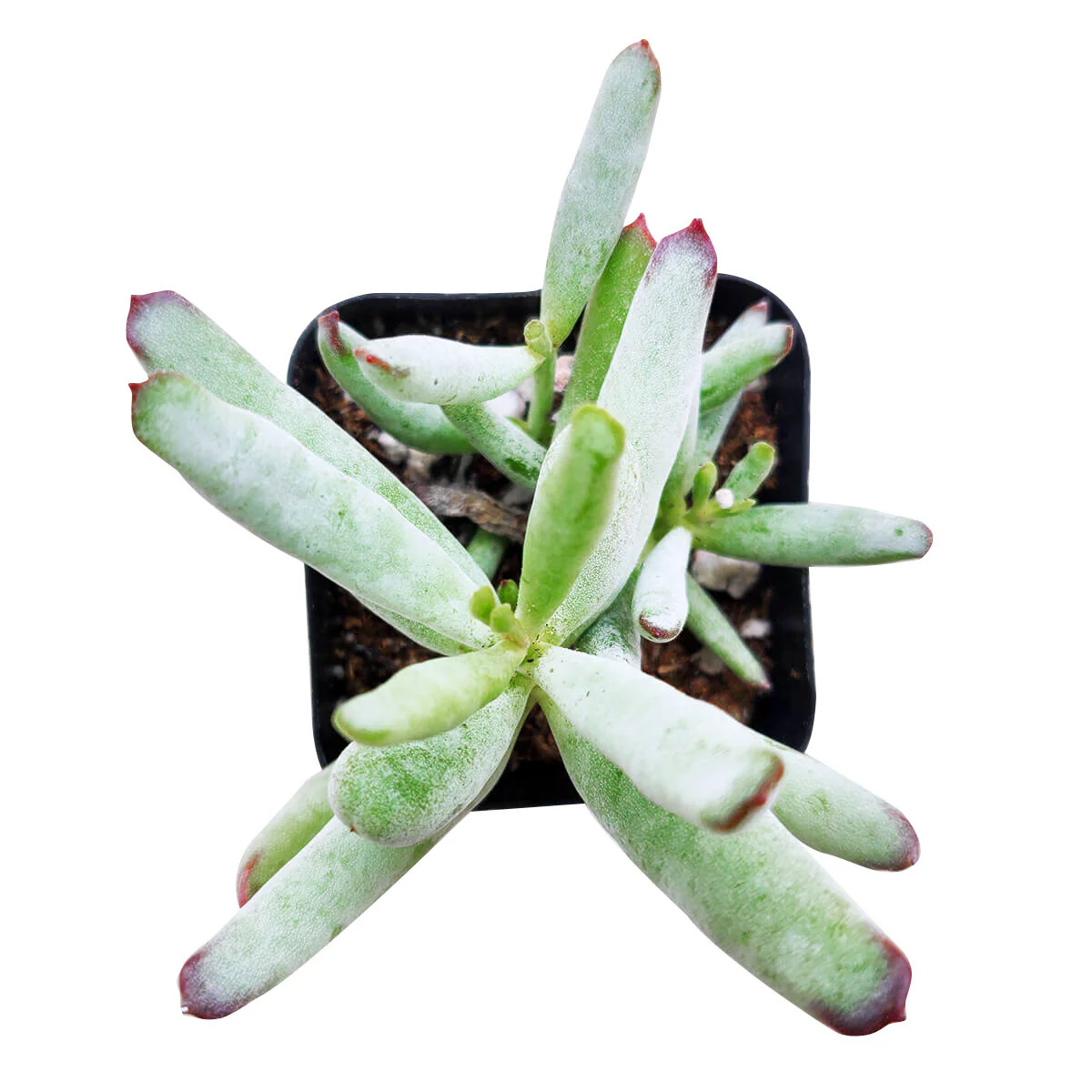
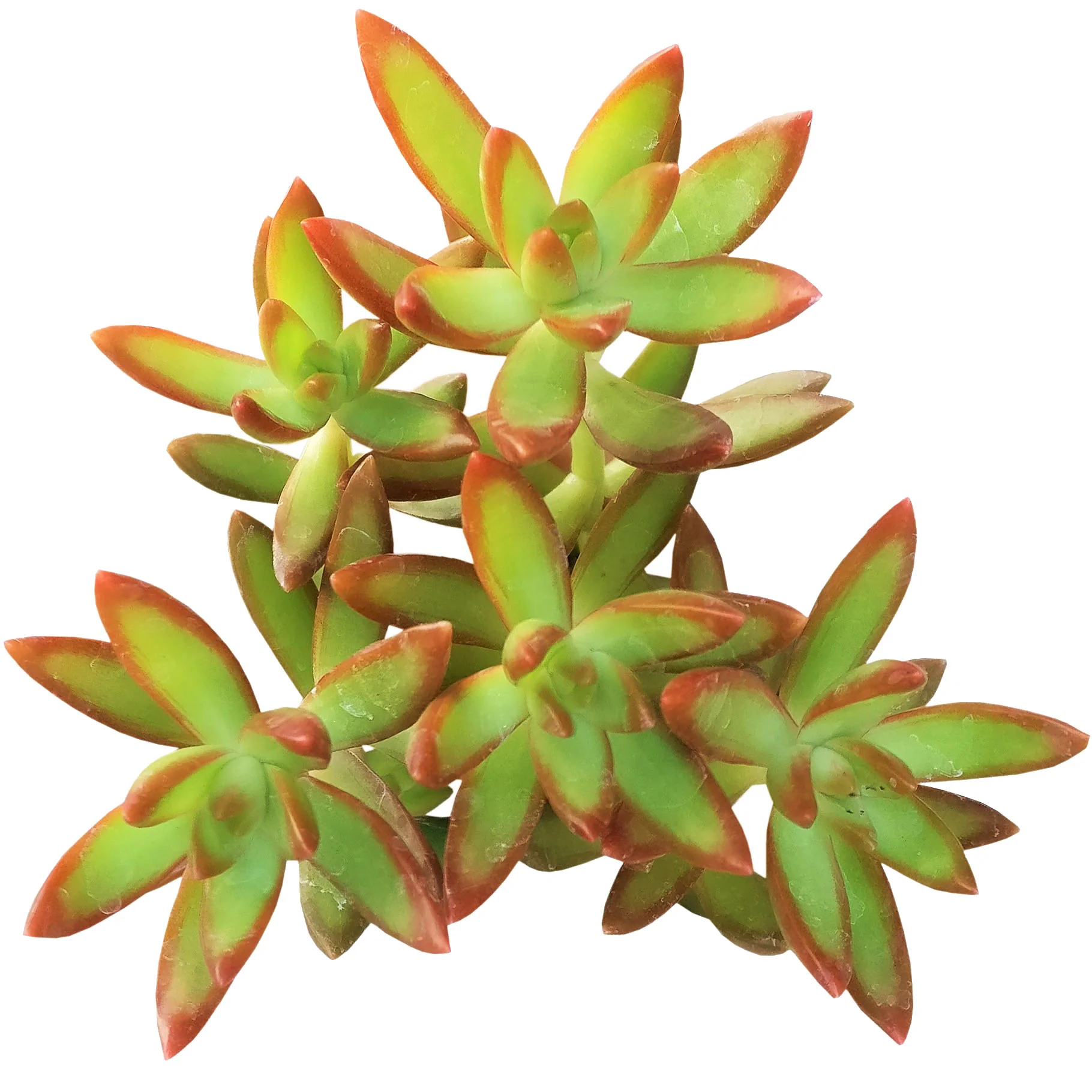
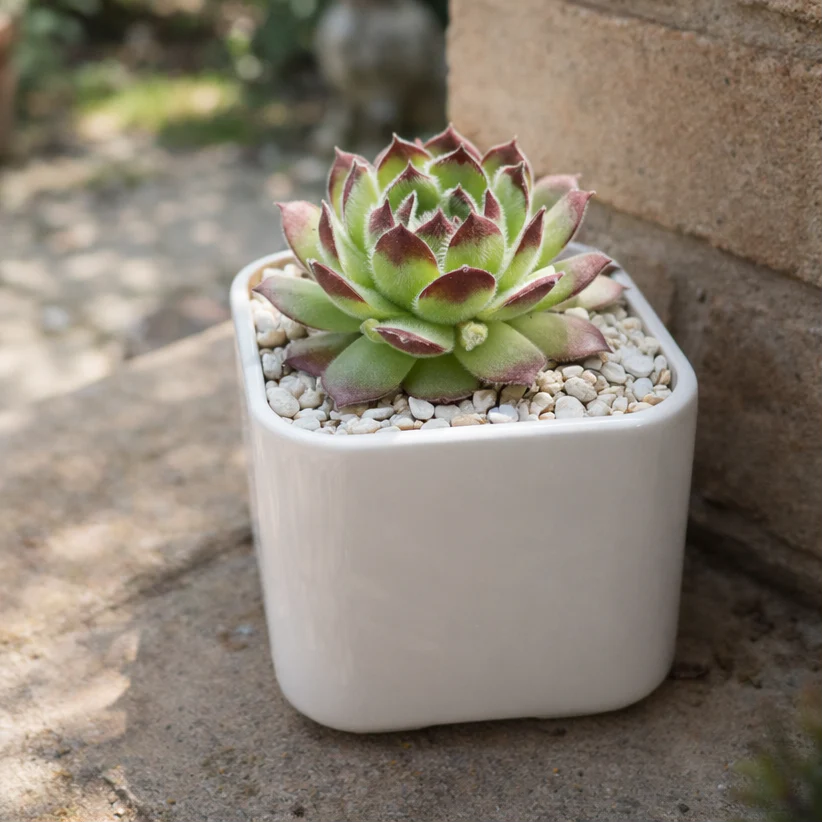
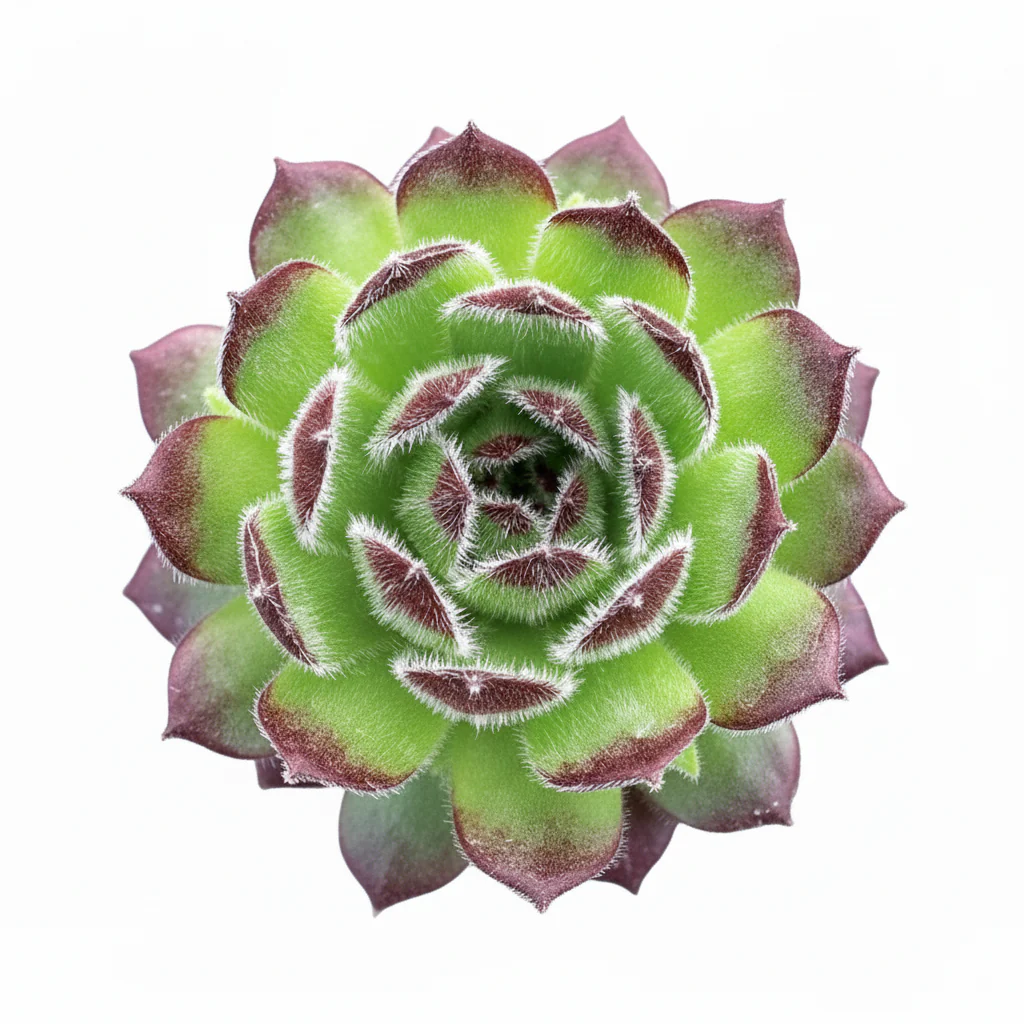
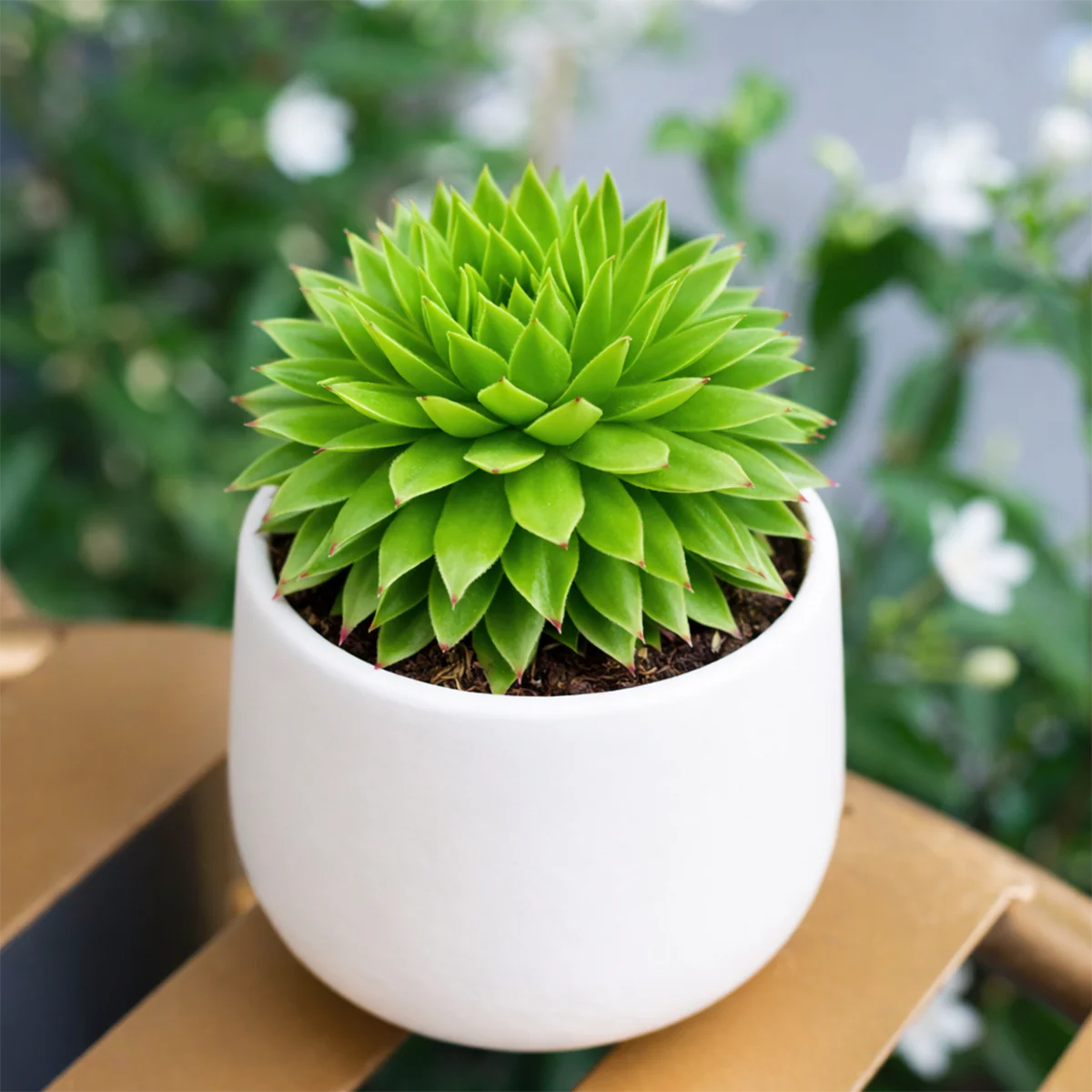
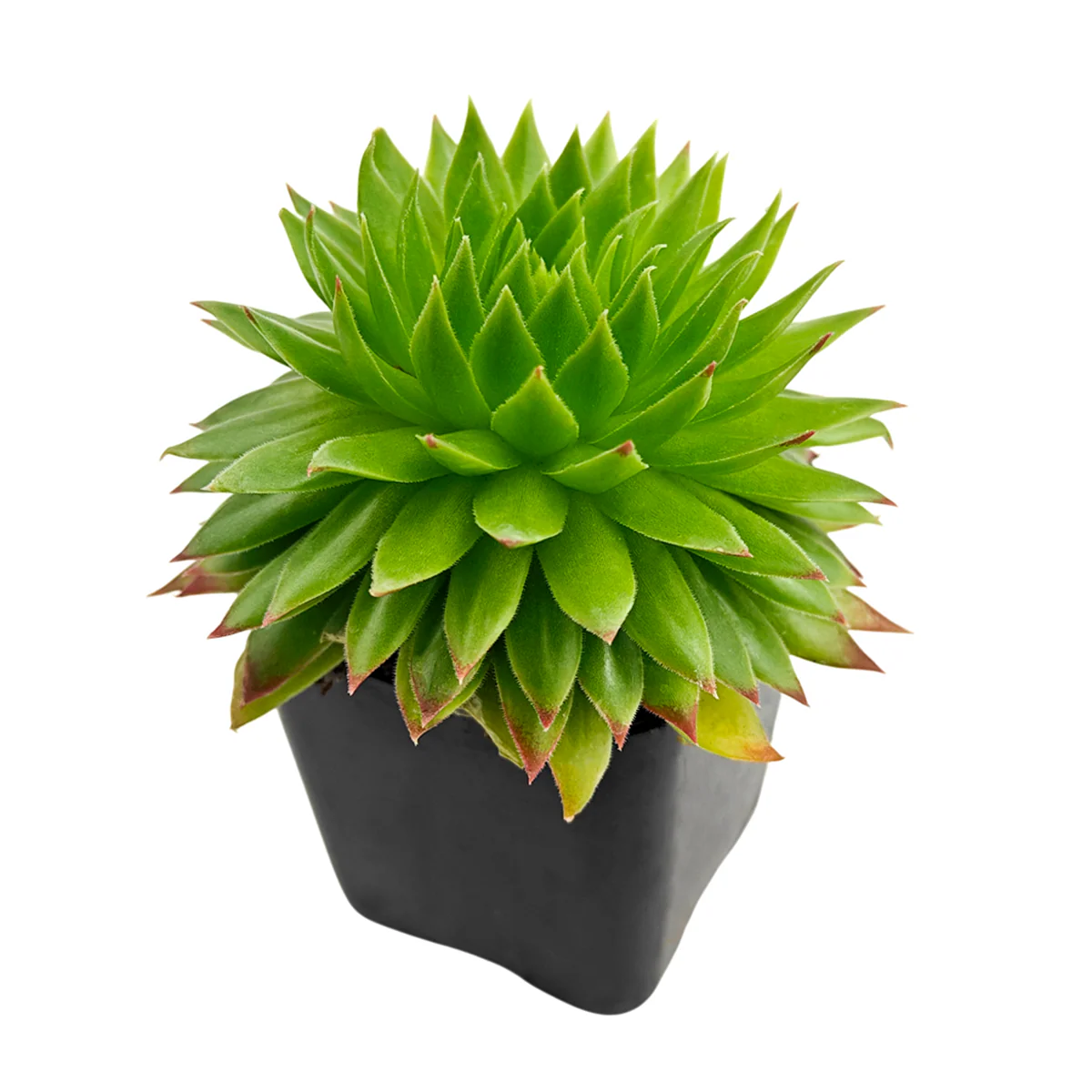
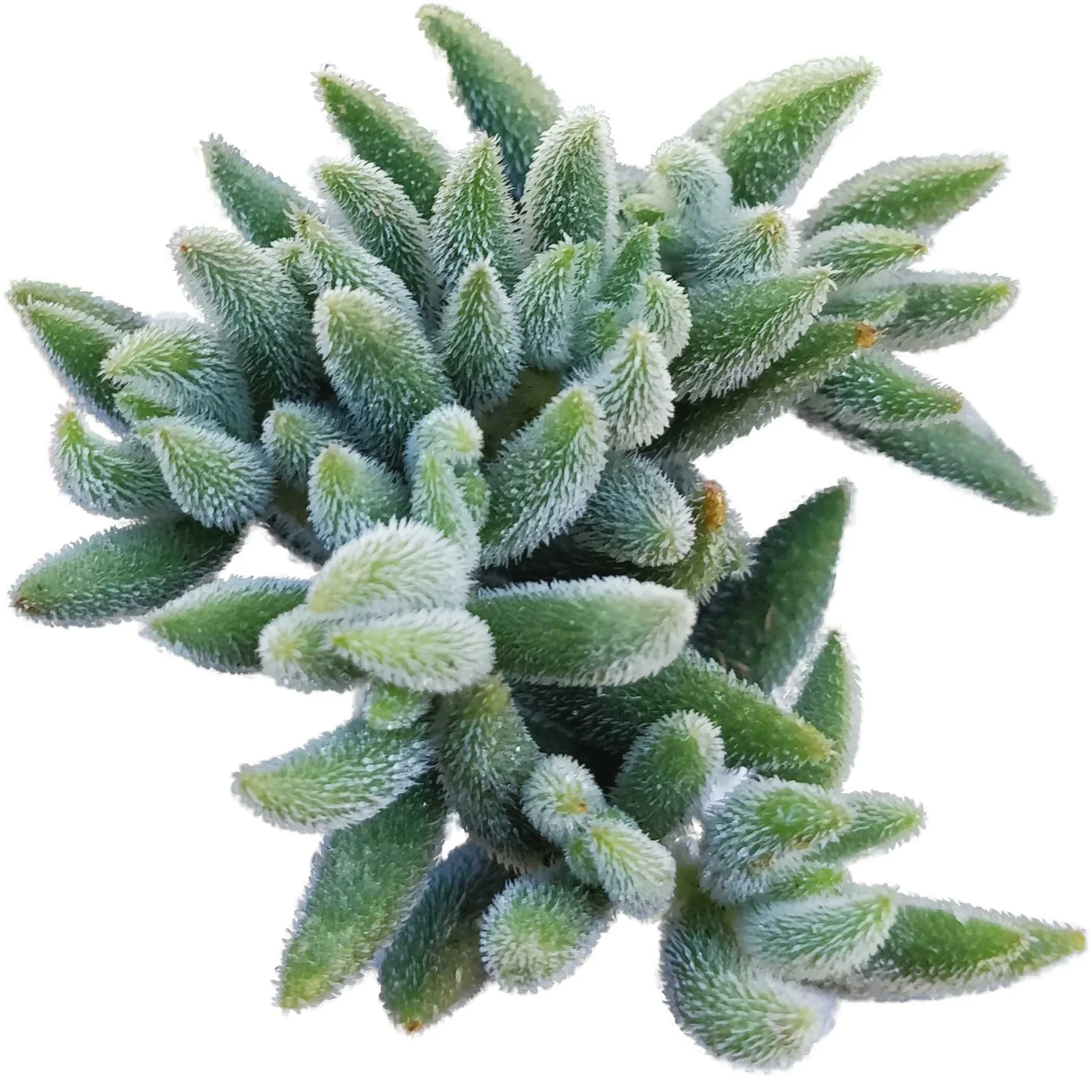
 Crassula Mesembryanthemoides is instantly recognizable for its densely hairy, elongated green leaves covered in fine white bristles that give it a soft, frosted appearance. The plant grows in an upright, clustering form, producing tidy rosette-like stems that slowly multiply into a fuller clump over time. That distinctive fuzzy coat is what earns it nicknames like crassula ice plant and crassula moon glow among enthusiasts, and it makes this hairy succulent genuinely hard to mistake for anything else.
 Crassula Mesembryanthemoides produces small, star-shaped white to pale pink flowers, typically appearing in autumn to winter when nights grow cooler. A drop in nighttime temperature is actually the key trigger for blooming, so that seasonal chill is your best tool for encouraging flowers. The blooms are modest but charming, adding a delicate detail to an already striking plant.
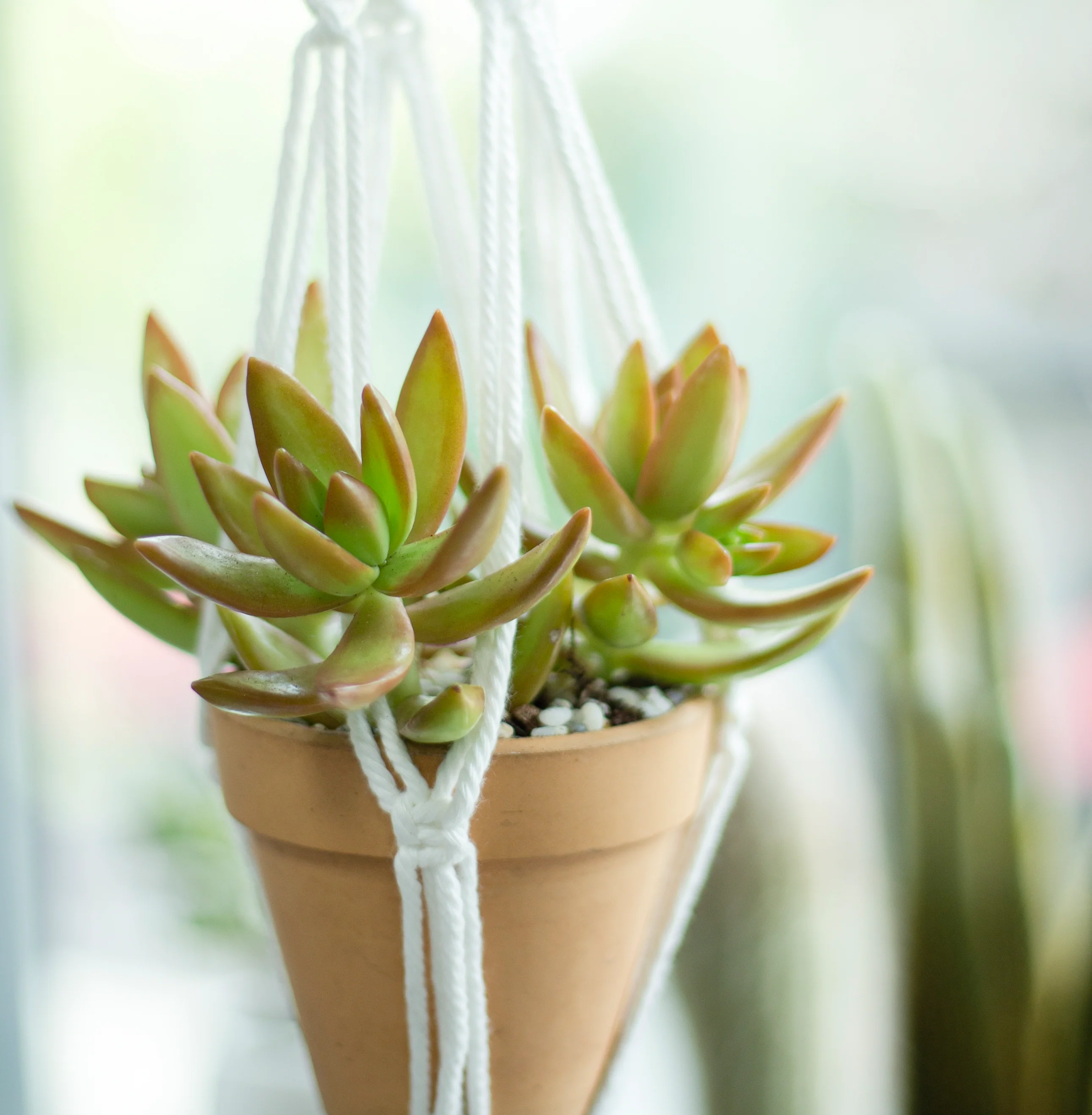
 Crassula Mesembryanthemoides is a wonderful choice for a sunny windowsill, a 4" pot on a shelf, or even a terrarium display where its sculptural form can shine. It genuinely tolerates dry heated indoor air, making it forgiving through winter months, and it loves spending summer outdoors where the fresh air and light encourage healthy clustering growth. Just be sure to cover it from rain or bring it under shelter, since excess moisture invites rot. Because Crassula Mesembryanthemoides is considered rare in cultivation, it draws real excitement from collectors and makes a memorable gift for anyone who loves something a little out of the ordinary.
-
 Crassula Mesembryanthemoides thrives in bright indirect light and should be kept away from harsh direct south-facing windows where leaves may scorch.
 Water Crassula Mesembryanthemoides deeply every 10 to 14 days in summer, cutting back to once every 3 to 4 weeks in winter.
 Crassula Mesembryanthemoides does best in a well-draining cactus and succulent mix blended with extra perlite for fast drainage.
 Crassula Mesembryanthemoides prefers temperatures between 60 and 80°F (15 to 27°C) and should be brought indoors before temps fall near freezing.
![]() Crassula Mesembryanthemoides is a slow to moderate grower that benefits from a light, diluted succulent fertilizer once in spring and once in summer.
Crassula Mesembryanthemoides is a slow to moderate grower that benefits from a light, diluted succulent fertilizer once in spring and once in summer.
 Crassula Mesembryanthemoides is reliably hardy in USDA Zones 9 through 11, tolerating brief dips to around 25°F (-4°C) but performing best well above freezing. Gardeners growing Crassula Mesembryanthemoides outdoors year-round will find ideal conditions across California, Arizona, Texas, Florida, Hawaii, Nevada, Louisiana, Georgia, South Carolina, Alabama, and Mississippi. Coastal regions of Oregon, parts of New Mexico, and sheltered microclimates in Arkansas and North Carolina can also support this plant through mild winters with minimal protection.
-
Q: How often should I water Crassula Mesembryanthemoides?
A: Water Crassula Mesembryanthemoides every 10 to 14 days in the growing season, always letting the soil dry out completely between waterings. In winter, reduce to once every three to four weeks.
Q: Is Crassula Mesembryanthemoides safe around pets and children?
A: Cats and dogs should not be left to nibble or eat Crassula Mesembryanthemoides, so keeping it on a high shelf out of reach is the safest approach. It is also best placed away from small children who might handle or mouth the plant.
Q: How much light does Crassula Mesembryanthemoides need?
A: Crassula Mesembryanthemoides does best in bright indirect light and can scorch if placed directly against a south-facing window with intense midday sun. Rotate the pot regularly for even, balanced growth on all sides.
Q: How do I get Crassula Mesembryanthemoides to bloom?
A: Crassula Mesembryanthemoides needs a drop in nighttime temperature in autumn to trigger blooming, so moving it somewhere cooler in the evenings is very helpful. Keeping it slightly drier during this period also encourages flower development.
Q: Can Crassula Mesembryanthemoides go outside in summer?
A: Yes, Crassula Mesembryanthemoides loves spending summer outdoors in a bright, sheltered spot. Just make sure to protect it from heavy rain and bring it back indoors once autumn nights start to cool significantly.
Q: How do I propagate Crassula Mesembryanthemoides?
A: Crassula Mesembryanthemoides is most easily propagated by stem cuttings, which should be left to callous for a day or two before being placed in dry succulent mix. New roots typically establish within two to four weeks in warm, bright conditions.


Original: $7.30
-70%$7.30
$2.19Product Information
Product Information
Shipping & Returns
Shipping & Returns
Description
- Description
- Crassula Mesembryanthemoides Care Guide
- FAQ/Common Issues
-
![]() Crassula Mesembryanthemoides is a rare fuzzy succulent belonging to the Crassula genus within the Crassulaceae family. Native to the Eastern Cape of South Africa, it grows naturally in rocky, dry hillsides where drainage is excellent and sunlight is intense. This easy care gem has built a devoted following among succulent collectors who love its unusual texture and upright clustering habit.
Crassula Mesembryanthemoides is a rare fuzzy succulent belonging to the Crassula genus within the Crassulaceae family. Native to the Eastern Cape of South Africa, it grows naturally in rocky, dry hillsides where drainage is excellent and sunlight is intense. This easy care gem has built a devoted following among succulent collectors who love its unusual texture and upright clustering habit.
Crassula Mesembryanthemoides is instantly recognizable for its densely hairy, elongated green leaves covered in fine white bristles that give it a soft, frosted appearance. The plant grows in an upright, clustering form, producing tidy rosette-like stems that slowly multiply into a fuller clump over time. That distinctive fuzzy coat is what earns it nicknames like crassula ice plant and crassula moon glow among enthusiasts, and it makes this hairy succulent genuinely hard to mistake for anything else.
Crassula Mesembryanthemoides produces small, star-shaped white to pale pink flowers, typically appearing in autumn to winter when nights grow cooler. A drop in nighttime temperature is actually the key trigger for blooming, so that seasonal chill is your best tool for encouraging flowers. The blooms are modest but charming, adding a delicate detail to an already striking plant.
Crassula Mesembryanthemoides is a wonderful choice for a sunny windowsill, a 4" pot on a shelf, or even a terrarium display where its sculptural form can shine. It genuinely tolerates dry heated indoor air, making it forgiving through winter months, and it loves spending summer outdoors where the fresh air and light encourage healthy clustering growth. Just be sure to cover it from rain or bring it under shelter, since excess moisture invites rot. Because Crassula Mesembryanthemoides is considered rare in cultivation, it draws real excitement from collectors and makes a memorable gift for anyone who loves something a little out of the ordinary.
-
Crassula Mesembryanthemoides thrives in bright indirect light and should be kept away from harsh direct south-facing windows where leaves may scorch.
Water Crassula Mesembryanthemoides deeply every 10 to 14 days in summer, cutting back to once every 3 to 4 weeks in winter.
Crassula Mesembryanthemoides does best in a well-draining cactus and succulent mix blended with extra perlite for fast drainage.
Crassula Mesembryanthemoides prefers temperatures between 60 and 80°F (15 to 27°C) and should be brought indoors before temps fall near freezing.
![]() Crassula Mesembryanthemoides is a slow to moderate grower that benefits from a light, diluted succulent fertilizer once in spring and once in summer.
Crassula Mesembryanthemoides is a slow to moderate grower that benefits from a light, diluted succulent fertilizer once in spring and once in summer.
Crassula Mesembryanthemoides is reliably hardy in USDA Zones 9 through 11, tolerating brief dips to around 25°F (-4°C) but performing best well above freezing. Gardeners growing Crassula Mesembryanthemoides outdoors year-round will find ideal conditions across California, Arizona, Texas, Florida, Hawaii, Nevada, Louisiana, Georgia, South Carolina, Alabama, and Mississippi. Coastal regions of Oregon, parts of New Mexico, and sheltered microclimates in Arkansas and North Carolina can also support this plant through mild winters with minimal protection.
-
Q: How often should I water Crassula Mesembryanthemoides?
A: Water Crassula Mesembryanthemoides every 10 to 14 days in the growing season, always letting the soil dry out completely between waterings. In winter, reduce to once every three to four weeks.
Q: Is Crassula Mesembryanthemoides safe around pets and children?
A: Cats and dogs should not be left to nibble or eat Crassula Mesembryanthemoides, so keeping it on a high shelf out of reach is the safest approach. It is also best placed away from small children who might handle or mouth the plant.
Q: How much light does Crassula Mesembryanthemoides need?
A: Crassula Mesembryanthemoides does best in bright indirect light and can scorch if placed directly against a south-facing window with intense midday sun. Rotate the pot regularly for even, balanced growth on all sides.
Q: How do I get Crassula Mesembryanthemoides to bloom?
A: Crassula Mesembryanthemoides needs a drop in nighttime temperature in autumn to trigger blooming, so moving it somewhere cooler in the evenings is very helpful. Keeping it slightly drier during this period also encourages flower development.
Q: Can Crassula Mesembryanthemoides go outside in summer?
A: Yes, Crassula Mesembryanthemoides loves spending summer outdoors in a bright, sheltered spot. Just make sure to protect it from heavy rain and bring it back indoors once autumn nights start to cool significantly.
Q: How do I propagate Crassula Mesembryanthemoides?
A: Crassula Mesembryanthemoides is most easily propagated by stem cuttings, which should be left to callous for a day or two before being placed in dry succulent mix. New roots typically establish within two to four weeks in warm, bright conditions.