
Blue Jelly Bean Sedum
- Description
- Blue Jelly Bean Sedum Care Guide
- FAQ/Common Issues
-
![]() Blue Jelly Bean Sedum is a charming succulent in the Sedum genus, beloved by easy-care plant enthusiasts and serious collectors alike. Native to Mexico, it naturally grows in rocky, sun-drenched terrain where drought tolerance is a way of life. This tough little plant has traveled from those arid hillsides straight into the hearts of succulent lovers everywhere.
Blue Jelly Bean Sedum is a charming succulent in the Sedum genus, beloved by easy-care plant enthusiasts and serious collectors alike. Native to Mexico, it naturally grows in rocky, sun-drenched terrain where drought tolerance is a way of life. This tough little plant has traveled from those arid hillsides straight into the hearts of succulent lovers everywhere.
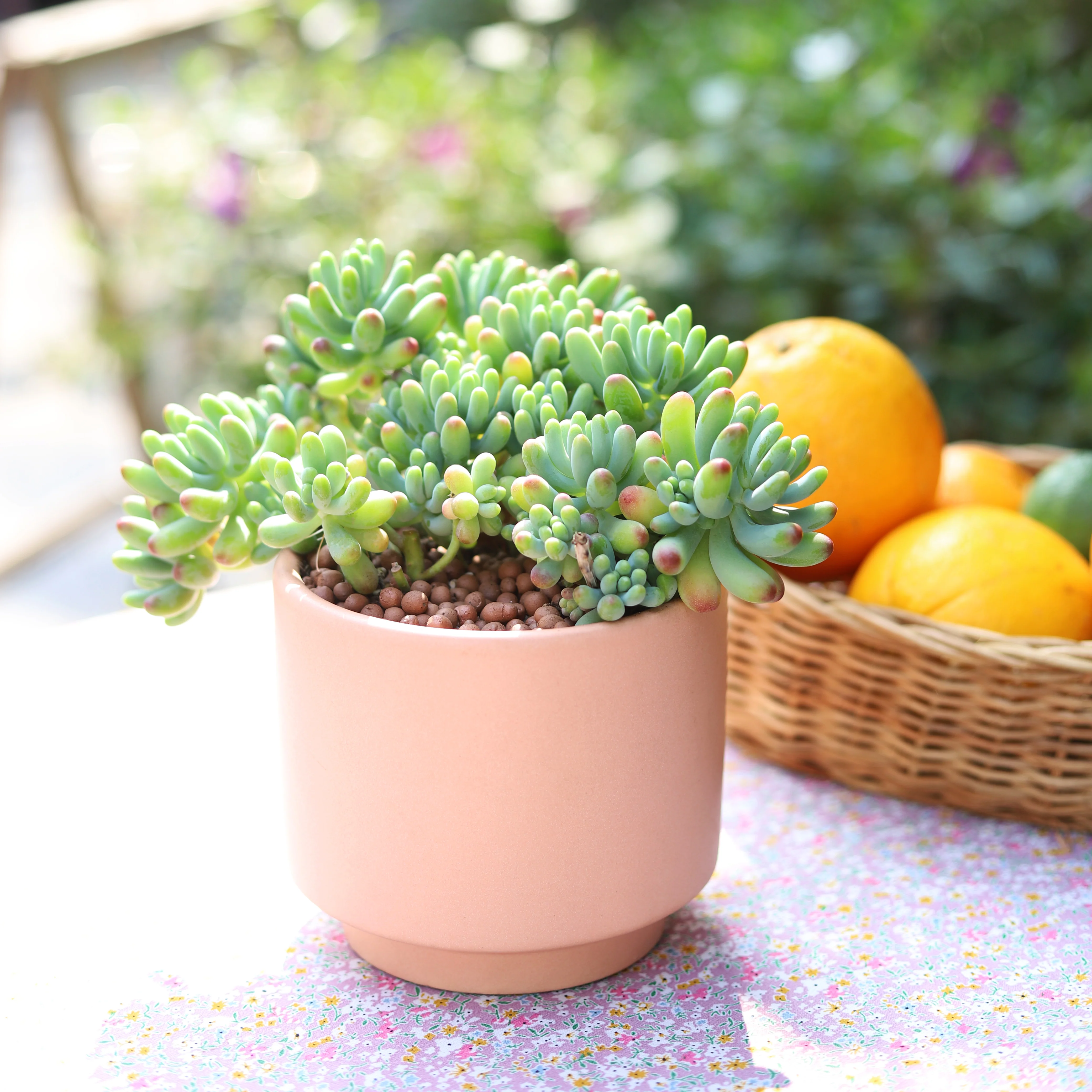
 Blue Jelly Bean Sedum gets its name from its plump, cylindrical leaves that genuinely resemble jelly beans, packed in dense clusters along upright and trailing stems. The foliage is a cool blue-green, often blushing red or yellow at the tips when given plenty of sun, creating a living color show right on your shelf. Its clustering, trailing growth habit gives it a lush, architectural presence that works beautifully in pots, on shelves, or spilling over the edge of a hanging planter.
 Blue Jelly Bean Sedum is a prolific bloomer, producing cheerful yellow star-shaped flowers typically in late winter to early spring. The blooms emerge in small clusters above the foliage and add a bright pop of color just when you need it most after winter. It is worth noting that Blue Jelly Bean Sedum produces pollen during bloom season, so keep that in mind if you have allergy sensitivities at home.
 Blue Jelly Bean Sedum is one of those rare finds that feels both like a casual easy-care succulent and a genuine collector gem, fitting right into bohemian and architectural plant displays. It loves spending summers outdoors and can even stay outside into autumn in mild climates, soaking up the seasonal temperature drop that encourages blooming. Because it clusters and trails beautifully, a hanging hook or a high shelf is the perfect home for it, and that height also keeps it safely out of reach of curious toddlers and pets since Blue Jelly Bean Sedum can be harmful if ingested.
-
 Blue Jelly Bean Sedum thrives in bright indirect light, partial sun, or full sun, rotating the pot regularly for even, balanced growth.
 Water Blue Jelly Bean Sedum deeply every 10 to 14 days in summer, cutting back to once a month or less in winter.
 Blue Jelly Bean Sedum performs best in a gritty, fast-draining cactus and succulent mix amended with extra perlite.
 Blue Jelly Bean Sedum prefers temperatures between 65 and 80 degrees Fahrenheit (18 to 27 degrees Celsius) and is frost-sensitive below 25 degrees Fahrenheit (-4 degrees Celsius).
![]() Blue Jelly Bean Sedum is an easy-care, moderate grower that benefits from a light balanced succulent fertilizer once or twice during the growing season.
Blue Jelly Bean Sedum is an easy-care, moderate grower that benefits from a light balanced succulent fertilizer once or twice during the growing season.
 Blue Jelly Bean Sedum is hardy in USDA Zones 9 through 11, tolerating minimum temperatures down to around 25 degrees Fahrenheit (-4 degrees Celsius) before frost damage occurs. Gardeners growing Blue Jelly Bean Sedum outdoors year-round will find it right at home across California, Arizona, Texas, Florida, Hawaii, Nevada, New Mexico, Louisiana, Mississippi, Alabama, Georgia, South Carolina, and coastal areas of Oregon and Washington. It also thrives in protected microclimates throughout the warmer pockets of Arkansas and North Carolina that edge into Zone 9.
-
Q: How often should I water Blue Jelly Bean Sedum?
A: Water Blue Jelly Bean Sedum every 10 to 14 days in the growing season, allowing the soil to dry out completely between waterings. In winter, reduce watering to once a month or less.
Q: Is Blue Jelly Bean Sedum safe for cats and dogs?
A: Blue Jelly Bean Sedum can be harmful if ingested by pets, so keep it on a high shelf out of reach of cats and dogs. Sap contact may also cause mild skin or paw irritation, so handle with care.
Q: How do I propagate Blue Jelly Bean Sedum?
A: Blue Jelly Bean Sedum propagates easily from stem cuttings or individual leaves placed on dry, well-draining succulent soil. Allow cuttings to callous for a day or two before planting, then mist lightly until roots develop.
Q: Can Blue Jelly Bean Sedum handle full sun?
A: Yes, Blue Jelly Bean Sedum loves full sun and actually develops its best red and yellow leaf-tip coloring under bright, direct light. Avoid scorching south-facing windows with intense reflected heat, and rotate the pot regularly for even growth.
Q: Why are the leaves on my Blue Jelly Bean Sedum turning yellow?
A: Yellow leaves on Blue Jelly Bean Sedum are most often caused by overwatering or soggy soil, which leads to root stress. Make sure the pot has drainage holes and the soil dries out fully between waterings.
Q: Can Blue Jelly Bean Sedum go outside for the summer?
A: Absolutely, Blue Jelly Bean Sedum loves spending summer outdoors in a bright spot and can even stay outside into autumn in mild climates. Just bring it back indoors before temperatures drop toward freezing.


Original: $8.00
-70%$8.00
$2.40Product Information
Product Information
Shipping & Returns
Shipping & Returns
Description
- Description
- Blue Jelly Bean Sedum Care Guide
- FAQ/Common Issues
-
![]() Blue Jelly Bean Sedum is a charming succulent in the Sedum genus, beloved by easy-care plant enthusiasts and serious collectors alike. Native to Mexico, it naturally grows in rocky, sun-drenched terrain where drought tolerance is a way of life. This tough little plant has traveled from those arid hillsides straight into the hearts of succulent lovers everywhere.
Blue Jelly Bean Sedum is a charming succulent in the Sedum genus, beloved by easy-care plant enthusiasts and serious collectors alike. Native to Mexico, it naturally grows in rocky, sun-drenched terrain where drought tolerance is a way of life. This tough little plant has traveled from those arid hillsides straight into the hearts of succulent lovers everywhere.
Blue Jelly Bean Sedum gets its name from its plump, cylindrical leaves that genuinely resemble jelly beans, packed in dense clusters along upright and trailing stems. The foliage is a cool blue-green, often blushing red or yellow at the tips when given plenty of sun, creating a living color show right on your shelf. Its clustering, trailing growth habit gives it a lush, architectural presence that works beautifully in pots, on shelves, or spilling over the edge of a hanging planter.
Blue Jelly Bean Sedum is a prolific bloomer, producing cheerful yellow star-shaped flowers typically in late winter to early spring. The blooms emerge in small clusters above the foliage and add a bright pop of color just when you need it most after winter. It is worth noting that Blue Jelly Bean Sedum produces pollen during bloom season, so keep that in mind if you have allergy sensitivities at home.
Blue Jelly Bean Sedum is one of those rare finds that feels both like a casual easy-care succulent and a genuine collector gem, fitting right into bohemian and architectural plant displays. It loves spending summers outdoors and can even stay outside into autumn in mild climates, soaking up the seasonal temperature drop that encourages blooming. Because it clusters and trails beautifully, a hanging hook or a high shelf is the perfect home for it, and that height also keeps it safely out of reach of curious toddlers and pets since Blue Jelly Bean Sedum can be harmful if ingested.
-
Blue Jelly Bean Sedum thrives in bright indirect light, partial sun, or full sun, rotating the pot regularly for even, balanced growth.
Water Blue Jelly Bean Sedum deeply every 10 to 14 days in summer, cutting back to once a month or less in winter.
Blue Jelly Bean Sedum performs best in a gritty, fast-draining cactus and succulent mix amended with extra perlite.
Blue Jelly Bean Sedum prefers temperatures between 65 and 80 degrees Fahrenheit (18 to 27 degrees Celsius) and is frost-sensitive below 25 degrees Fahrenheit (-4 degrees Celsius).
![]() Blue Jelly Bean Sedum is an easy-care, moderate grower that benefits from a light balanced succulent fertilizer once or twice during the growing season.
Blue Jelly Bean Sedum is an easy-care, moderate grower that benefits from a light balanced succulent fertilizer once or twice during the growing season.
Blue Jelly Bean Sedum is hardy in USDA Zones 9 through 11, tolerating minimum temperatures down to around 25 degrees Fahrenheit (-4 degrees Celsius) before frost damage occurs. Gardeners growing Blue Jelly Bean Sedum outdoors year-round will find it right at home across California, Arizona, Texas, Florida, Hawaii, Nevada, New Mexico, Louisiana, Mississippi, Alabama, Georgia, South Carolina, and coastal areas of Oregon and Washington. It also thrives in protected microclimates throughout the warmer pockets of Arkansas and North Carolina that edge into Zone 9.
-
Q: How often should I water Blue Jelly Bean Sedum?
A: Water Blue Jelly Bean Sedum every 10 to 14 days in the growing season, allowing the soil to dry out completely between waterings. In winter, reduce watering to once a month or less.
Q: Is Blue Jelly Bean Sedum safe for cats and dogs?
A: Blue Jelly Bean Sedum can be harmful if ingested by pets, so keep it on a high shelf out of reach of cats and dogs. Sap contact may also cause mild skin or paw irritation, so handle with care.
Q: How do I propagate Blue Jelly Bean Sedum?
A: Blue Jelly Bean Sedum propagates easily from stem cuttings or individual leaves placed on dry, well-draining succulent soil. Allow cuttings to callous for a day or two before planting, then mist lightly until roots develop.
Q: Can Blue Jelly Bean Sedum handle full sun?
A: Yes, Blue Jelly Bean Sedum loves full sun and actually develops its best red and yellow leaf-tip coloring under bright, direct light. Avoid scorching south-facing windows with intense reflected heat, and rotate the pot regularly for even growth.
Q: Why are the leaves on my Blue Jelly Bean Sedum turning yellow?
A: Yellow leaves on Blue Jelly Bean Sedum are most often caused by overwatering or soggy soil, which leads to root stress. Make sure the pot has drainage holes and the soil dries out fully between waterings.
Q: Can Blue Jelly Bean Sedum go outside for the summer?
A: Absolutely, Blue Jelly Bean Sedum loves spending summer outdoors in a bright spot and can even stay outside into autumn in mild climates. Just bring it back indoors before temperatures drop toward freezing.