Philodendron 'Verrucosum'
- Description
- Philodendron 'Verrucosum' Care Guide
- FAQ/Common Issues
-
![]() Philodendron 'Verrucosum' (Philodendron verrucosum) is a rare collector aroid from the cloud forests of Ecuador, Colombia, and surrounding regions of Central and South America, where it climbs tree trunks in warm, misty conditions. Part of the Araceae family, this high humidity plant has earned its place as one of the most coveted rare aroid plants in the hobby.
Philodendron 'Verrucosum' (Philodendron verrucosum) is a rare collector aroid from the cloud forests of Ecuador, Colombia, and surrounding regions of Central and South America, where it climbs tree trunks in warm, misty conditions. Part of the Araceae family, this high humidity plant has earned its place as one of the most coveted rare aroid plants in the hobby.
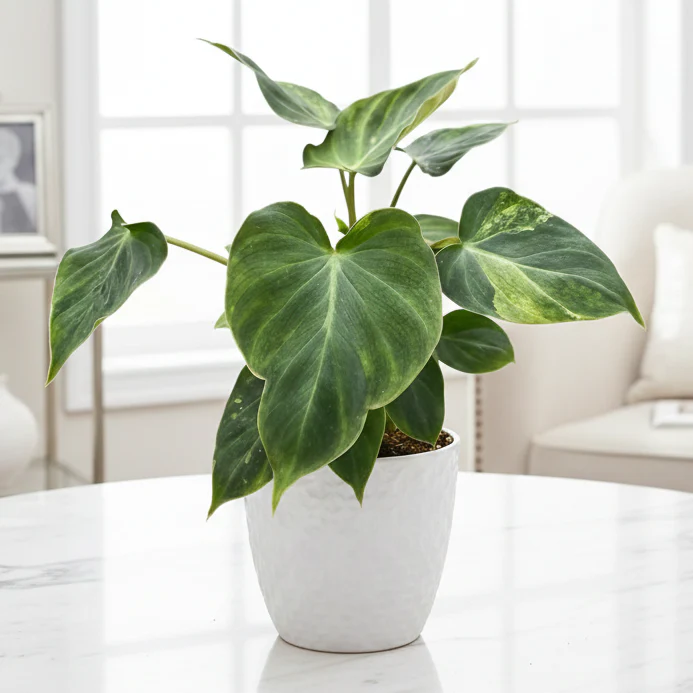
 What stops people in their tracks is the foliage: Philodendron 'Verrucosum' produces large, heart-shaped leaves covered in a deep emerald velvet texture with pale green to golden veins that practically glow. The leaf undersides blush in rich burgundy or reddish-purple, and the petioles are lined with fine bristly hairs that add to its wild, exotic look. This is an unmistakably striking velvet leaf philodendron that earns its rare collector plant status on looks alone.
 Like most climbing aroids grown as houseplants, Philodendron 'Verrucosum' rarely flowers in indoor conditions, so its foliage is the true showpiece. What makes it even more remarkable is how the leaves shift in color and size as the plant matures, with each new leaf often larger and more dramatically veined than the last. Providing a moss pole or support encourages Philodendron 'Verrucosum' to climb and push out its most impressive growth.
 Philodendron 'Verrucosum' is genuinely rare, and plant collectors seek it out for good reason. It thrives in terrariums where humidity stays naturally high, and it does beautifully near kitchen moisture or a bathroom window where the air is consistently humid. Keep it away from air conditioning vents, heaters, and any drafts, as this tropical houseplant is sensitive to dry or moving air. Because the sap of Philodendron 'Verrucosum' can cause skin and paw irritation, it is best kept on a high shelf out of reach of cats, dogs, and small children, and should never be nibbled or eaten by pets.
-
 Philodendron 'Verrucosum' thrives in bright indirect light and will scorch if placed in a south-facing window.
 Water Philodendron 'Verrucosum' when the top inch of soil dries out, roughly every 7 to 10 days, and ease off in winter.
 Philodendron 'Verrucosum' performs best in a chunky, well-draining mix of potting soil, perlite, and orchid bark.
 Philodendron 'Verrucosum' prefers temperatures between 65 and 80°F (18 to 27°C) and cannot tolerate frost or cold snaps.
![]() Philodendron 'Verrucosum' is a moderate to fast grower during warm months and benefits from a balanced liquid fertilizer every two to four weeks in spring and summer.
Philodendron 'Verrucosum' is a moderate to fast grower during warm months and benefits from a balanced liquid fertilizer every two to four weeks in spring and summer.
 Philodendron 'Verrucosum' is best suited to USDA Hardiness Zones 10 to 12, where temperatures stay reliably above 35°F (2°C) year-round. Gardeners growing Philodendron 'Verrucosum' outdoors will find suitable climates in Hawaii, southern Florida, coastal and southern California, southern Texas, and parts of Arizona and New Mexico. Those in Louisiana, southern Georgia, coastal South Carolina, southern Alabama, and Mississippi may grow it outside in warmer months, but should move it indoors before temperatures dip in autumn.
-
Q: How often should I water Philodendron 'Verrucosum'?
A: Water Philodendron 'Verrucosum' roughly every 7 to 10 days, letting the top inch of soil dry out between waterings. The leaves will begin to wilt gently when the plant is thirsty, which is a helpful signal.
Q: Is Philodendron 'Verrucosum' safe for pets and children?
A: Philodendron 'Verrucosum' should be kept out of reach of cats, dogs, and small children, as the sap can cause skin and paw irritation and the plant should not be chewed or eaten. A high shelf or a room with a closed door is the safest placement.
Q: How do I propagate Philodendron 'Verrucosum'?
A: Propagate Philodendron 'Verrucosum' by taking a stem cutting with at least one node and one leaf, then rooting it in moist sphagnum moss or water in a warm, humid spot. High humidity and gentle warmth will give your cutting the best chance of success.
Q: Why are the leaves on my Philodendron 'Verrucosum' turning yellow?
A: Yellow leaves on Philodendron 'Verrucosum' are most often caused by overwatering, low humidity, or being moved to a new spot, as this plant is quite sensitive to environmental changes. Check your watering routine first, and try to keep humidity above 60%.
Q: What humidity does Philodendron 'Verrucosum' need?
A: Philodendron 'Verrucosum' needs high humidity, ideally between 60 and 80%, to thrive and produce its best velvety foliage. A terrarium, a spot near kitchen steam, or a pebble tray with water can all help maintain the moisture levels it craves.
Q: Is Philodendron 'Verrucosum' a rare plant?
A: Yes, Philodendron 'Verrucosum' is considered a genuinely rare aroid and is highly sought after by collectors for its dramatic velvet leaves and striking vein patterns. It is not commonly found at general garden centers, making it a special addition to any collection.


Original: $51.28
-70%$51.28
$15.38Product Information
Product Information
Shipping & Returns
Shipping & Returns
Description
- Description
- Philodendron 'Verrucosum' Care Guide
- FAQ/Common Issues
-
![]() Philodendron 'Verrucosum' (Philodendron verrucosum) is a rare collector aroid from the cloud forests of Ecuador, Colombia, and surrounding regions of Central and South America, where it climbs tree trunks in warm, misty conditions. Part of the Araceae family, this high humidity plant has earned its place as one of the most coveted rare aroid plants in the hobby.
Philodendron 'Verrucosum' (Philodendron verrucosum) is a rare collector aroid from the cloud forests of Ecuador, Colombia, and surrounding regions of Central and South America, where it climbs tree trunks in warm, misty conditions. Part of the Araceae family, this high humidity plant has earned its place as one of the most coveted rare aroid plants in the hobby.
What stops people in their tracks is the foliage: Philodendron 'Verrucosum' produces large, heart-shaped leaves covered in a deep emerald velvet texture with pale green to golden veins that practically glow. The leaf undersides blush in rich burgundy or reddish-purple, and the petioles are lined with fine bristly hairs that add to its wild, exotic look. This is an unmistakably striking velvet leaf philodendron that earns its rare collector plant status on looks alone.
Like most climbing aroids grown as houseplants, Philodendron 'Verrucosum' rarely flowers in indoor conditions, so its foliage is the true showpiece. What makes it even more remarkable is how the leaves shift in color and size as the plant matures, with each new leaf often larger and more dramatically veined than the last. Providing a moss pole or support encourages Philodendron 'Verrucosum' to climb and push out its most impressive growth.
Philodendron 'Verrucosum' is genuinely rare, and plant collectors seek it out for good reason. It thrives in terrariums where humidity stays naturally high, and it does beautifully near kitchen moisture or a bathroom window where the air is consistently humid. Keep it away from air conditioning vents, heaters, and any drafts, as this tropical houseplant is sensitive to dry or moving air. Because the sap of Philodendron 'Verrucosum' can cause skin and paw irritation, it is best kept on a high shelf out of reach of cats, dogs, and small children, and should never be nibbled or eaten by pets.
-
Philodendron 'Verrucosum' thrives in bright indirect light and will scorch if placed in a south-facing window.
Water Philodendron 'Verrucosum' when the top inch of soil dries out, roughly every 7 to 10 days, and ease off in winter.
Philodendron 'Verrucosum' performs best in a chunky, well-draining mix of potting soil, perlite, and orchid bark.
Philodendron 'Verrucosum' prefers temperatures between 65 and 80°F (18 to 27°C) and cannot tolerate frost or cold snaps.
![]() Philodendron 'Verrucosum' is a moderate to fast grower during warm months and benefits from a balanced liquid fertilizer every two to four weeks in spring and summer.
Philodendron 'Verrucosum' is a moderate to fast grower during warm months and benefits from a balanced liquid fertilizer every two to four weeks in spring and summer.
Philodendron 'Verrucosum' is best suited to USDA Hardiness Zones 10 to 12, where temperatures stay reliably above 35°F (2°C) year-round. Gardeners growing Philodendron 'Verrucosum' outdoors will find suitable climates in Hawaii, southern Florida, coastal and southern California, southern Texas, and parts of Arizona and New Mexico. Those in Louisiana, southern Georgia, coastal South Carolina, southern Alabama, and Mississippi may grow it outside in warmer months, but should move it indoors before temperatures dip in autumn.
-
Q: How often should I water Philodendron 'Verrucosum'?
A: Water Philodendron 'Verrucosum' roughly every 7 to 10 days, letting the top inch of soil dry out between waterings. The leaves will begin to wilt gently when the plant is thirsty, which is a helpful signal.
Q: Is Philodendron 'Verrucosum' safe for pets and children?
A: Philodendron 'Verrucosum' should be kept out of reach of cats, dogs, and small children, as the sap can cause skin and paw irritation and the plant should not be chewed or eaten. A high shelf or a room with a closed door is the safest placement.
Q: How do I propagate Philodendron 'Verrucosum'?
A: Propagate Philodendron 'Verrucosum' by taking a stem cutting with at least one node and one leaf, then rooting it in moist sphagnum moss or water in a warm, humid spot. High humidity and gentle warmth will give your cutting the best chance of success.
Q: Why are the leaves on my Philodendron 'Verrucosum' turning yellow?
A: Yellow leaves on Philodendron 'Verrucosum' are most often caused by overwatering, low humidity, or being moved to a new spot, as this plant is quite sensitive to environmental changes. Check your watering routine first, and try to keep humidity above 60%.
Q: What humidity does Philodendron 'Verrucosum' need?
A: Philodendron 'Verrucosum' needs high humidity, ideally between 60 and 80%, to thrive and produce its best velvety foliage. A terrarium, a spot near kitchen steam, or a pebble tray with water can all help maintain the moisture levels it craves.
Q: Is Philodendron 'Verrucosum' a rare plant?
A: Yes, Philodendron 'Verrucosum' is considered a genuinely rare aroid and is highly sought after by collectors for its dramatic velvet leaves and striking vein patterns. It is not commonly found at general garden centers, making it a special addition to any collection.