
Cotyledon Orbiculata Pig's Ear
- Description
- Cotyledon Orbiculata Pig's Ear Care Guide
- FAQ/Common Issues
-
![]() Cotyledon Orbiculata Pig's Ear is a charming, easy care succulent native to the rocky slopes and dry scrublands of South Africa. Belonging to the genus Cotyledon in the Crassulaceae family, this drought tolerant beauty has traveled from sun-baked African hillsides to windowsills and gardens worldwide. It is one of those plants that rewards beginners and collectors equally, asking for very little in return for its striking good looks.
Cotyledon Orbiculata Pig's Ear is a charming, easy care succulent native to the rocky slopes and dry scrublands of South Africa. Belonging to the genus Cotyledon in the Crassulaceae family, this drought tolerant beauty has traveled from sun-baked African hillsides to windowsills and gardens worldwide. It is one of those plants that rewards beginners and collectors equally, asking for very little in return for its striking good looks.
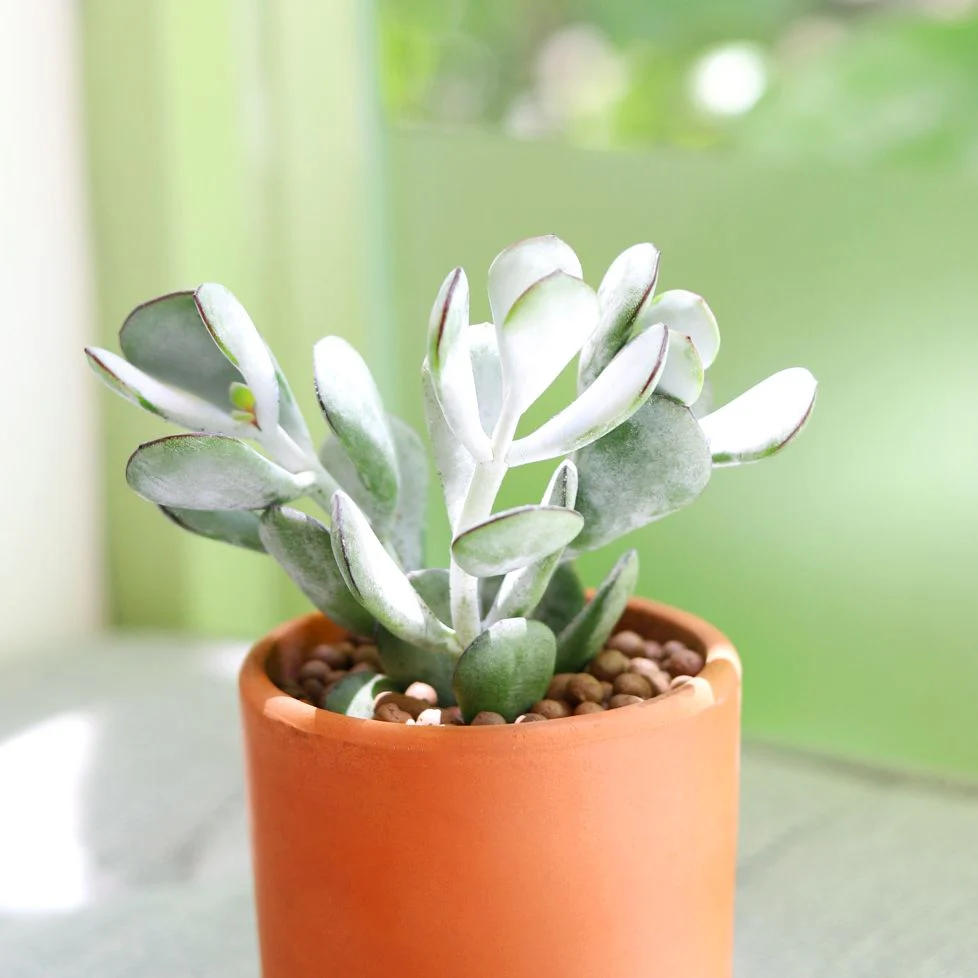
 Cotyledon Orbiculata Pig's Ear earns its quirky name from its thick, rounded, paddle-shaped leaves that genuinely resemble a pig's ear in both shape and feel. The fleshy leaves are a soft silver-green, coated in a powdery white farina that gives the whole plant a cool, frosted glow. Growth is upright and rosette-forming, making this pig's ear succulent a tidy, sculptural addition to any shelf or sunny spot. Leaf edges often blush with a thin red or orange margin, especially when the plant receives plenty of light.
 Cotyledon Orbiculata Pig's Ear produces tubular, bell-shaped flowers in shades of orange to red-orange, typically appearing in late spring through summer on tall arching stems that rise dramatically above the rosette. Blooming is encouraged by a drop in nighttime temperatures, so if your plant has been indoors all winter, that natural seasonal cool-down is your best tool for triggering a flower show. The blooms are a real head-turner and well worth the patience.
 Cotyledon Orbiculata Pig's Ear is wonderfully versatile in the home and garden. It moves happily outdoors for summer and thrives in patio containers or rock gardens in warmer climates, though it needs cover from rain to prevent rot since it strongly prefers dry conditions. Because cats and dogs shouldn't be left to nibble or eat this plant, and it is best placed away from small children, a high shelf or a sunny spot out of easy reach is the ideal home for your pig's ear succulent. Experienced collectors love it for its architectural form, its edible and historically medicinal reputation in some cultures, and the fact that it survives a ten-day trip without a sitter without even blinking.
-
 Cotyledon Orbiculata Pig's Ear thrives in bright indirect light, partial sun, or full sun, but scorches in intense south-facing windows during peak summer hours.
 Water Cotyledon Orbiculata Pig's Ear deeply every 10-14 days in summer, pulling back to once a month or less in winter; wilting leaves are its signal for a drink.
 Cotyledon Orbiculata Pig's Ear does best in a fast-draining succulent or cactus mix blended with extra perlite or coarse grit for excellent drainage.
 Cotyledon Orbiculata Pig's Ear prefers temperatures between 50-80°F (10-27°C) and should be brought indoors before frost threatens, as it is not frost hardy.
![]() Cotyledon Orbiculata Pig's Ear is a slow to moderate grower that benefits from a diluted balanced fertilizer once in spring and once in early summer.
Cotyledon Orbiculata Pig's Ear is a slow to moderate grower that benefits from a diluted balanced fertilizer once in spring and once in early summer.
 Cotyledon Orbiculata Pig's Ear is rated for USDA Hardiness Zones 9-11, tolerating brief dips to around 25-28°F (-4 to -2°C) but performing best where winters stay mild. Outdoor growers in California, Arizona, Texas, Florida, Hawaii, Louisiana, Georgia, South Carolina, Alabama, Mississippi, and Nevada will find this pig's ear succulent perfectly at home year-round in the ground or in containers. Along the Oregon coast and in sheltered microclimates of Zone 9, Cotyledon Orbiculata Pig's Ear can stay outside through autumn with light frost protection in place.
-
Q: How often should I water Cotyledon Orbiculata Pig's Ear?
A: Water deeply every 10-14 days in the growing season and reduce to once a month in winter. If the leaves look slightly wrinkled or soft, that is the plant telling you it is thirsty.
Q: Is Cotyledon Orbiculata Pig's Ear safe around pets and children?
A: Cats and dogs shouldn't be left to nibble or eat Cotyledon Orbiculata Pig's Ear, and it is best placed away from small children. A high shelf out of reach is the ideal spot.
Q: How much light does Cotyledon Orbiculata Pig's Ear need?
A: This pig's ear succulent loves bright indirect light to partial or full sun and can even grow reasonably well under strong office LEDs. Avoid leaving it in a harsh, unshaded south-facing window during peak summer heat to prevent leaf scorch.
Q: Can Cotyledon Orbiculata Pig's Ear go outside in summer?
A: Yes, Cotyledon Orbiculata Pig's Ear thrives outdoors in summer in a bright, sheltered spot. Just make sure to cover it or move it under an overhang during rain, as excess moisture leads to rot.
Q: How do I get Cotyledon Orbiculata Pig's Ear to bloom?
A: A drop in nighttime temperatures is the key trigger for Cotyledon Orbiculata Pig's Ear to set flower buds. Allow it to experience cooler nights in late winter or early spring and you should be rewarded with tall stems of orange-red blooms.
Q: How do I propagate Cotyledon Orbiculata Pig's Ear?
A: Cotyledon Orbiculata Pig's Ear propagates easily from leaf cuttings or stem cuttings allowed to callous for a day or two before placing on dry, well-draining succulent mix. Roots typically appear within a few weeks in warm, bright conditions.


Original: $8.30
-70%$8.30
$2.49Product Information
Product Information
Shipping & Returns
Shipping & Returns
Description
- Description
- Cotyledon Orbiculata Pig's Ear Care Guide
- FAQ/Common Issues
-
![]() Cotyledon Orbiculata Pig's Ear is a charming, easy care succulent native to the rocky slopes and dry scrublands of South Africa. Belonging to the genus Cotyledon in the Crassulaceae family, this drought tolerant beauty has traveled from sun-baked African hillsides to windowsills and gardens worldwide. It is one of those plants that rewards beginners and collectors equally, asking for very little in return for its striking good looks.
Cotyledon Orbiculata Pig's Ear is a charming, easy care succulent native to the rocky slopes and dry scrublands of South Africa. Belonging to the genus Cotyledon in the Crassulaceae family, this drought tolerant beauty has traveled from sun-baked African hillsides to windowsills and gardens worldwide. It is one of those plants that rewards beginners and collectors equally, asking for very little in return for its striking good looks.
Cotyledon Orbiculata Pig's Ear earns its quirky name from its thick, rounded, paddle-shaped leaves that genuinely resemble a pig's ear in both shape and feel. The fleshy leaves are a soft silver-green, coated in a powdery white farina that gives the whole plant a cool, frosted glow. Growth is upright and rosette-forming, making this pig's ear succulent a tidy, sculptural addition to any shelf or sunny spot. Leaf edges often blush with a thin red or orange margin, especially when the plant receives plenty of light.
Cotyledon Orbiculata Pig's Ear produces tubular, bell-shaped flowers in shades of orange to red-orange, typically appearing in late spring through summer on tall arching stems that rise dramatically above the rosette. Blooming is encouraged by a drop in nighttime temperatures, so if your plant has been indoors all winter, that natural seasonal cool-down is your best tool for triggering a flower show. The blooms are a real head-turner and well worth the patience.
Cotyledon Orbiculata Pig's Ear is wonderfully versatile in the home and garden. It moves happily outdoors for summer and thrives in patio containers or rock gardens in warmer climates, though it needs cover from rain to prevent rot since it strongly prefers dry conditions. Because cats and dogs shouldn't be left to nibble or eat this plant, and it is best placed away from small children, a high shelf or a sunny spot out of easy reach is the ideal home for your pig's ear succulent. Experienced collectors love it for its architectural form, its edible and historically medicinal reputation in some cultures, and the fact that it survives a ten-day trip without a sitter without even blinking.
-
Cotyledon Orbiculata Pig's Ear thrives in bright indirect light, partial sun, or full sun, but scorches in intense south-facing windows during peak summer hours.
Water Cotyledon Orbiculata Pig's Ear deeply every 10-14 days in summer, pulling back to once a month or less in winter; wilting leaves are its signal for a drink.
Cotyledon Orbiculata Pig's Ear does best in a fast-draining succulent or cactus mix blended with extra perlite or coarse grit for excellent drainage.
Cotyledon Orbiculata Pig's Ear prefers temperatures between 50-80°F (10-27°C) and should be brought indoors before frost threatens, as it is not frost hardy.
![]() Cotyledon Orbiculata Pig's Ear is a slow to moderate grower that benefits from a diluted balanced fertilizer once in spring and once in early summer.
Cotyledon Orbiculata Pig's Ear is a slow to moderate grower that benefits from a diluted balanced fertilizer once in spring and once in early summer.
Cotyledon Orbiculata Pig's Ear is rated for USDA Hardiness Zones 9-11, tolerating brief dips to around 25-28°F (-4 to -2°C) but performing best where winters stay mild. Outdoor growers in California, Arizona, Texas, Florida, Hawaii, Louisiana, Georgia, South Carolina, Alabama, Mississippi, and Nevada will find this pig's ear succulent perfectly at home year-round in the ground or in containers. Along the Oregon coast and in sheltered microclimates of Zone 9, Cotyledon Orbiculata Pig's Ear can stay outside through autumn with light frost protection in place.
-
Q: How often should I water Cotyledon Orbiculata Pig's Ear?
A: Water deeply every 10-14 days in the growing season and reduce to once a month in winter. If the leaves look slightly wrinkled or soft, that is the plant telling you it is thirsty.
Q: Is Cotyledon Orbiculata Pig's Ear safe around pets and children?
A: Cats and dogs shouldn't be left to nibble or eat Cotyledon Orbiculata Pig's Ear, and it is best placed away from small children. A high shelf out of reach is the ideal spot.
Q: How much light does Cotyledon Orbiculata Pig's Ear need?
A: This pig's ear succulent loves bright indirect light to partial or full sun and can even grow reasonably well under strong office LEDs. Avoid leaving it in a harsh, unshaded south-facing window during peak summer heat to prevent leaf scorch.
Q: Can Cotyledon Orbiculata Pig's Ear go outside in summer?
A: Yes, Cotyledon Orbiculata Pig's Ear thrives outdoors in summer in a bright, sheltered spot. Just make sure to cover it or move it under an overhang during rain, as excess moisture leads to rot.
Q: How do I get Cotyledon Orbiculata Pig's Ear to bloom?
A: A drop in nighttime temperatures is the key trigger for Cotyledon Orbiculata Pig's Ear to set flower buds. Allow it to experience cooler nights in late winter or early spring and you should be rewarded with tall stems of orange-red blooms.
Q: How do I propagate Cotyledon Orbiculata Pig's Ear?
A: Cotyledon Orbiculata Pig's Ear propagates easily from leaf cuttings or stem cuttings allowed to callous for a day or two before placing on dry, well-draining succulent mix. Roots typically appear within a few weeks in warm, bright conditions.