White Bunny Ear Cactus - Opuntia microdasys var. albospina
- Description
- White Bunny Ear Cactus - Opuntia microdasys var. albospina Care Guide
- FAQ/Common Issues
-
![]() White Bunny Ear Cactus - Opuntia microdasys var. albospina is a charming member of the Opuntia genus in the Cactaceae family, beloved by collectors and beginners alike. Native to the arid highlands of central and northern Mexico, this prickly pear cactus evolved in hot, dry conditions with rocky, well-draining soils and intense sun.
White Bunny Ear Cactus - Opuntia microdasys var. albospina is a charming member of the Opuntia genus in the Cactaceae family, beloved by collectors and beginners alike. Native to the arid highlands of central and northern Mexico, this prickly pear cactus evolved in hot, dry conditions with rocky, well-draining soils and intense sun.
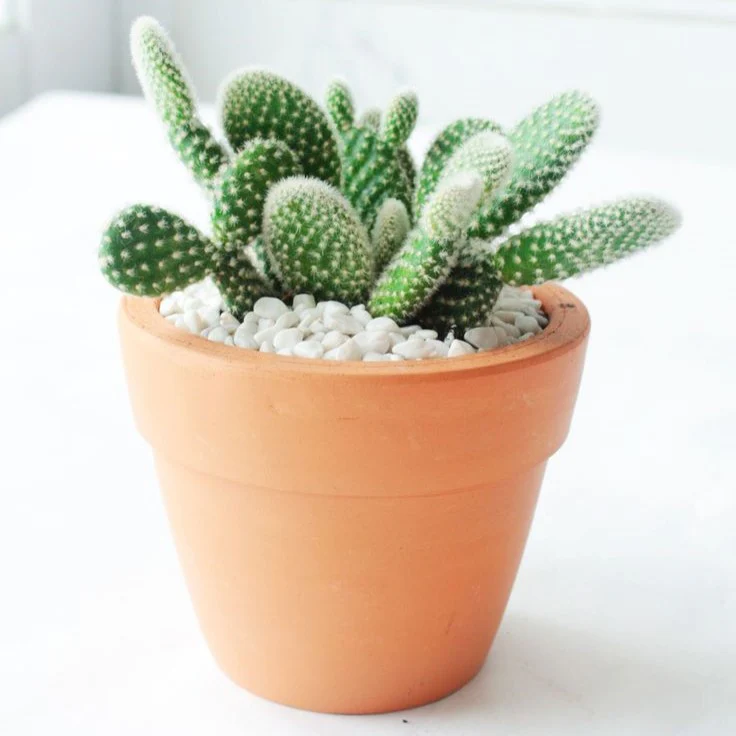
 White Bunny Ear Cactus - Opuntia microdasys var. albospina forms flat, oval pads covered in clusters of tiny white glochids that give each pad a soft, snowy appearance. The pads grow in an upright, clustering habit, spreading outward over time to create a bushy, sculptural display. Unlike the golden-spined species, this white bunny ear cactus stands out for its bright, clean coloration that catches the light beautifully.
 White Bunny Ear Cactus - Opuntia microdasys var. albospina can produce yellow blooms when mature, typically in late spring to early summer, though flowering indoors is uncommon without a seasonal night temperature drop. Giving this bunny ears cactus a cooler resting period in winter encourages the hormonal shift it needs to set buds when warmer days return.
 White Bunny Ear Cactus - Opuntia microdasys var. albospina is a rewarding, easy care choice for sunny windowsills, patios, and xeriscape gardens. It thrives outdoors in summer and can stay outside into autumn in mild climates, but needs cover from rain to prevent rot. A wide spreader by nature, it makes a striking statement in a terracotta pot or a low-water garden bed, and its slow growth keeps it manageable for years.
-
 White Bunny Ear Cactus - Opuntia microdasys var. albospina thrives in partial to full sun, needing at least four to six hours of direct sun daily.
 Water White Bunny Ear Cactus - Opuntia microdasys var. albospina every two to three weeks in summer, reducing to once a month or less in winter.
 White Bunny Ear Cactus - Opuntia microdasys var. albospina performs best in a gritty cactus mix blended with extra perlite or coarse sand for fast drainage.
 White Bunny Ear Cactus - Opuntia microdasys var. albospina prefers temperatures between 70-100°F (21-38°C) in summer and tolerates a winter low of around 50°F (10°C) indoors.
![]() White Bunny Ear Cactus - Opuntia microdasys var. albospina is a slow grower that needs only a light balanced cactus fertilizer once in spring and once in early summer.
White Bunny Ear Cactus - Opuntia microdasys var. albospina is a slow grower that needs only a light balanced cactus fertilizer once in spring and once in early summer.
 White Bunny Ear Cactus - Opuntia microdasys var. albospina is hardy in USDA Zones 9 through 11, tolerating brief dips to around 20-25°F (-6 to -4°C) but performing best where frosts are rare or absent. In the United States, Zone 9 covers much of California, Texas, Arizona, Louisiana, Georgia, South Carolina, Alabama, Mississippi, Oregon's coast, and parts of Nevada and Washington. Zone 10 and 11 gardeners in Florida, Hawaii, and the southernmost tips of California, Texas, and Arizona can grow White Bunny Ear Cactus - Opuntia microdasys var. albospina outdoors year-round with ease.
-
Q: How often should I water White Bunny Ear Cactus - Opuntia microdasys var. albospina?
A: Water every two to three weeks in the growing season and cut back to once a month in winter, always letting the soil dry completely between waterings.
Q: Is White Bunny Ear Cactus - Opuntia microdasys var. albospina safe around pets and small children?
A: The glochids on White Bunny Ear Cactus - Opuntia microdasys var. albospina can cause skin and paw irritation, and contact with sap may also irritate skin. It is best placed on a high shelf away from small children and curious pets.
Q: How do I propagate White Bunny Ear Cactus - Opuntia microdasys var. albospina?
A: Propagation is easy: use tongs to detach a healthy pad, let it callous for a few days, then set it upright in dry cactus mix. Roots typically develop within a few weeks in a warm, bright spot.
Q: How fast does White Bunny Ear Cactus - Opuntia microdasys var. albospina grow?
A: White Bunny Ear Cactus - Opuntia microdasys var. albospina is a slow grower, adding a modest amount of new pads each season, which makes it ideal for containers and tidy indoor displays.
Q: Why are the pads on my White Bunny Ear Cactus - Opuntia microdasys var. albospina turning yellow?
A: Yellowing pads on White Bunny Ear Cactus - Opuntia microdasys var. albospina usually signal overwatering, poor drainage, or too little light. Reduce watering, check that the soil drains freely, and move the plant to a brighter spot.
Q: Can White Bunny Ear Cactus - Opuntia microdasys var. albospina survive while I travel?
A: Yes, White Bunny Ear Cactus - Opuntia microdasys var. albospina handles being left alone for ten days or more without watering, making it one of the most travel-friendly plants you can own.


Original: $11.60
-70%$11.60
$3.48Product Information
Product Information
Shipping & Returns
Shipping & Returns
Description
- Description
- White Bunny Ear Cactus - Opuntia microdasys var. albospina Care Guide
- FAQ/Common Issues
-
![]() White Bunny Ear Cactus - Opuntia microdasys var. albospina is a charming member of the Opuntia genus in the Cactaceae family, beloved by collectors and beginners alike. Native to the arid highlands of central and northern Mexico, this prickly pear cactus evolved in hot, dry conditions with rocky, well-draining soils and intense sun.
White Bunny Ear Cactus - Opuntia microdasys var. albospina is a charming member of the Opuntia genus in the Cactaceae family, beloved by collectors and beginners alike. Native to the arid highlands of central and northern Mexico, this prickly pear cactus evolved in hot, dry conditions with rocky, well-draining soils and intense sun.
White Bunny Ear Cactus - Opuntia microdasys var. albospina forms flat, oval pads covered in clusters of tiny white glochids that give each pad a soft, snowy appearance. The pads grow in an upright, clustering habit, spreading outward over time to create a bushy, sculptural display. Unlike the golden-spined species, this white bunny ear cactus stands out for its bright, clean coloration that catches the light beautifully.
White Bunny Ear Cactus - Opuntia microdasys var. albospina can produce yellow blooms when mature, typically in late spring to early summer, though flowering indoors is uncommon without a seasonal night temperature drop. Giving this bunny ears cactus a cooler resting period in winter encourages the hormonal shift it needs to set buds when warmer days return.
White Bunny Ear Cactus - Opuntia microdasys var. albospina is a rewarding, easy care choice for sunny windowsills, patios, and xeriscape gardens. It thrives outdoors in summer and can stay outside into autumn in mild climates, but needs cover from rain to prevent rot. A wide spreader by nature, it makes a striking statement in a terracotta pot or a low-water garden bed, and its slow growth keeps it manageable for years.
-
White Bunny Ear Cactus - Opuntia microdasys var. albospina thrives in partial to full sun, needing at least four to six hours of direct sun daily.
Water White Bunny Ear Cactus - Opuntia microdasys var. albospina every two to three weeks in summer, reducing to once a month or less in winter.
White Bunny Ear Cactus - Opuntia microdasys var. albospina performs best in a gritty cactus mix blended with extra perlite or coarse sand for fast drainage.
White Bunny Ear Cactus - Opuntia microdasys var. albospina prefers temperatures between 70-100°F (21-38°C) in summer and tolerates a winter low of around 50°F (10°C) indoors.
![]() White Bunny Ear Cactus - Opuntia microdasys var. albospina is a slow grower that needs only a light balanced cactus fertilizer once in spring and once in early summer.
White Bunny Ear Cactus - Opuntia microdasys var. albospina is a slow grower that needs only a light balanced cactus fertilizer once in spring and once in early summer.
White Bunny Ear Cactus - Opuntia microdasys var. albospina is hardy in USDA Zones 9 through 11, tolerating brief dips to around 20-25°F (-6 to -4°C) but performing best where frosts are rare or absent. In the United States, Zone 9 covers much of California, Texas, Arizona, Louisiana, Georgia, South Carolina, Alabama, Mississippi, Oregon's coast, and parts of Nevada and Washington. Zone 10 and 11 gardeners in Florida, Hawaii, and the southernmost tips of California, Texas, and Arizona can grow White Bunny Ear Cactus - Opuntia microdasys var. albospina outdoors year-round with ease.
-
Q: How often should I water White Bunny Ear Cactus - Opuntia microdasys var. albospina?
A: Water every two to three weeks in the growing season and cut back to once a month in winter, always letting the soil dry completely between waterings.
Q: Is White Bunny Ear Cactus - Opuntia microdasys var. albospina safe around pets and small children?
A: The glochids on White Bunny Ear Cactus - Opuntia microdasys var. albospina can cause skin and paw irritation, and contact with sap may also irritate skin. It is best placed on a high shelf away from small children and curious pets.
Q: How do I propagate White Bunny Ear Cactus - Opuntia microdasys var. albospina?
A: Propagation is easy: use tongs to detach a healthy pad, let it callous for a few days, then set it upright in dry cactus mix. Roots typically develop within a few weeks in a warm, bright spot.
Q: How fast does White Bunny Ear Cactus - Opuntia microdasys var. albospina grow?
A: White Bunny Ear Cactus - Opuntia microdasys var. albospina is a slow grower, adding a modest amount of new pads each season, which makes it ideal for containers and tidy indoor displays.
Q: Why are the pads on my White Bunny Ear Cactus - Opuntia microdasys var. albospina turning yellow?
A: Yellowing pads on White Bunny Ear Cactus - Opuntia microdasys var. albospina usually signal overwatering, poor drainage, or too little light. Reduce watering, check that the soil drains freely, and move the plant to a brighter spot.
Q: Can White Bunny Ear Cactus - Opuntia microdasys var. albospina survive while I travel?
A: Yes, White Bunny Ear Cactus - Opuntia microdasys var. albospina handles being left alone for ten days or more without watering, making it one of the most travel-friendly plants you can own.