Aeonium Emerald Ice
- Description
- Aeonium Emerald Ice Care Guide
- FAQ/Common Issues
-
![]() Aeonium Emerald Ice is a rare aeonium cultivar belonging to the Crassulaceae family, prized by collectors and beginners alike for its striking variegation and easy care. Like all aeoniums, it traces its roots to the Canary Islands and the Mediterranean region, where its ancestors evolved to thrive in mild, seasonally dry climates. This beginner friendly succulent has found enthusiastic fans worldwide and is increasingly sought after as a low maintenance indoor succulent plant.
Aeonium Emerald Ice is a rare aeonium cultivar belonging to the Crassulaceae family, prized by collectors and beginners alike for its striking variegation and easy care. Like all aeoniums, it traces its roots to the Canary Islands and the Mediterranean region, where its ancestors evolved to thrive in mild, seasonally dry climates. This beginner friendly succulent has found enthusiastic fans worldwide and is increasingly sought after as a low maintenance indoor succulent plant.
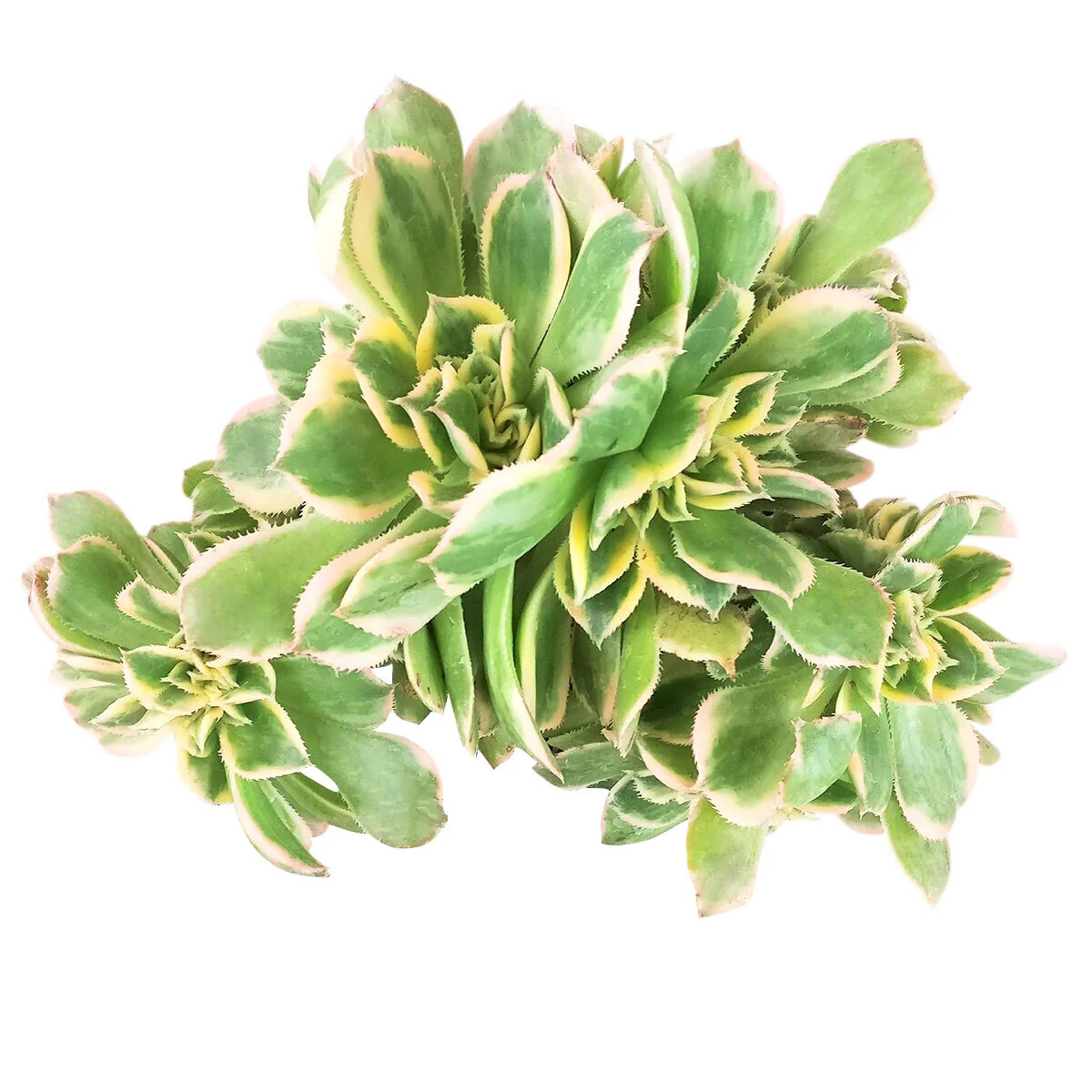
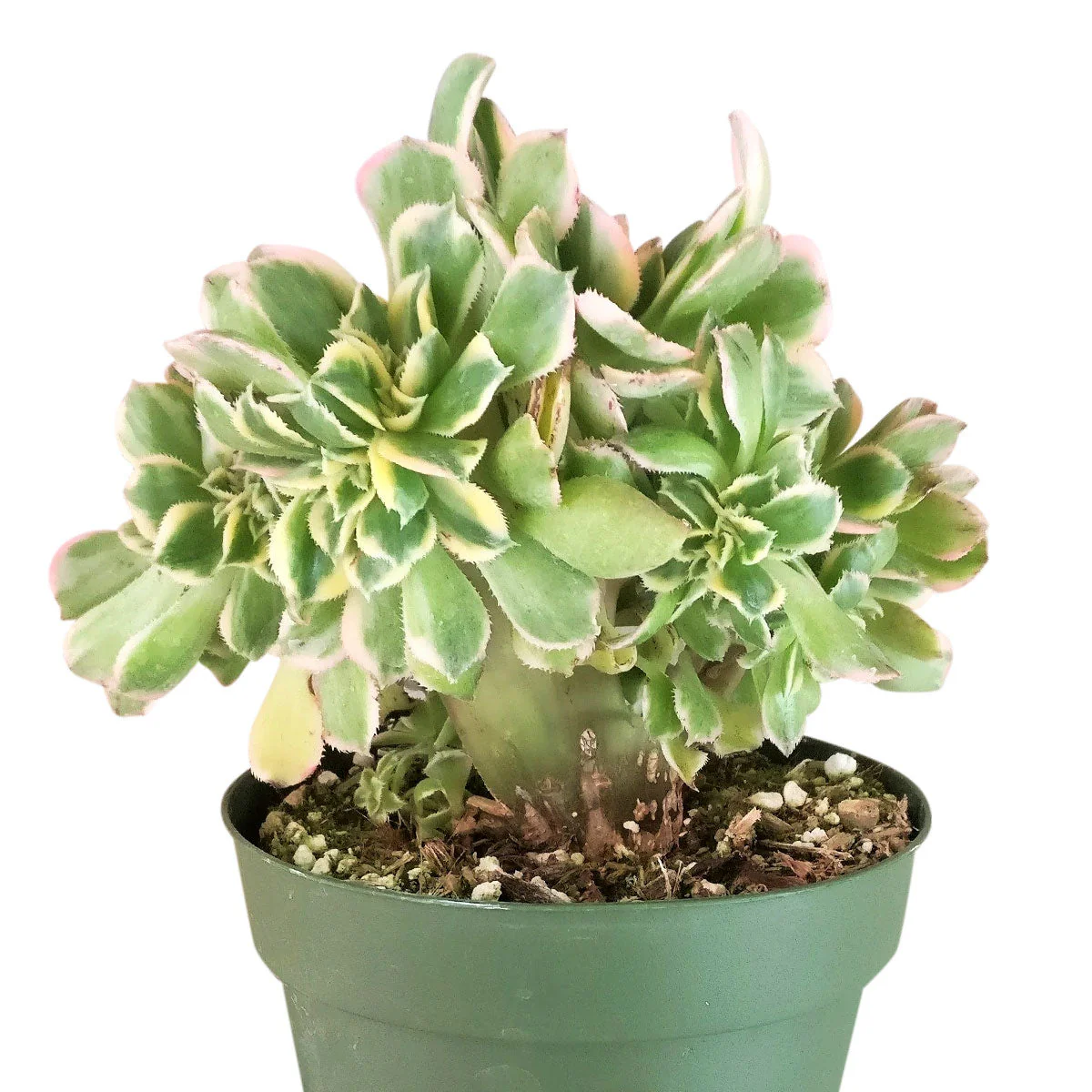
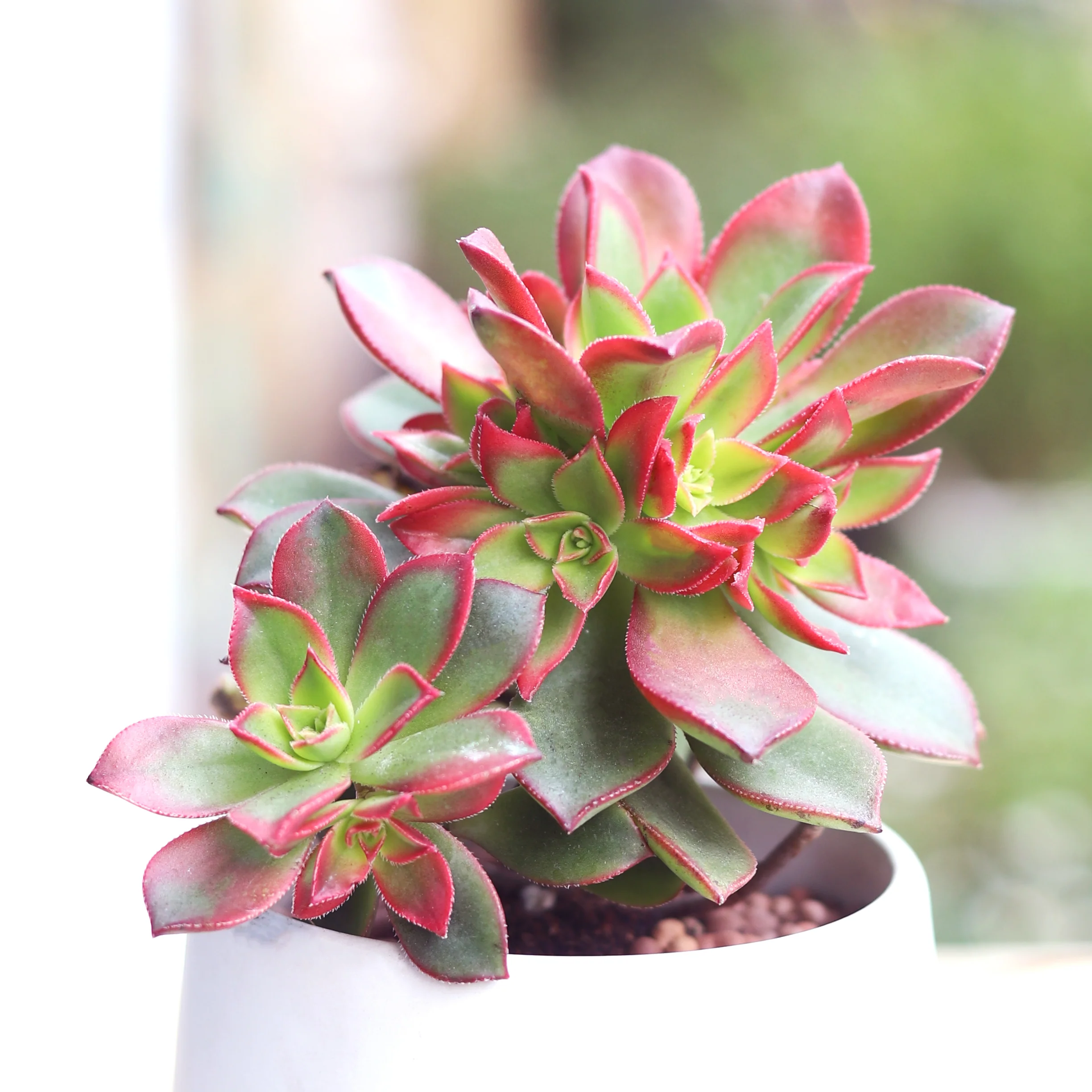
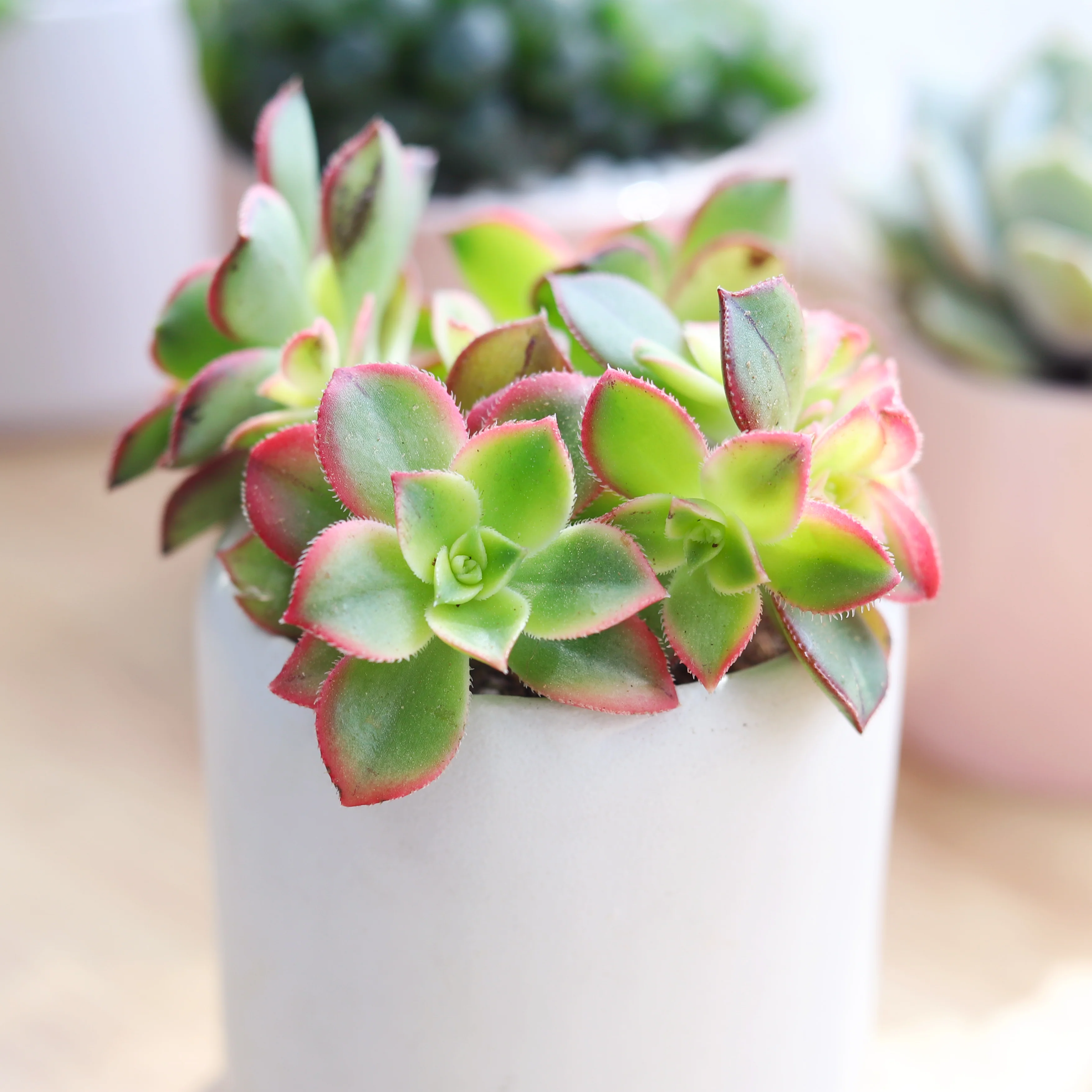
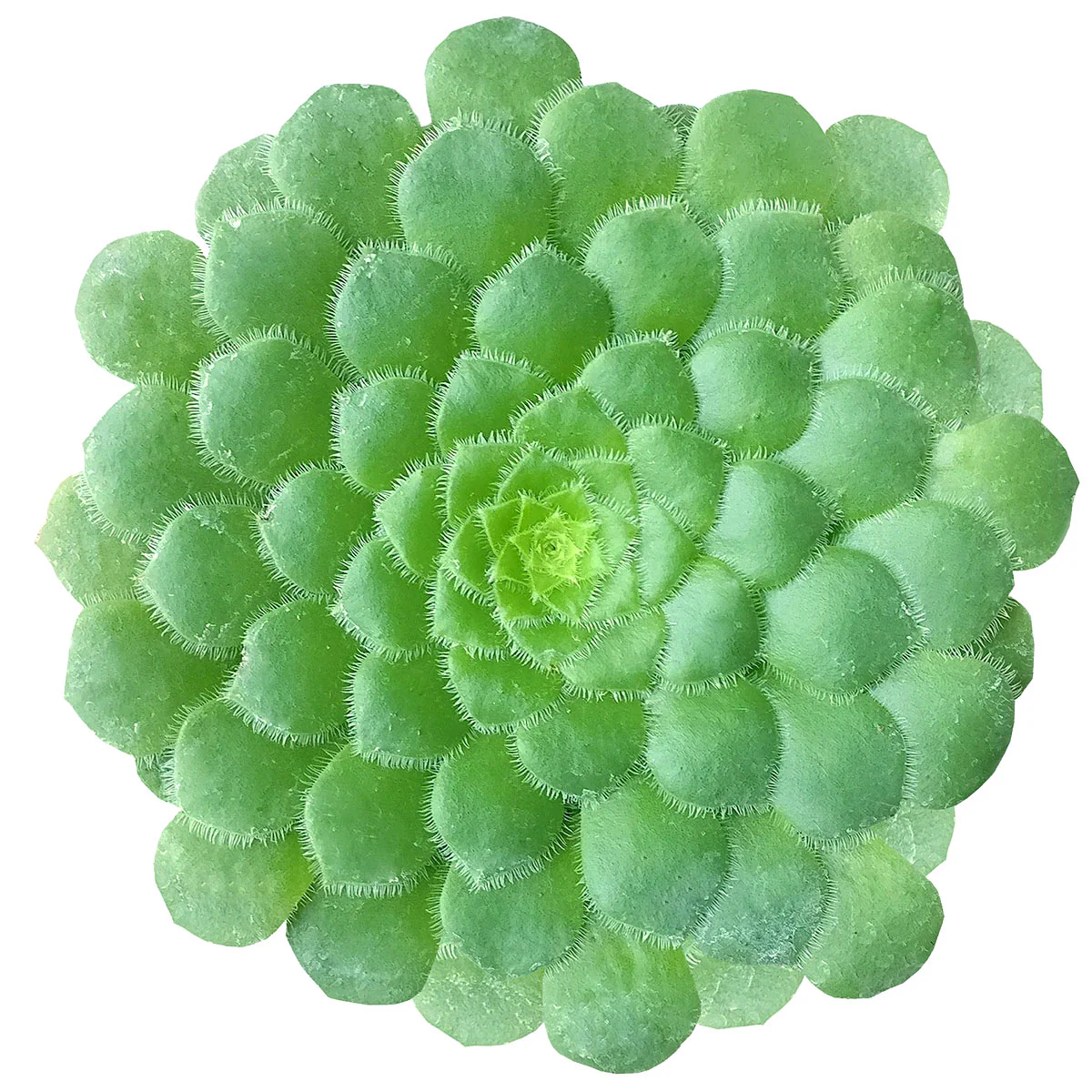
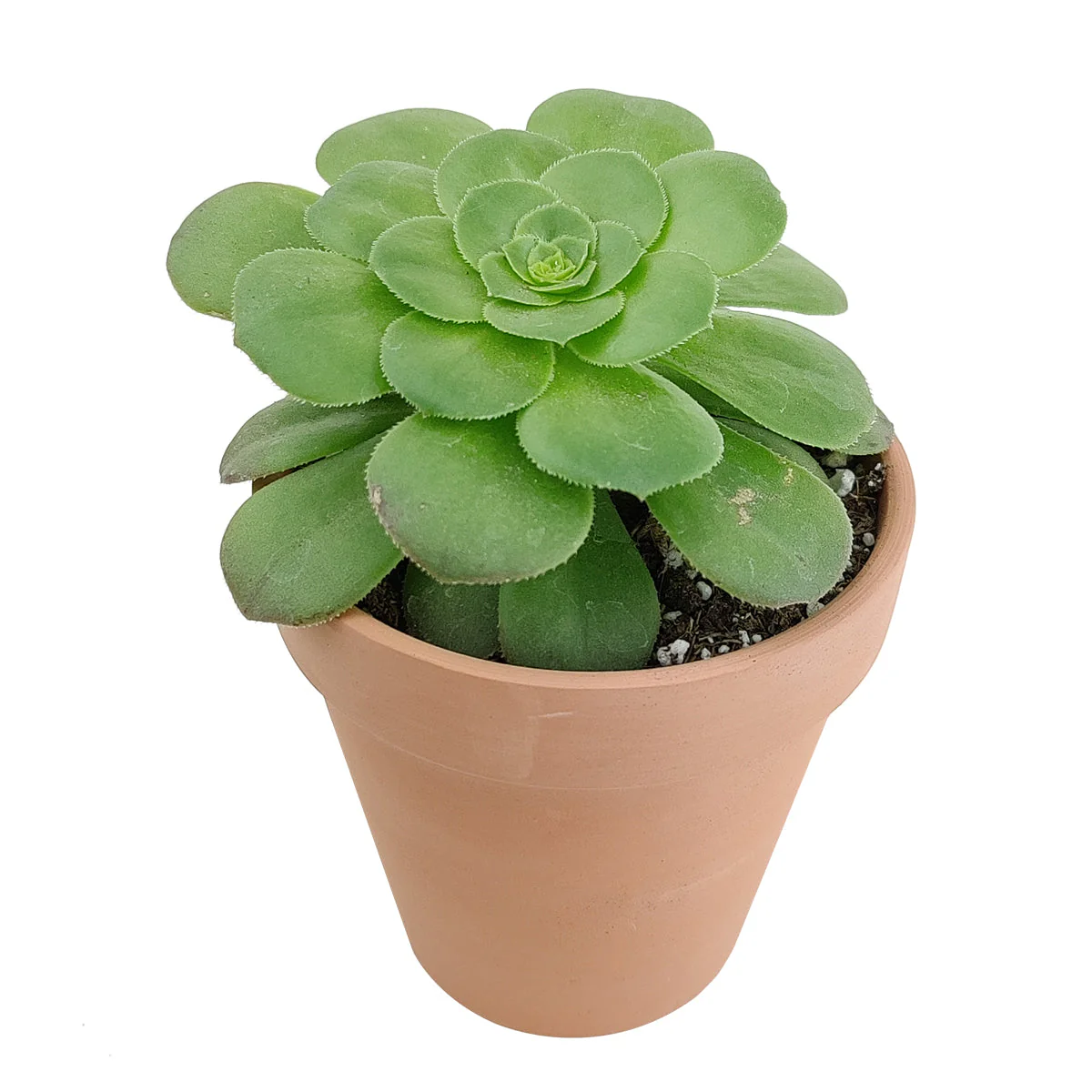
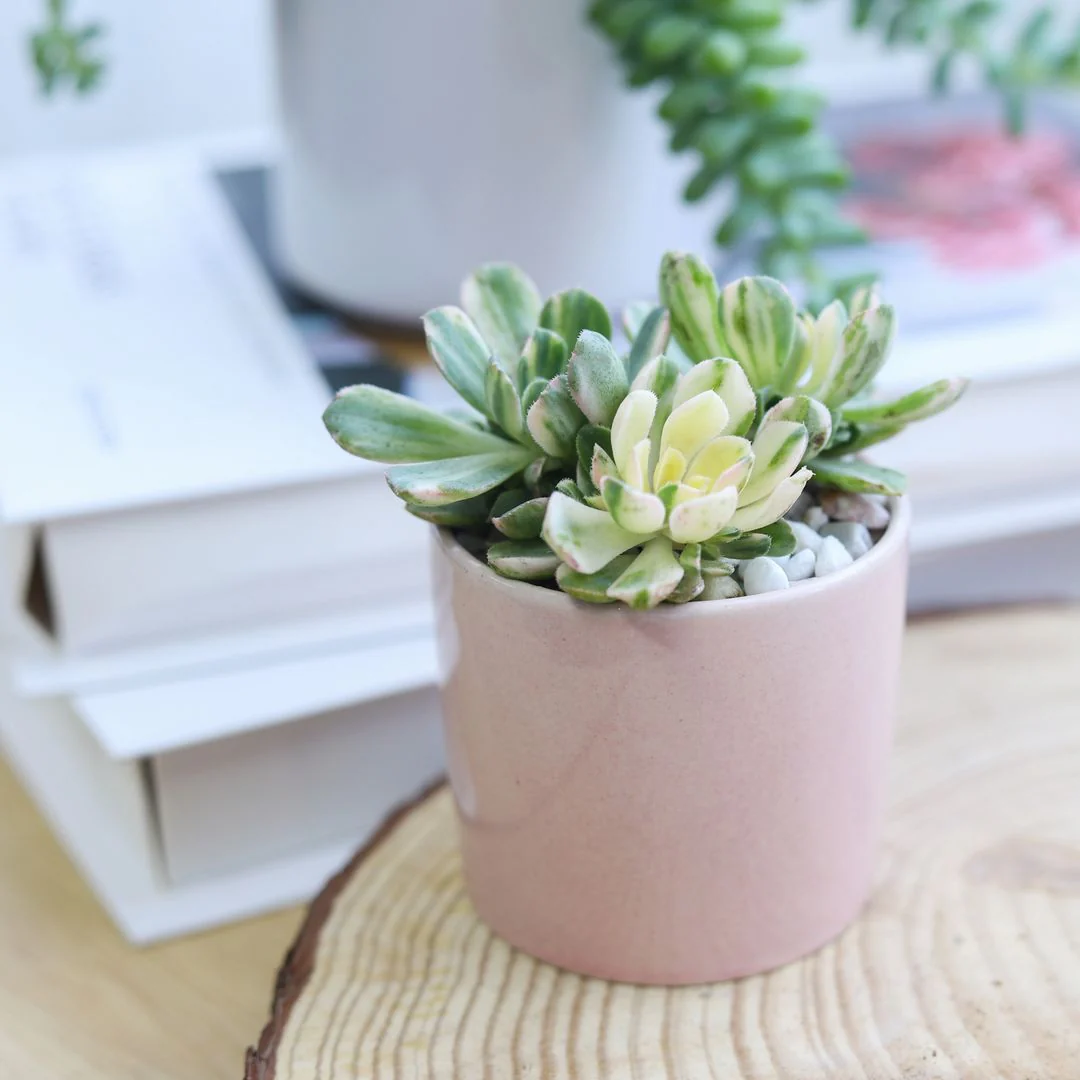
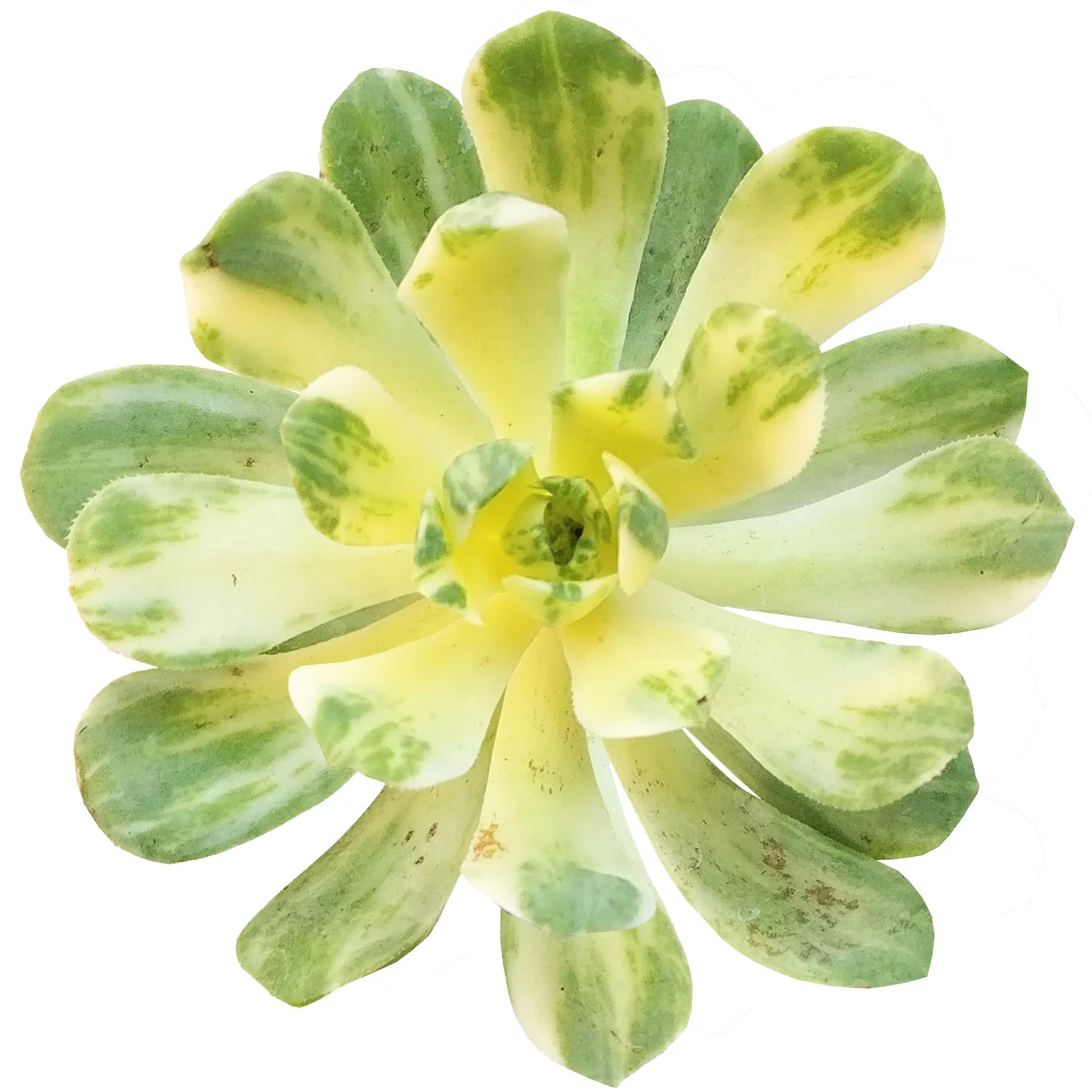
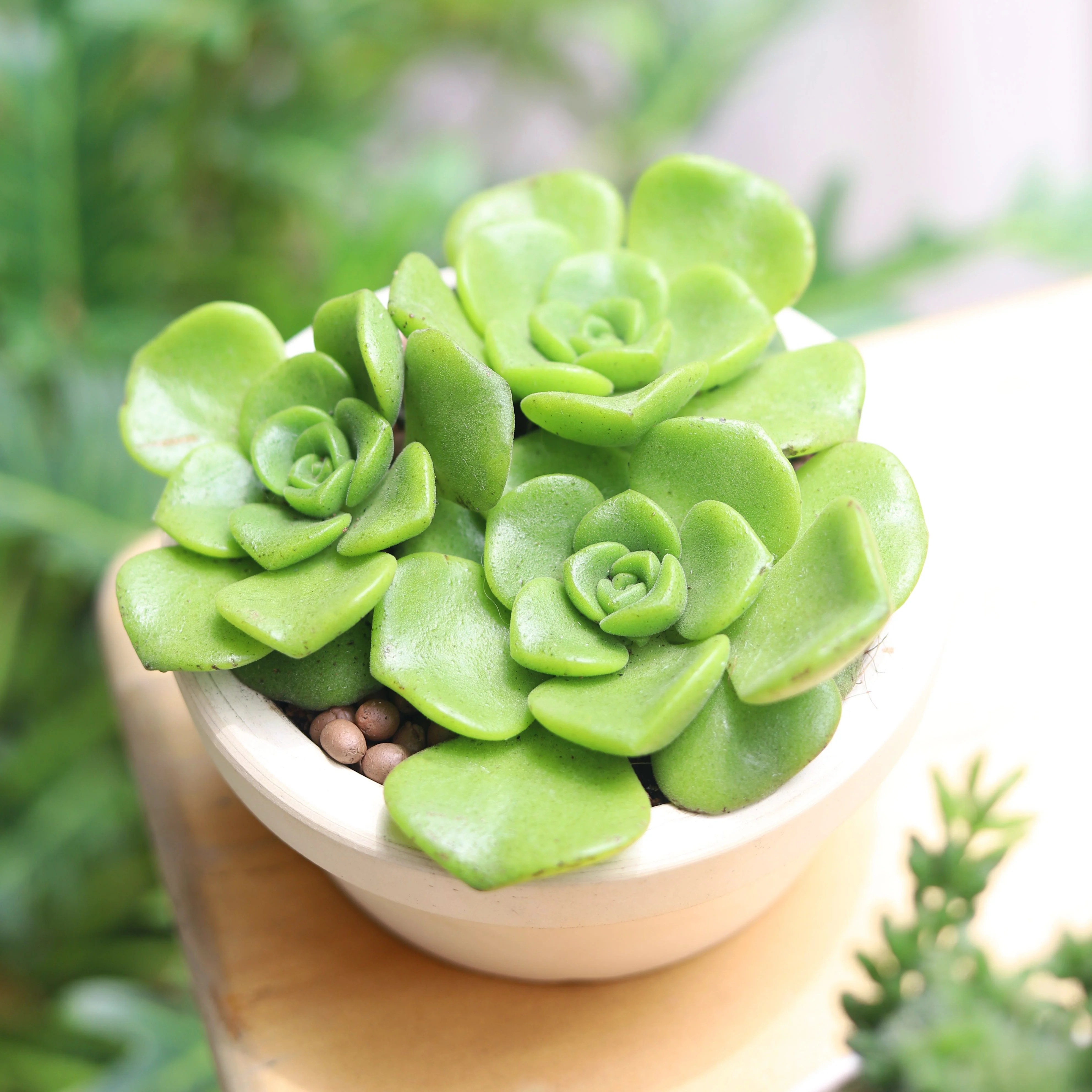
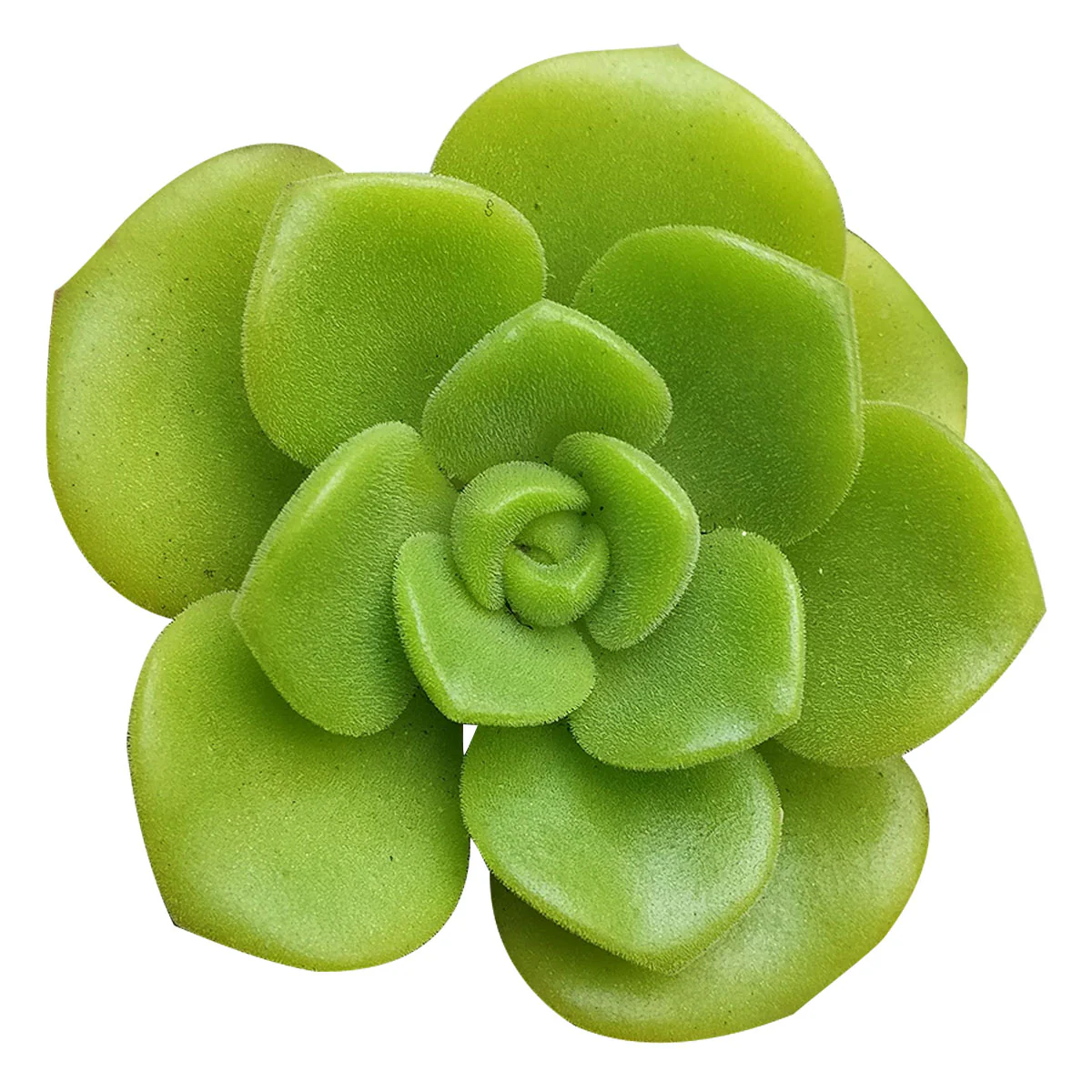
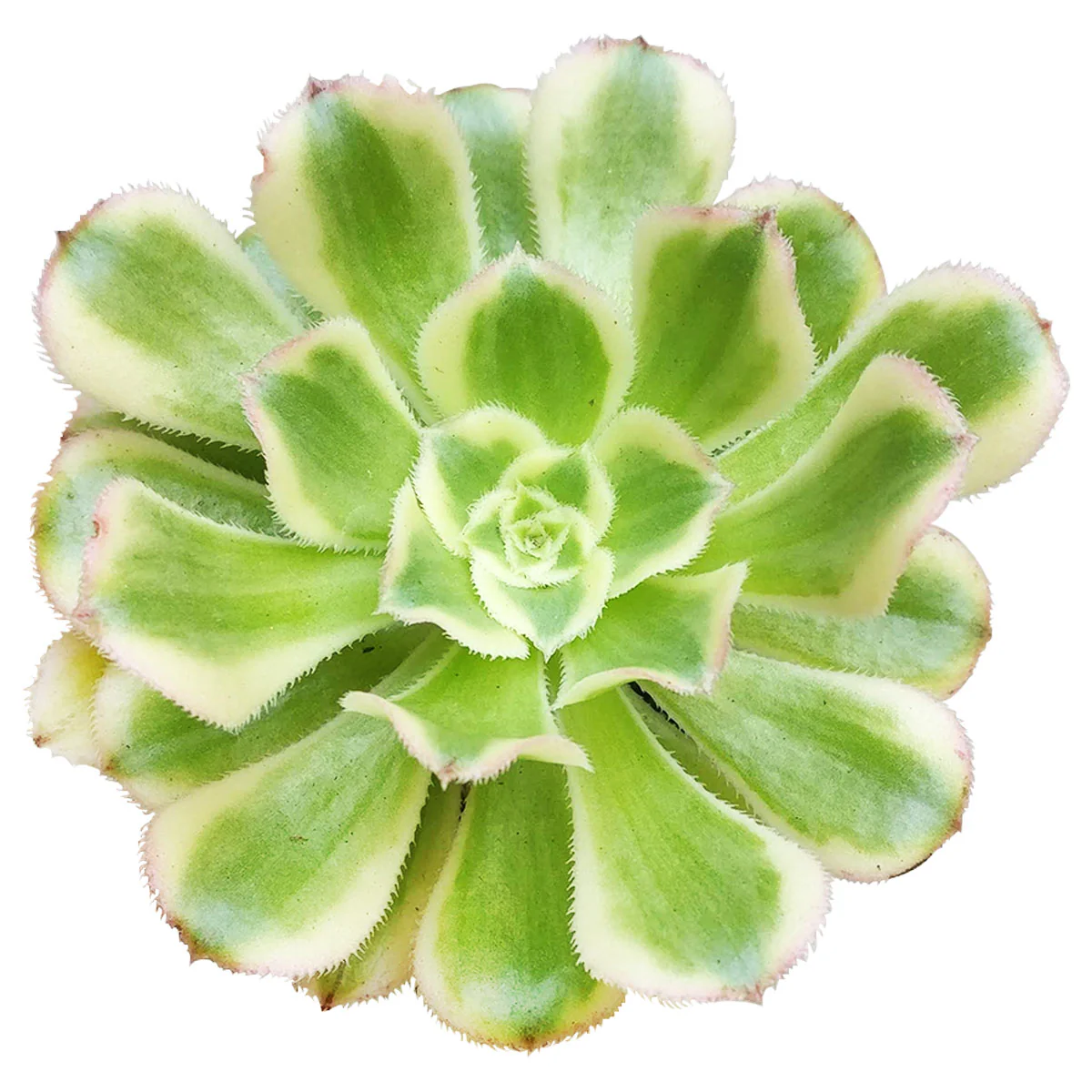
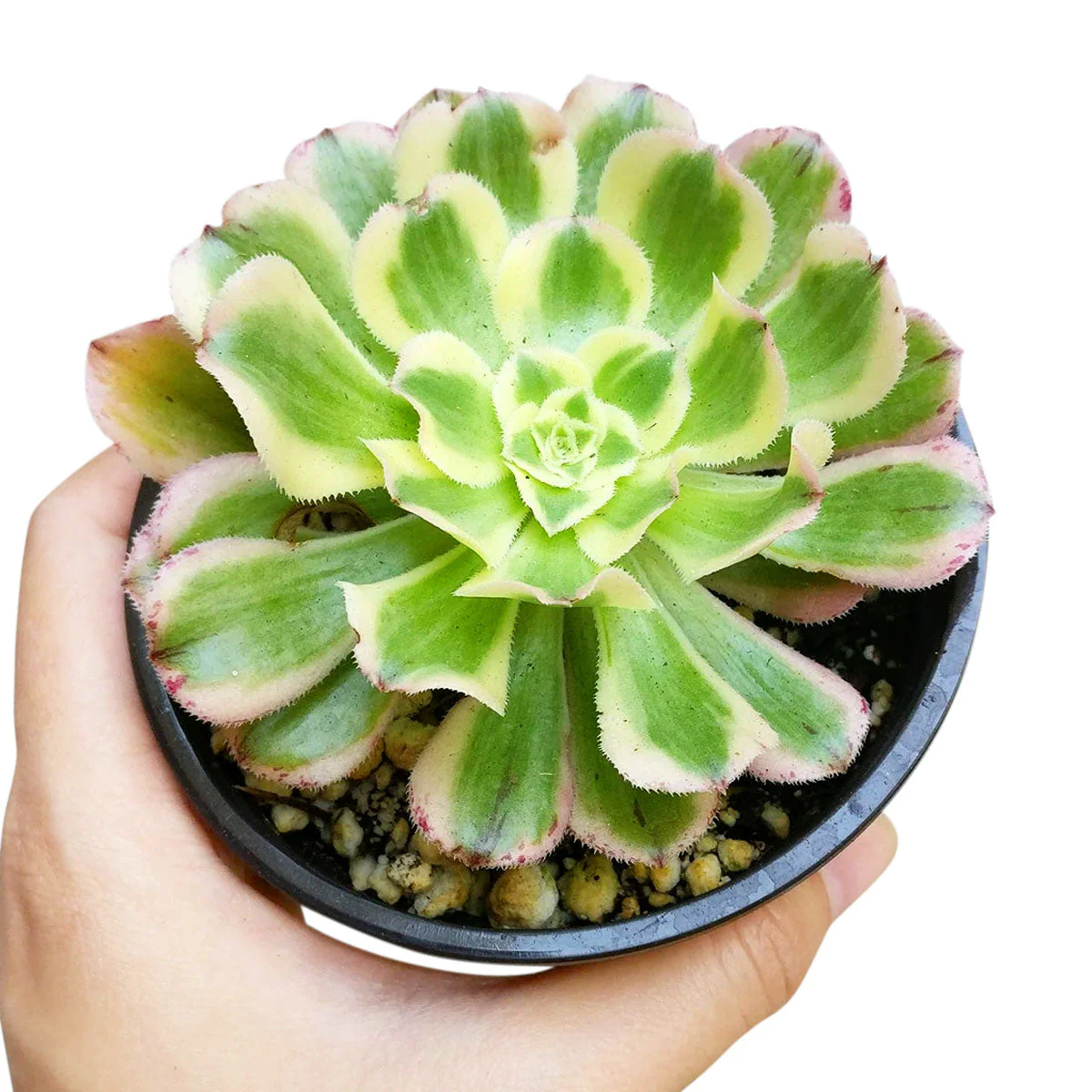
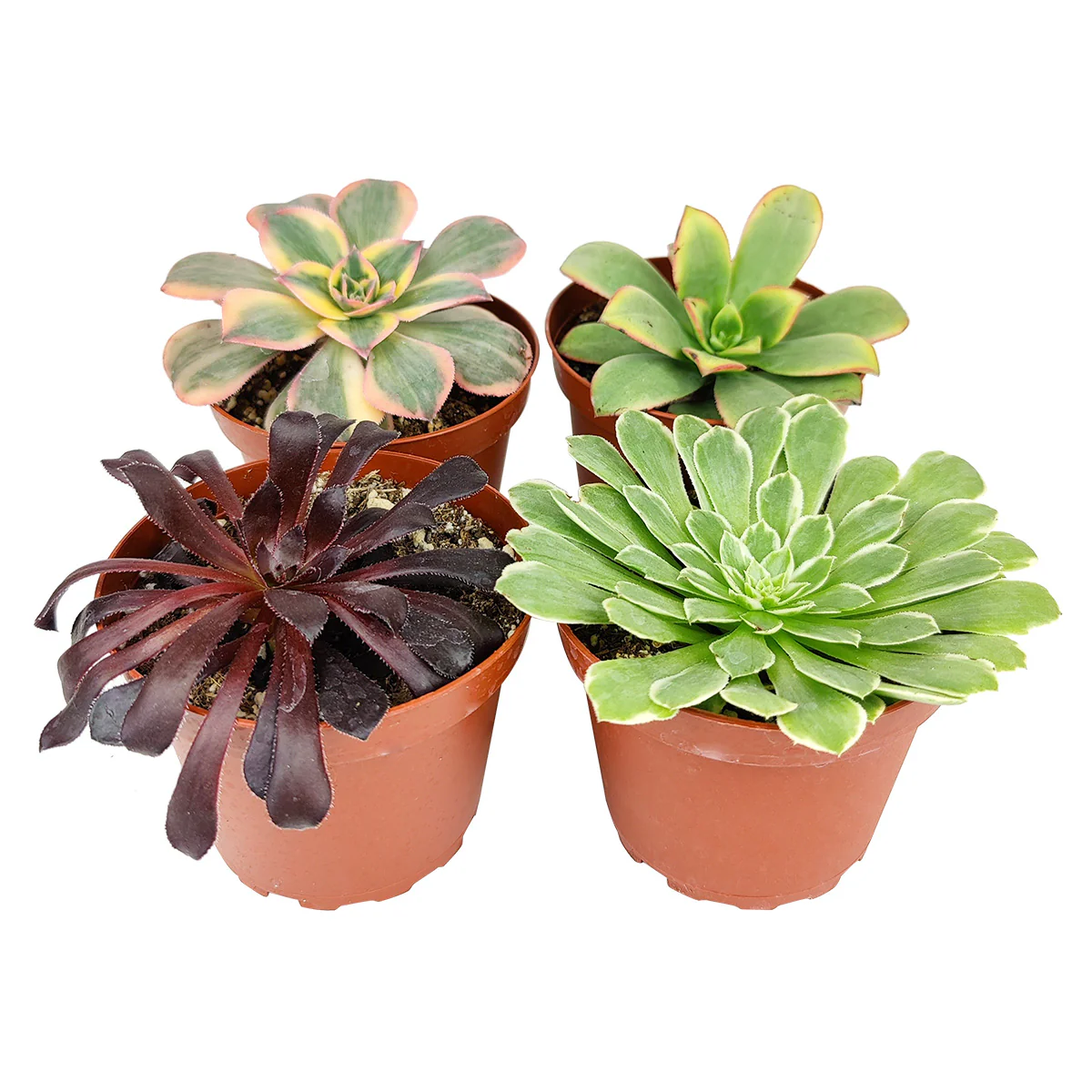
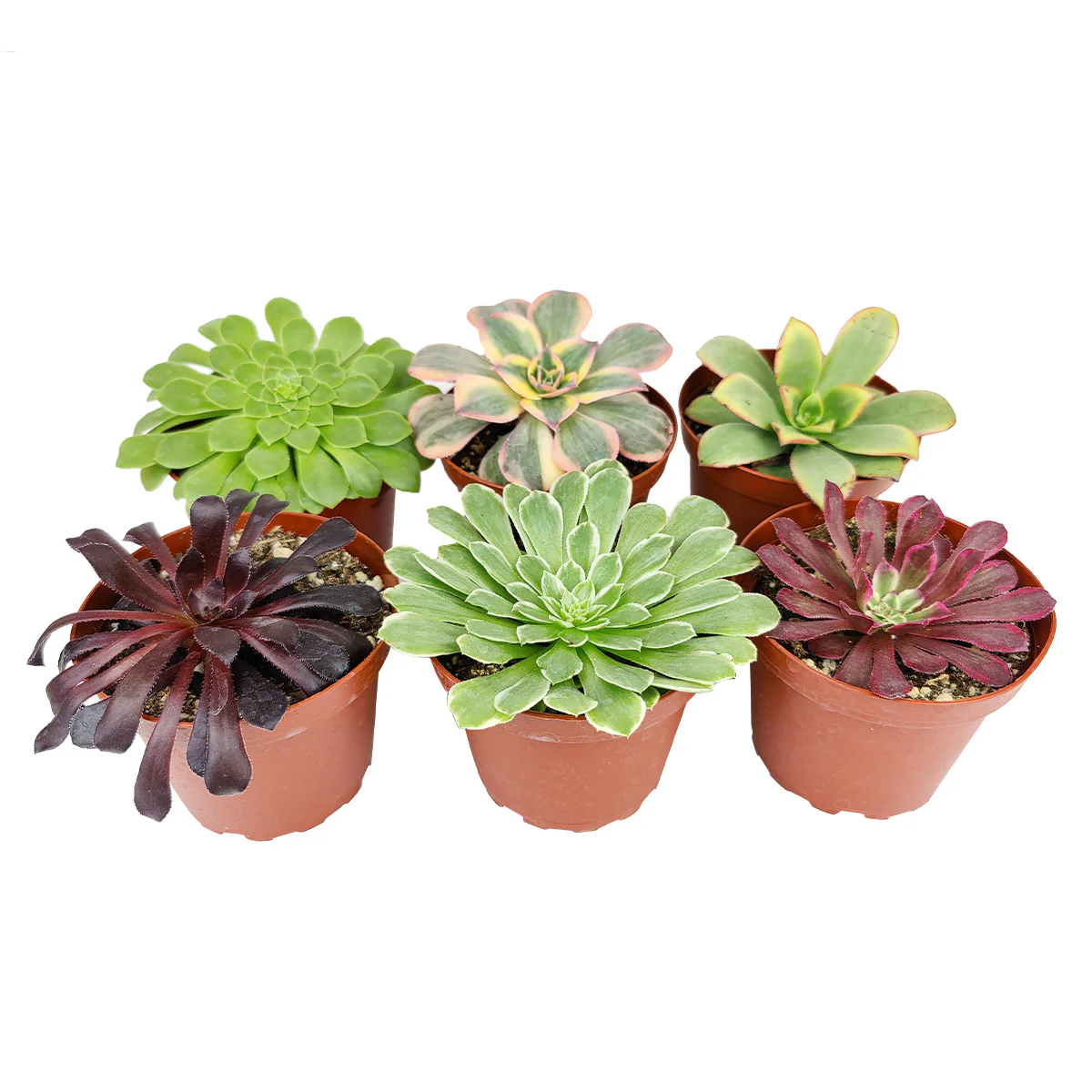
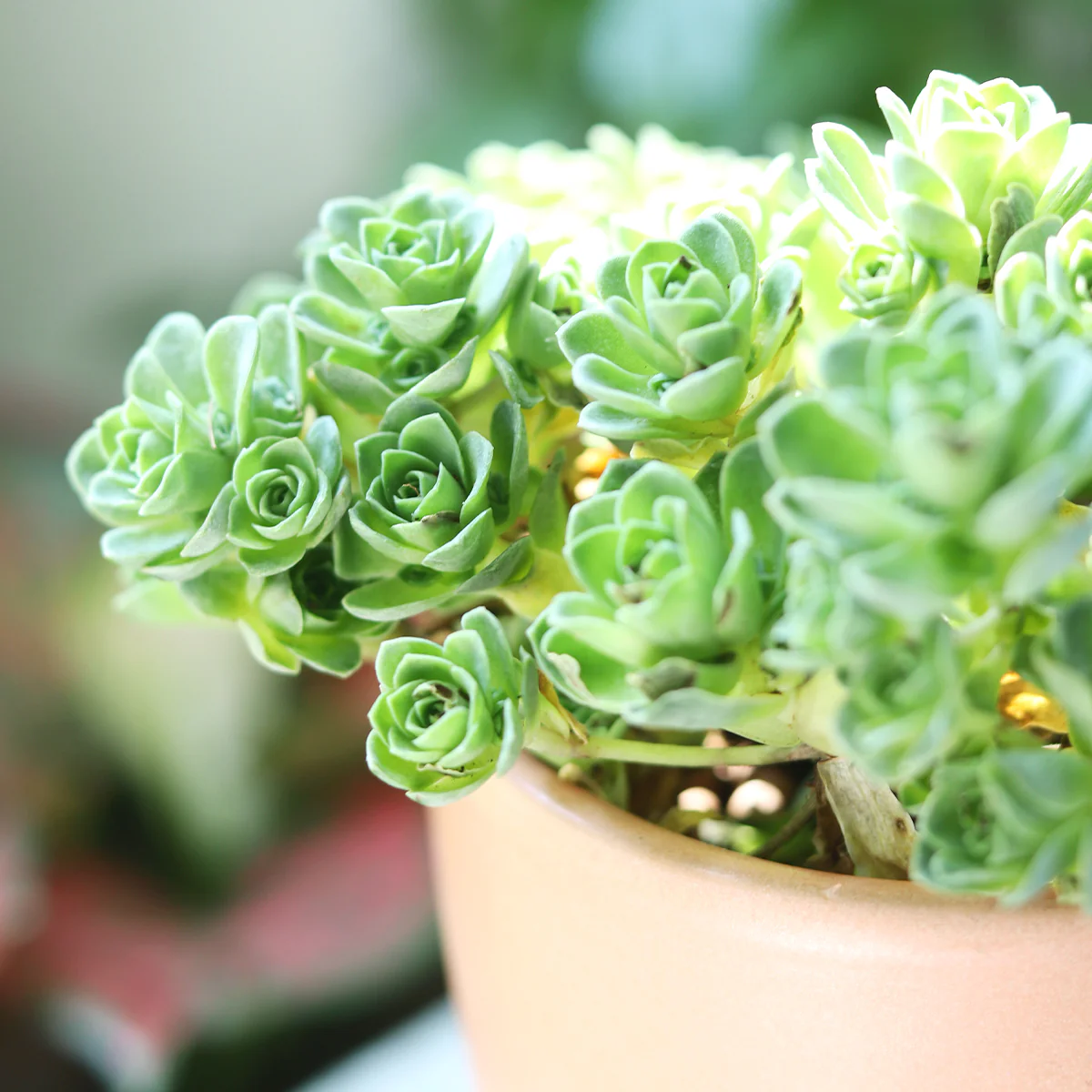
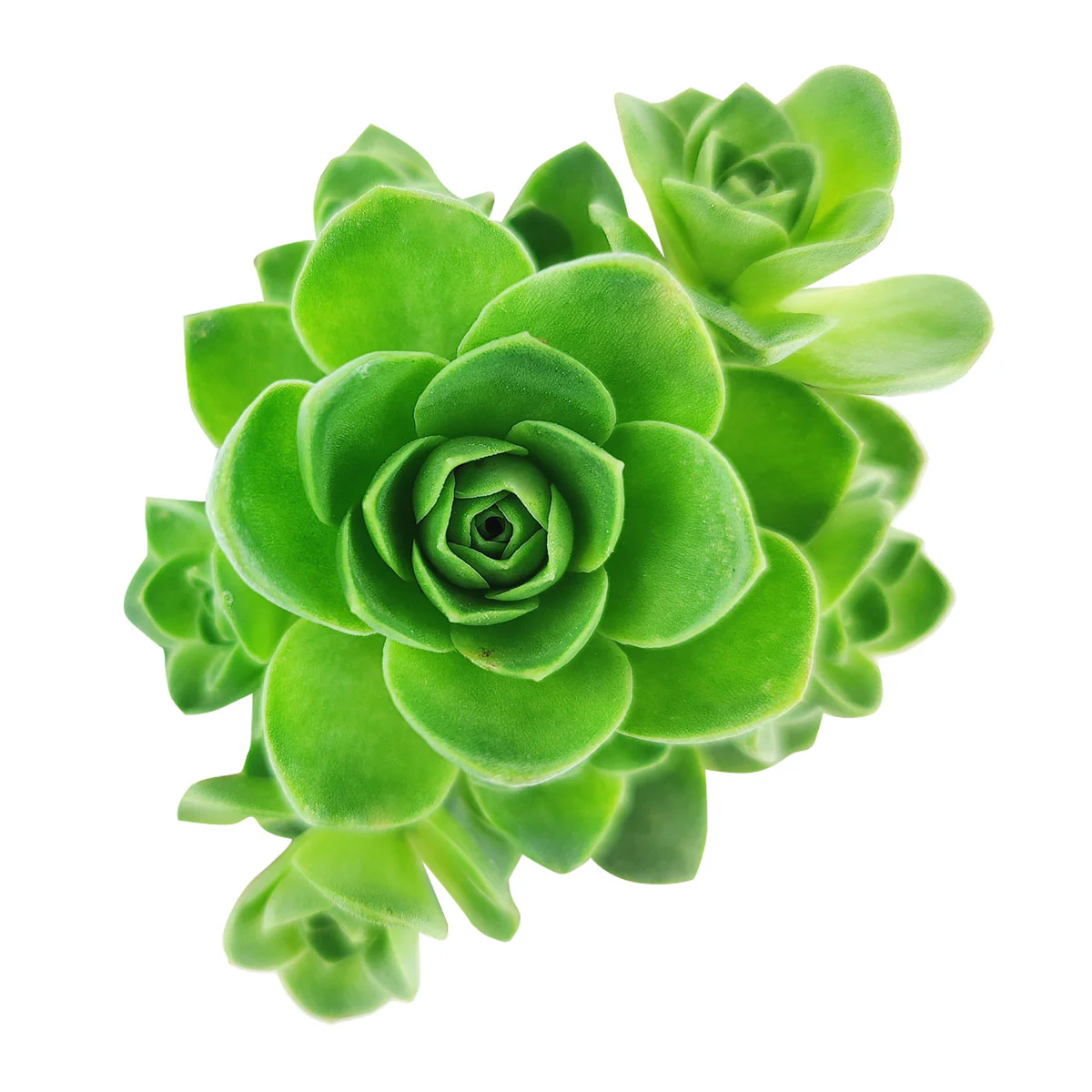
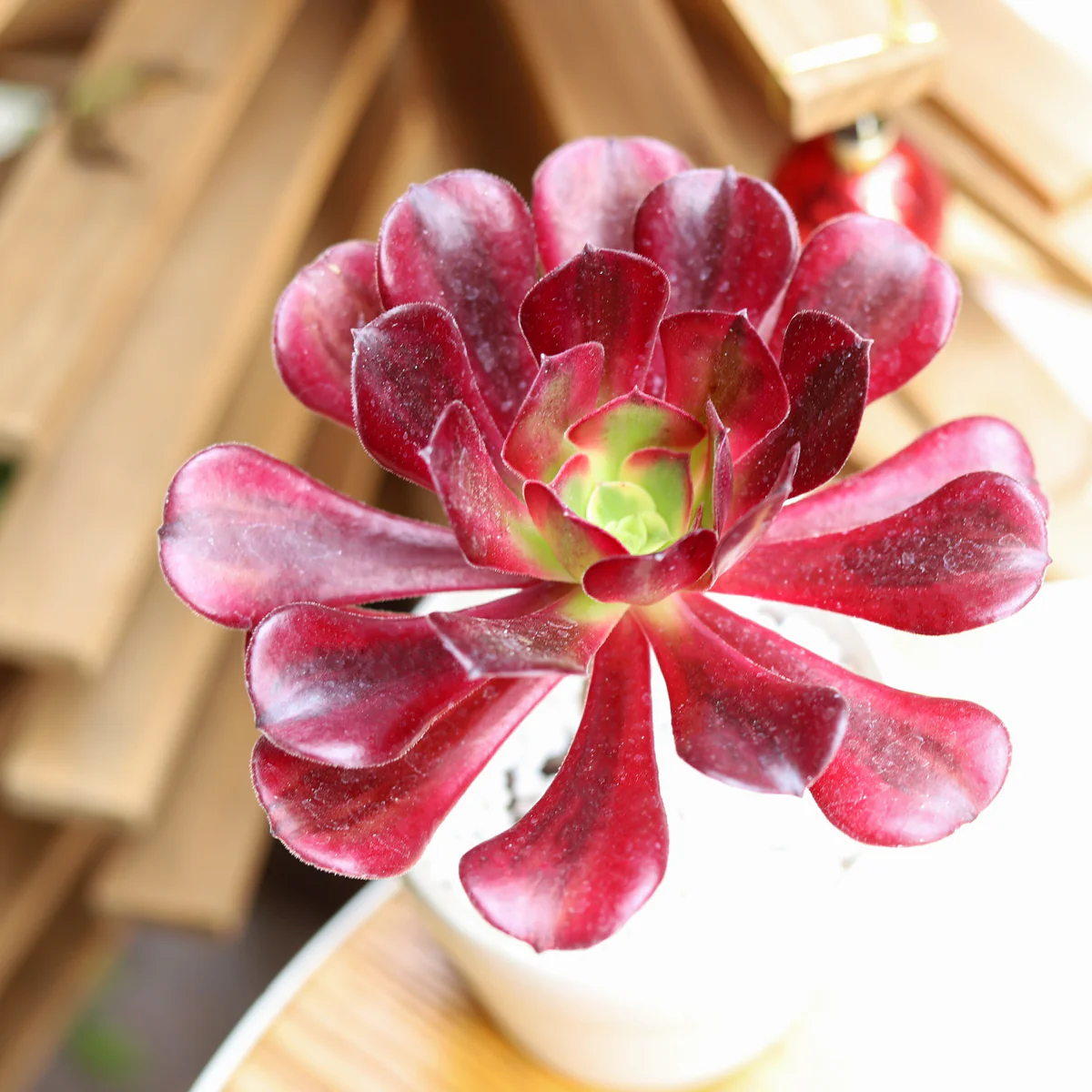
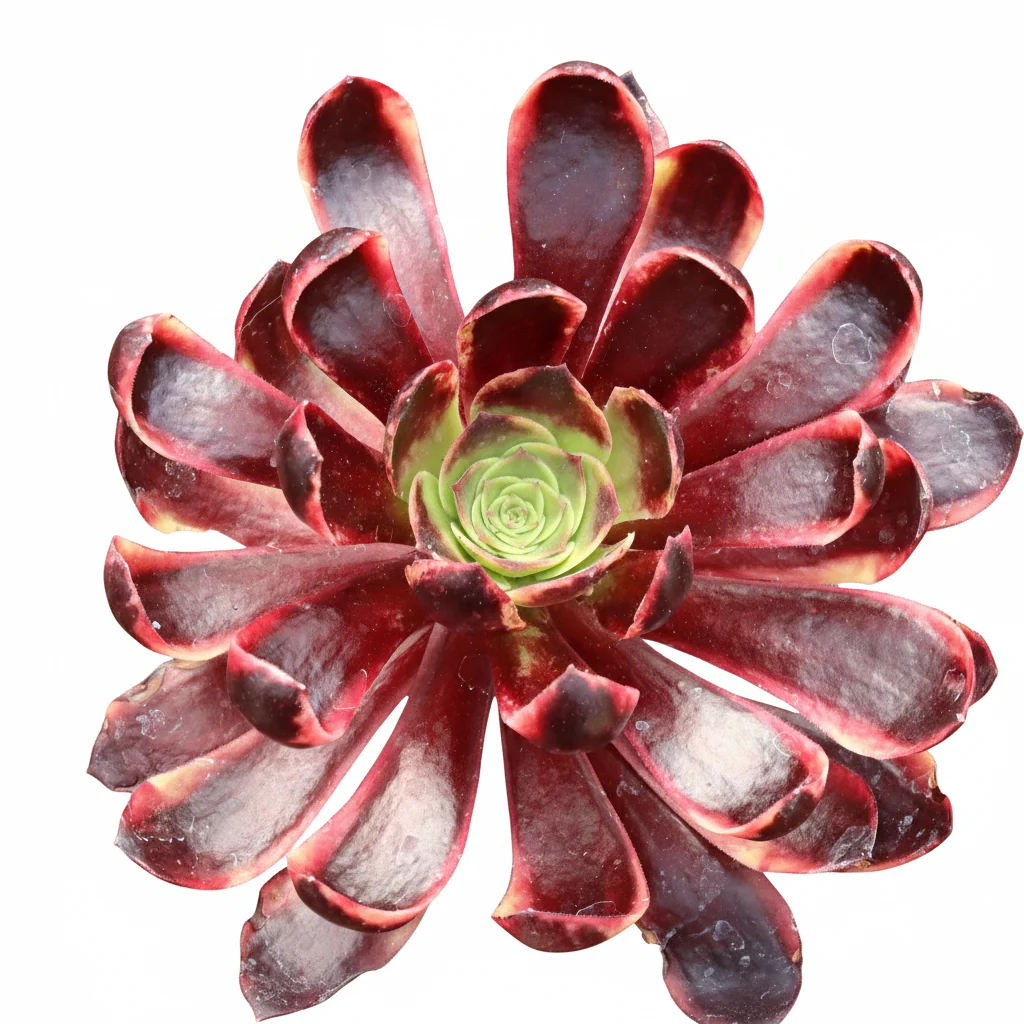
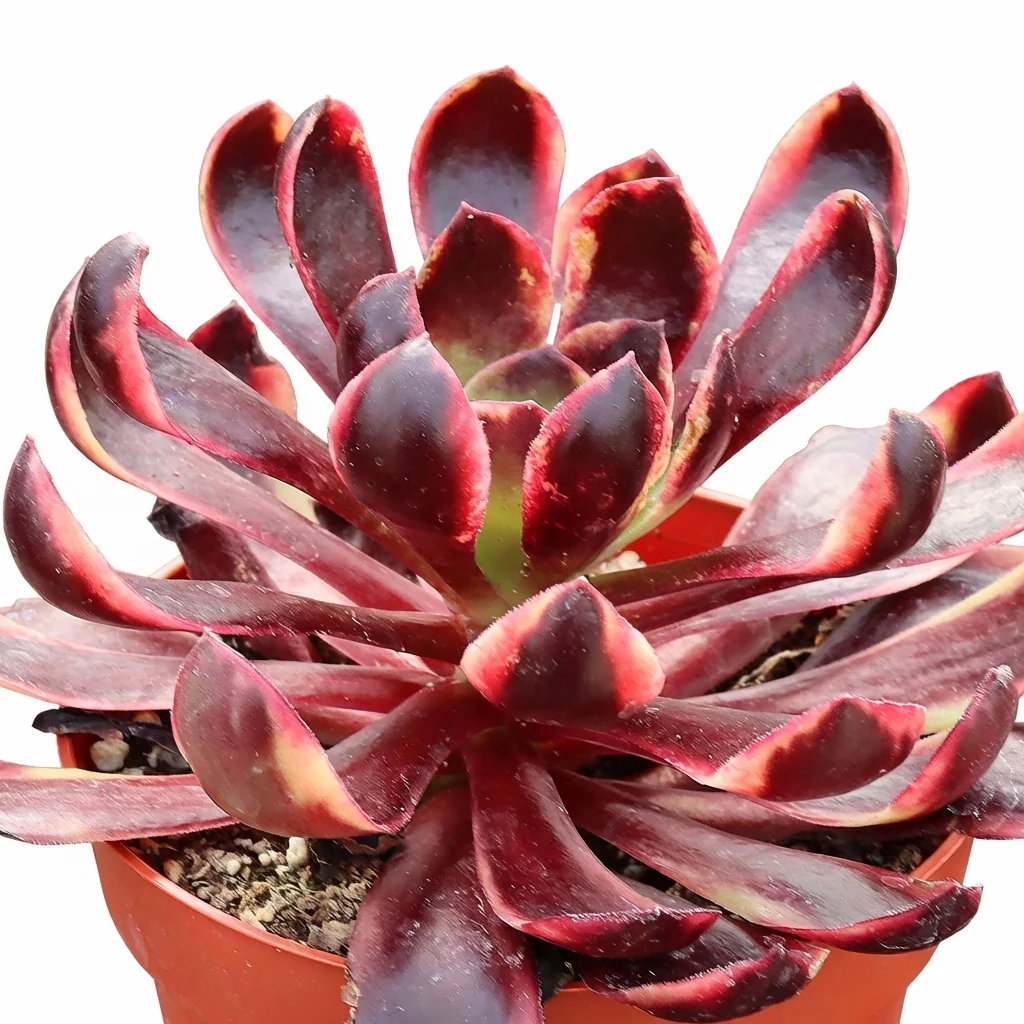
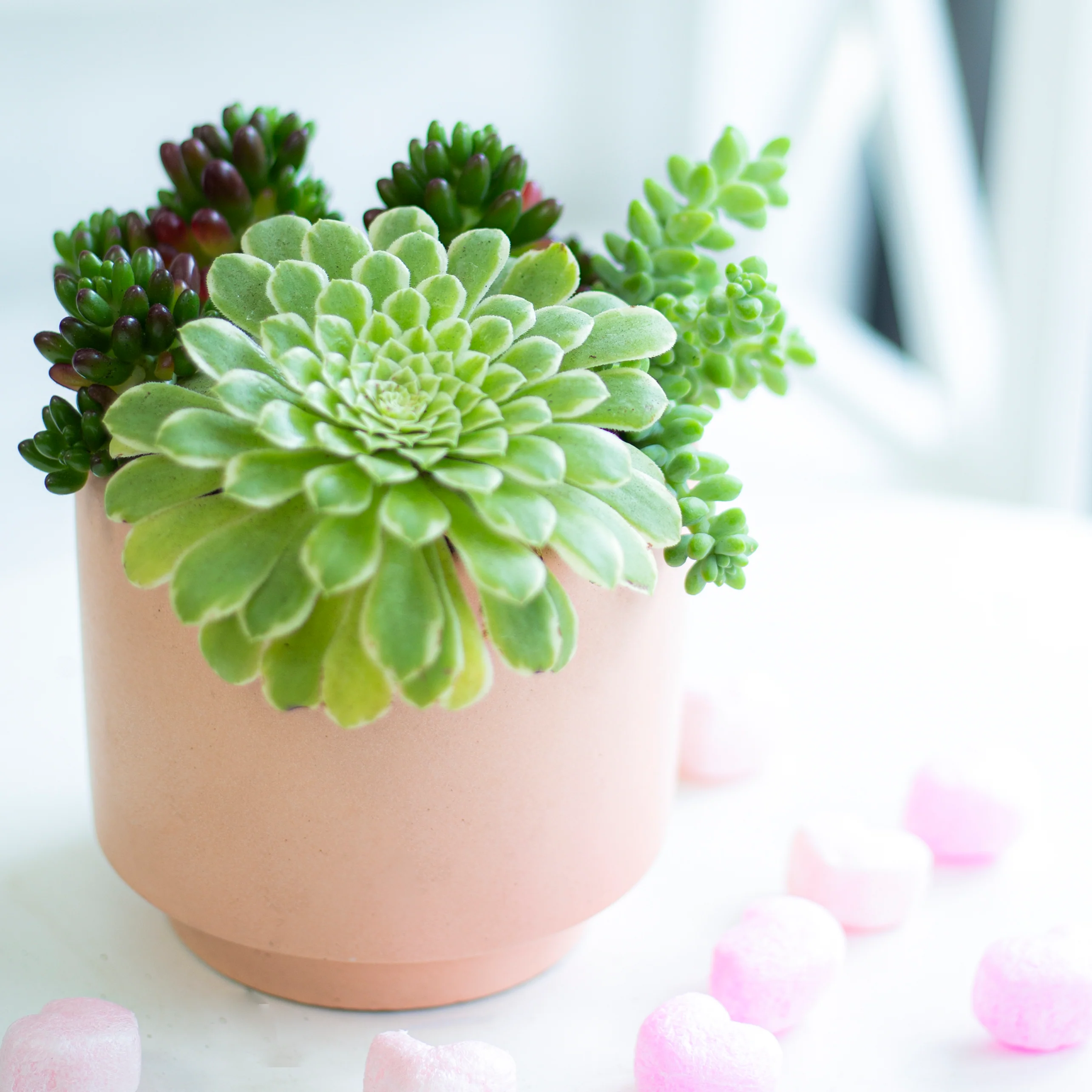
 Aeonium Emerald Ice forms elegant rosettes of spoon-shaped leaves layered in a classic upright, clustering habit that builds into a lush, architectural display over time. What truly sets this green and white succulent apart is its vivid variegation: creamy white margins contrast sharply against rich emerald green centers, creating a two-toned pattern that looks almost painted. The leaves have a slightly waxy, smooth texture, and as the rosette matures it develops a satisfying symmetry that makes it an instant focal point on any shelf or patio.
 Aeonium Emerald Ice shares the genus trait of requiring a noticeable night temperature drop to trigger blooming, so growers who move it outdoors in cooler seasons give it the best chance to flower. This rosette succulent is also a natural air-purifying companion indoors, and its pet friendly status means you can display it anywhere in the home without worry. Whether or not it blooms for you, the foliage alone delivers year-round visual payoff that few other variegated aeoniums can match.
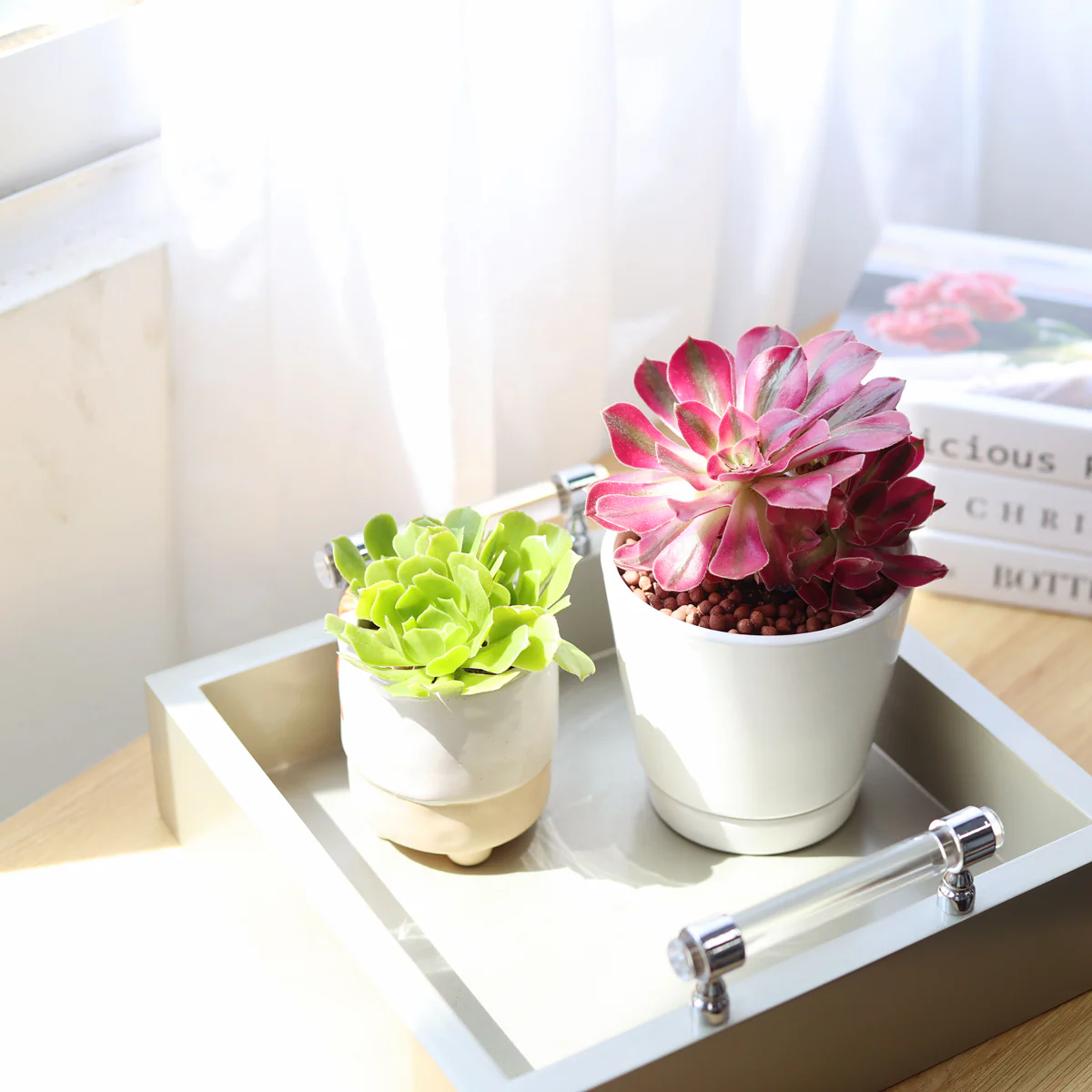
 Aeonium Emerald Ice is a genuinely rare find that earns a coveted spot in any succulent collection, and its versatility makes it equally at home on a sunny windowsill, a sheltered patio, or an outdoor container garden during summer and autumn. Rotate it regularly so every side of the rosette gets even light exposure, and keep it away from direct air conditioning or heating vents that dry out the foliage too harshly. The good news for travelers is that this drought tolerant succulent handles a 10-day solo stint without water beautifully, and it tells you when it's thirsty by gently wilting, so guesswork is off the table.
-
 Aeonium Emerald Ice thrives in bright indirect light to partial sun, tolerating full sun in cooler climates but risking scorch near south-facing windows in intense heat.
 Aeonium Emerald Ice needs watering every 10-14 days in the growing season, reduced to once every 3-4 weeks during summer dormancy.
 Aeonium Emerald Ice performs best in a well-draining cactus and succulent mix blended with 20-30% perlite for extra drainage.
 Aeonium Emerald Ice prefers temperatures between 65-75°F (18-24°C) and should be protected from frost below 25°F (-4°C).
![]() Aeonium Emerald Ice is a slow to moderate grower that benefits from a balanced, diluted liquid fertilizer applied 2-3 times during its active growing season.
Aeonium Emerald Ice is a slow to moderate grower that benefits from a balanced, diluted liquid fertilizer applied 2-3 times during its active growing season.
 Aeonium Emerald Ice is hardy in USDA Zones 9-11, tolerating brief dips to around 25-28°F (-4 to -2°C) but needing frost protection below that threshold. Gardeners growing Aeonium Emerald Ice outdoors year-round will find it well suited to California, Arizona, Nevada, Hawaii, Florida, Texas, Louisiana, Georgia, South Carolina, Alabama, Mississippi, and the mild coastal stretches of Oregon and Washington. Beyond those regions, it thrives as a container plant that moves outside for summer and autumn and returns indoors before the first hard freeze.
-
Q: How often should I water Aeonium Emerald Ice?
A: Water Aeonium Emerald Ice every 10-14 days during its active season and cut back to every 3-4 weeks in summer when it goes dormant. It will show gentle wilting when it's ready for a drink.
Q: Is Aeonium Emerald Ice pet friendly?
A: Yes, Aeonium Emerald Ice is pet friendly and safe to display anywhere in a home with cats or dogs. No need to keep it out of reach.
Q: How much light does Aeonium Emerald Ice need?
A: Aeonium Emerald Ice does best in bright indirect light or partial sun, making an east or west-facing windowsill ideal. Avoid intense south-facing direct sun, which can scorch the delicate variegated leaves.
Q: How do I propagate Aeonium Emerald Ice?
A: Aeonium Emerald Ice is most easily propagated by cutting a healthy rosette stem, allowing the cut end to callous for a day or two, then planting it in dry succulent mix. Roots typically establish within a few weeks.
Q: How big does Aeonium Emerald Ice get?
A: Aeonium Emerald Ice is a slow to moderate grower that typically reaches 12-18 inches (30-45 cm) in height as it clusters and offsets over time. Individual rosettes can spread to around 6-8 inches (15-20 cm) across.
Q: Can I grow Aeonium Emerald Ice outside?
A: Aeonium Emerald Ice can move outdoors for summer and autumn in most climates, but it needs shelter from heavy rain and protection before temperatures drop near freezing. In frost-free USDA Zones 9-11, it can live outdoors year-round.


Original: $8.30
-70%$8.30
$2.49Product Information
Product Information
Shipping & Returns
Shipping & Returns
Description
- Description
- Aeonium Emerald Ice Care Guide
- FAQ/Common Issues
-
![]() Aeonium Emerald Ice is a rare aeonium cultivar belonging to the Crassulaceae family, prized by collectors and beginners alike for its striking variegation and easy care. Like all aeoniums, it traces its roots to the Canary Islands and the Mediterranean region, where its ancestors evolved to thrive in mild, seasonally dry climates. This beginner friendly succulent has found enthusiastic fans worldwide and is increasingly sought after as a low maintenance indoor succulent plant.
Aeonium Emerald Ice is a rare aeonium cultivar belonging to the Crassulaceae family, prized by collectors and beginners alike for its striking variegation and easy care. Like all aeoniums, it traces its roots to the Canary Islands and the Mediterranean region, where its ancestors evolved to thrive in mild, seasonally dry climates. This beginner friendly succulent has found enthusiastic fans worldwide and is increasingly sought after as a low maintenance indoor succulent plant.
Aeonium Emerald Ice forms elegant rosettes of spoon-shaped leaves layered in a classic upright, clustering habit that builds into a lush, architectural display over time. What truly sets this green and white succulent apart is its vivid variegation: creamy white margins contrast sharply against rich emerald green centers, creating a two-toned pattern that looks almost painted. The leaves have a slightly waxy, smooth texture, and as the rosette matures it develops a satisfying symmetry that makes it an instant focal point on any shelf or patio.
Aeonium Emerald Ice shares the genus trait of requiring a noticeable night temperature drop to trigger blooming, so growers who move it outdoors in cooler seasons give it the best chance to flower. This rosette succulent is also a natural air-purifying companion indoors, and its pet friendly status means you can display it anywhere in the home without worry. Whether or not it blooms for you, the foliage alone delivers year-round visual payoff that few other variegated aeoniums can match.
Aeonium Emerald Ice is a genuinely rare find that earns a coveted spot in any succulent collection, and its versatility makes it equally at home on a sunny windowsill, a sheltered patio, or an outdoor container garden during summer and autumn. Rotate it regularly so every side of the rosette gets even light exposure, and keep it away from direct air conditioning or heating vents that dry out the foliage too harshly. The good news for travelers is that this drought tolerant succulent handles a 10-day solo stint without water beautifully, and it tells you when it's thirsty by gently wilting, so guesswork is off the table.
-
Aeonium Emerald Ice thrives in bright indirect light to partial sun, tolerating full sun in cooler climates but risking scorch near south-facing windows in intense heat.
Aeonium Emerald Ice needs watering every 10-14 days in the growing season, reduced to once every 3-4 weeks during summer dormancy.
Aeonium Emerald Ice performs best in a well-draining cactus and succulent mix blended with 20-30% perlite for extra drainage.
Aeonium Emerald Ice prefers temperatures between 65-75°F (18-24°C) and should be protected from frost below 25°F (-4°C).
![]() Aeonium Emerald Ice is a slow to moderate grower that benefits from a balanced, diluted liquid fertilizer applied 2-3 times during its active growing season.
Aeonium Emerald Ice is a slow to moderate grower that benefits from a balanced, diluted liquid fertilizer applied 2-3 times during its active growing season.
Aeonium Emerald Ice is hardy in USDA Zones 9-11, tolerating brief dips to around 25-28°F (-4 to -2°C) but needing frost protection below that threshold. Gardeners growing Aeonium Emerald Ice outdoors year-round will find it well suited to California, Arizona, Nevada, Hawaii, Florida, Texas, Louisiana, Georgia, South Carolina, Alabama, Mississippi, and the mild coastal stretches of Oregon and Washington. Beyond those regions, it thrives as a container plant that moves outside for summer and autumn and returns indoors before the first hard freeze.
-
Q: How often should I water Aeonium Emerald Ice?
A: Water Aeonium Emerald Ice every 10-14 days during its active season and cut back to every 3-4 weeks in summer when it goes dormant. It will show gentle wilting when it's ready for a drink.
Q: Is Aeonium Emerald Ice pet friendly?
A: Yes, Aeonium Emerald Ice is pet friendly and safe to display anywhere in a home with cats or dogs. No need to keep it out of reach.
Q: How much light does Aeonium Emerald Ice need?
A: Aeonium Emerald Ice does best in bright indirect light or partial sun, making an east or west-facing windowsill ideal. Avoid intense south-facing direct sun, which can scorch the delicate variegated leaves.
Q: How do I propagate Aeonium Emerald Ice?
A: Aeonium Emerald Ice is most easily propagated by cutting a healthy rosette stem, allowing the cut end to callous for a day or two, then planting it in dry succulent mix. Roots typically establish within a few weeks.
Q: How big does Aeonium Emerald Ice get?
A: Aeonium Emerald Ice is a slow to moderate grower that typically reaches 12-18 inches (30-45 cm) in height as it clusters and offsets over time. Individual rosettes can spread to around 6-8 inches (15-20 cm) across.
Q: Can I grow Aeonium Emerald Ice outside?
A: Aeonium Emerald Ice can move outdoors for summer and autumn in most climates, but it needs shelter from heavy rain and protection before temperatures drop near freezing. In frost-free USDA Zones 9-11, it can live outdoors year-round.